This page details Pi-lit LED Sequential Road Flares, highlighting their features, INDOT's reasons for use, and videos demonstrating their nighttime performance.
Pi-lit LED Sequential Road Flares
Submitted by: Dustin Leslie & Ross Bucher (Research & Development)
This INDOT innovation enhances work zone visibility and safety with advanced, easy‑to‑deploy LED road flares. Pi‑Lit sequential flares use intelligent radio technology to automatically organize themselves in the correct sequence as soon as they are placed on the roadway. Any individual flare can control the entire network, allowing crews to change light patterns or turn all flares off using just one device.
The flares offer a 50‑foot range when placed on the ground and up to 1,000 feet when mounted on a traffic cone, with no limit to the number that can be linked together. They are rugged, compact, and designed to withstand harsh roadway conditions while storing easily in vehicles.
Featuring bright LEDs with 360‑degree horizontal visibility and up to one mile of viewing distance, Pi‑Lit flares significantly improve nighttime and curve visibility. They can attach magnetically to surfaces, and a cone adapter allows them to be seen from the top or side of a cone.
INDOT uses Pi‑Lit LED Sequential Road Flares because they:
- Increase visibility on curves, especially after dark
- Offer multiple sequencing options
- Provide additional visibility when needed
- Attach magnetically for quick placement
- Work effectively on standard cones using an adapter
- Include charging options for both vehicles and standard outlets
This innovation helps INDOT crews create safer, more visible work zones while making deployment quicker and more efficient.
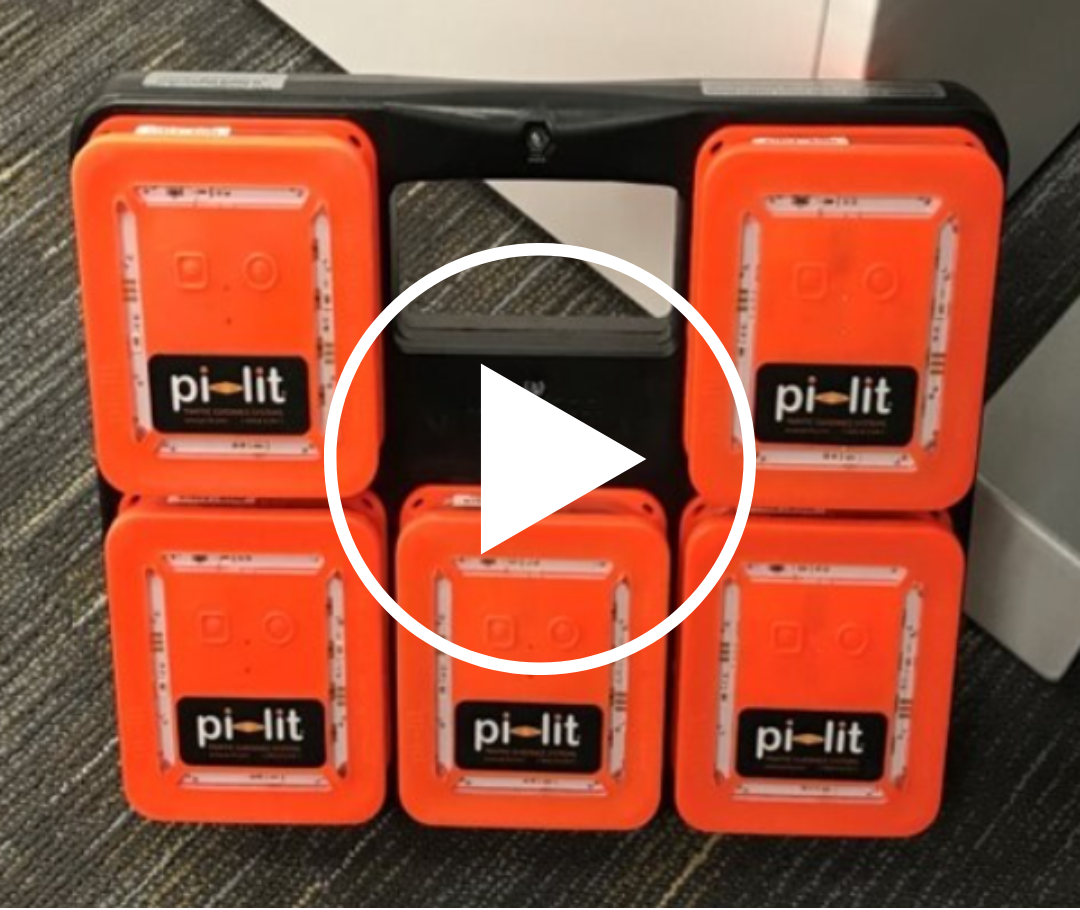
Watch the Pi-Lit LED Road flares in action at night!
May be purchased sole source via Pi Variables, Inc. For quote email sales@pilit.com