An INDOT roadway has made history by becoming the first highway segment in the U.S. to wirelessly charge an electric heavy-duty truck in motion.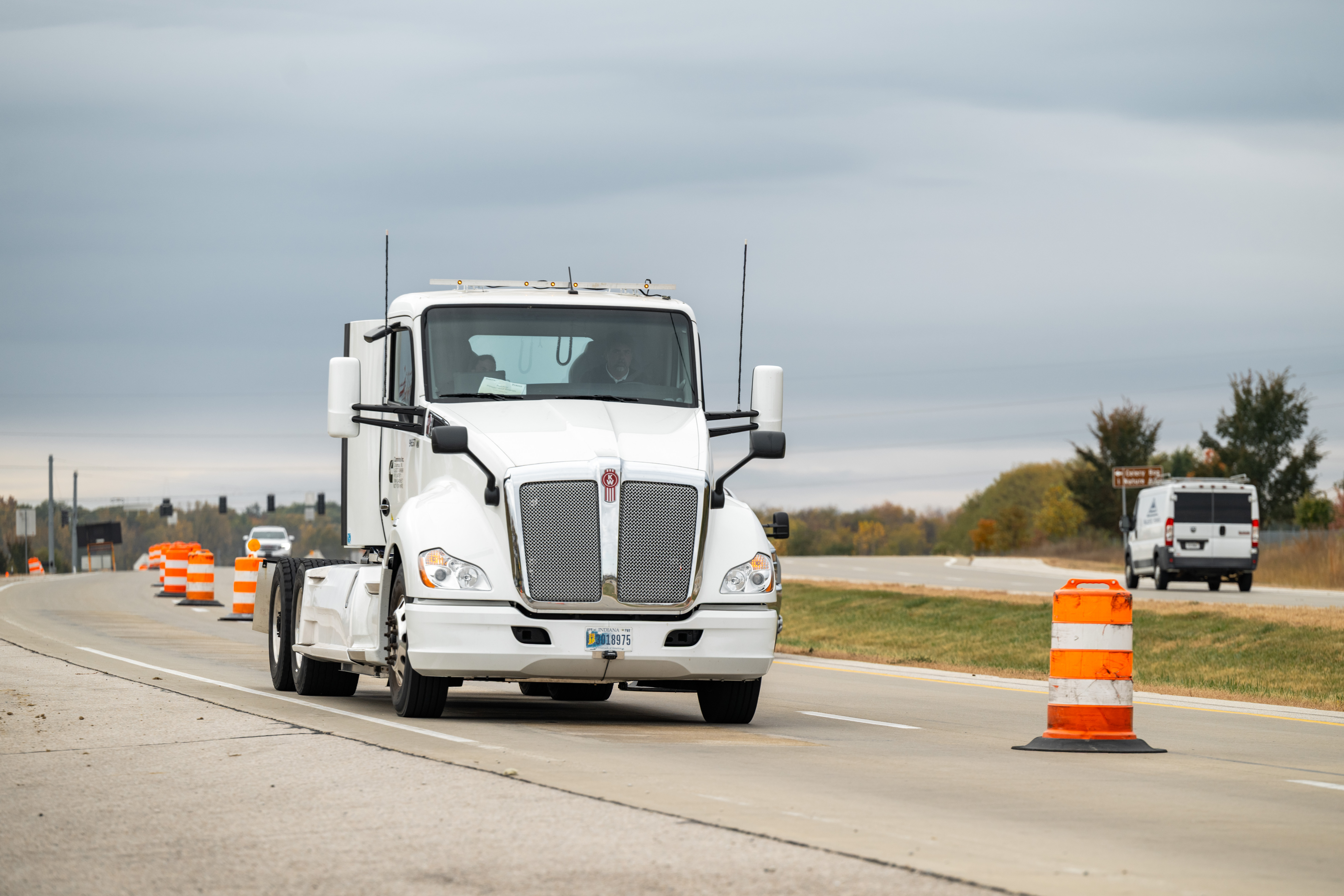
In October, an electric semitrailer provided by Cummins was driven at 65 mph on a quarter-mile testbed constructed on U.S. 52/U.S. 231 in West Lafayette. The experimental segment tests a patent-pending system designed by Purdue University that harnesses “dynamic wireless power transfer.” Dynamic refers to vehicles in motion.
“The successful test demonstrates key technology that could help lower the costs of building electrified highways that recharge electric vehicles of all sizes across the nation,” said INDOT Commissioner Lyndsay Quist.
A few other states and countries have tested roads designed to enable dynamic wireless power transfer, but the Purdue-designed system works at power levels much higher than what has been demonstrated in the U.S. so far. It delivered 190 kilowatts to the Cummins truck traveling at 65 mph during testing in October. For perspective, 200 kilowatts are on the scale of about 100 homes.
The system is also designed to work for passenger vehicles. Electrified highways could enable battery packs of passenger cars to become smaller to lower battery cost and eliminate range anxiety experienced by EV owners.
Similarly, if trucks could charge or stay charged using highways, subsequent smaller battery sizes could enable trucks to carry more cargo, significantly reducing the costs of using EVs for freight transportation. Lowering costs for heavy-duty electric trucks could help attract more private investment.
The U.S. 52/U.S. 231 section is designed so that the highway pavement provides power to EVs similarly to how smartphones use magnetic fields to wirelessly charge when placed on a charging pad. White Construction installed transmitter coils in specially dedicated lanes within the concrete pavement. The coils send power to receiver coils attached to the truck’s underside.
Other wireless EV charging efforts are also using transmitter coils and receivers, but they haven’t been designed for the higher power levels that heavy-duty trucks require. The coils embedded in the U.S. 52/U.S. 231 concrete pavement accommodate a wider power range; larger vehicles wouldn’t need multiple receivers on the trailer to charge from the road, which has been proposed to meet the high-power demands. Instead, a single receiver assembly is placed under the vehicle, greatly simplifying the overall system.
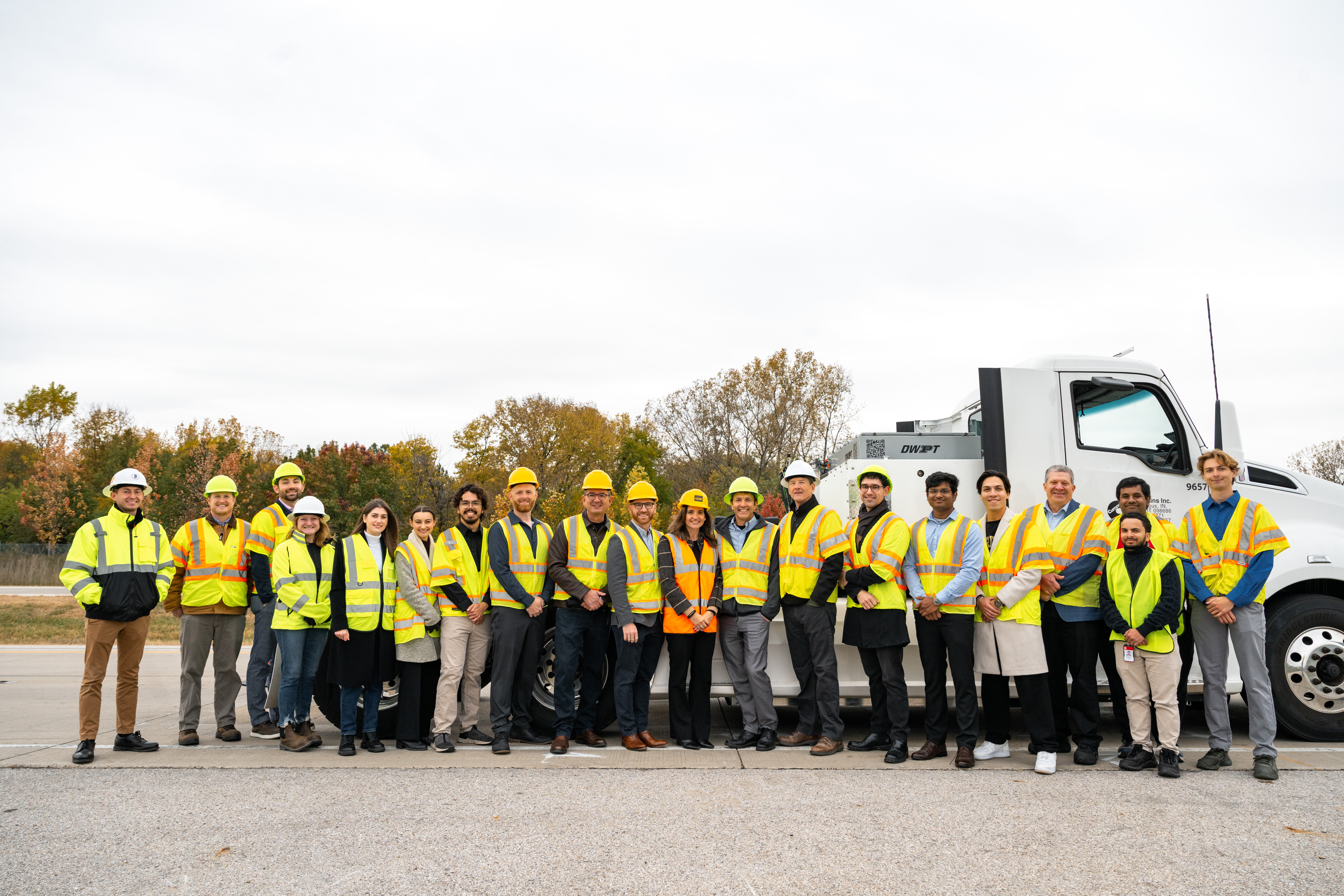
The October demonstration was part of a multistage research project that Purdue and INDOT began in 2018. In addition to support from INDOT through the Joint Transportation Research Program at Purdue, the project is affiliated with a National Science Foundation Engineering Research center called Advancing Self-sufficiency through Powered Infrastructure for Roadway Electrification (ASPIRE).
Others involved in developing and implementing various parts of the system include AECOM and PC Krause and Associates.
Next steps include further testing to help the team develop industry standards for dynamic wireless power transfer. The team hopes that these standards will encourage industry to adopt the technology in the future. Researchers plan to test the system for other vehicle classes.
Learn more about Dynamic Wireless Power Transfer at https://www.in.gov/indot/emerging-mobility/dynamic-wireless-power-transfer/.