Redkey's Historic Clock Is Ticking Again
For more than a century, Redkey's historic clock tower has stood above downtown as one of our community's most recognizable landmarks.
The Old Redkey City Building and Fire Station was built in 1905, and in 1909 the tower was rebuilt and extended to accommodate a Seth Thomas mechanical tower clock. The clock became a familiar part of everyday life in Redkey, marking time over the town for generations.
After an earlier restoration in 1976, the clock eventually fell silent again. In 2026, Redkey Community Development took on the challenge of restoring the original mechanical clock.
The historic mechanism was carefully removed from the tower, completely disassembled, cleaned, repaired, painted and reassembled. Volunteers also worked to restore the four clock faces and improve the exterior of the historic building.
On June 7, 2026, after years of silence, the 117-year-old Seth Thomas clock began keeping time over Redkey once again.
Discover the Full Story
Learn about the 1905 City Building, the 1909 Seth Thomas clock, how the mechanical clock works, the 1976 restoration, and the remarkable 2026 community restoration project.
- Redkey's Historic Clock Tower More Than a Century of Keeping Time in Redkey
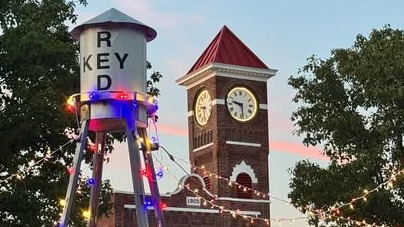 Standing above the corner of High and Oak Streets in downtown Redkey, the historic clock tower has watched over the community for more than a century.
The building beneath it has served Redkey since 1905. The clock has marked time over downtown since 1909. Together, they have survived changing industries, generations of residents, two world wars, the Great Depression, the decline of the railroads, changing technology and more than a century of Indiana weather.
Today, the Old Redkey City Building and Fire Station, and its Seth Thomas tower clock, remain among the most recognizable symbols of Redkey.
In 2026, a group of local volunteers took on the extraordinary task of bringing the historic clock back to life.
- Redkey Before the Clock
 The story of the clock tower is closely tied to the story of Redkey itself.
Settlement in the area dates to the 1830s. The community was once known as Halfway and was formally platted as Mt. Vernon in 1854 by William Harrison Wade.
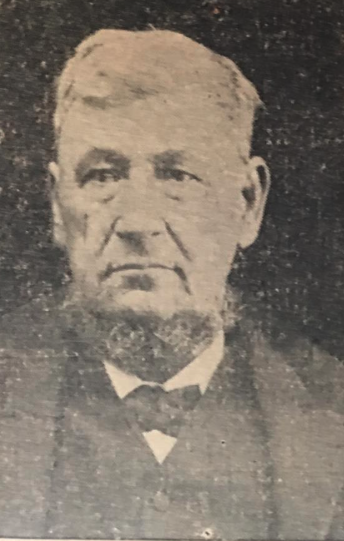
When James Redkey arrived in 1856, the village consisted of only a few homes, a sawmill and a store. Redkey's future changed with the arrival of the railroad in the late 1860s. James Redkey owned property west of the original town and platted additional land near the new railroad. The railroad station became known as Redkey, and the community eventually adopted that name.
Another railroad arrived in 1879, making Redkey an important local shipping and market town. By 1880, Redkey had a population of 386 along with stores, hotels, warehouses, a sawmill, tile mill and other businesses.
Then came the event that transformed east-central Indiana.
- The Indiana Gas Boom
 Natural gas was discovered in Jay County in 1886.
The discovery triggered a period of tremendous industrial growth throughout east-central Indiana. Thousands of gas wells were drilled, factories arrived and communities throughout the region grew rapidly.
Redkey was right in the middle of it.
Glass manufacturing was especially attracted to the inexpensive supply of natural gas, and three glass factories operated in Redkey during the gas-boom era. Other industries also established operations in the community.
Redkey's population climbed from 386 residents in 1880 to 2,206 by 1900. Downtown Redkey grew along with it. New brick commercial buildings replaced many earlier wooden structures, and High Street became the center of business and community activity.
Although the natural gas supply was largely depleted by about 1906, much of the downtown that residents recognize today was created during this period of prosperity.
- The City Building – Built in 1905
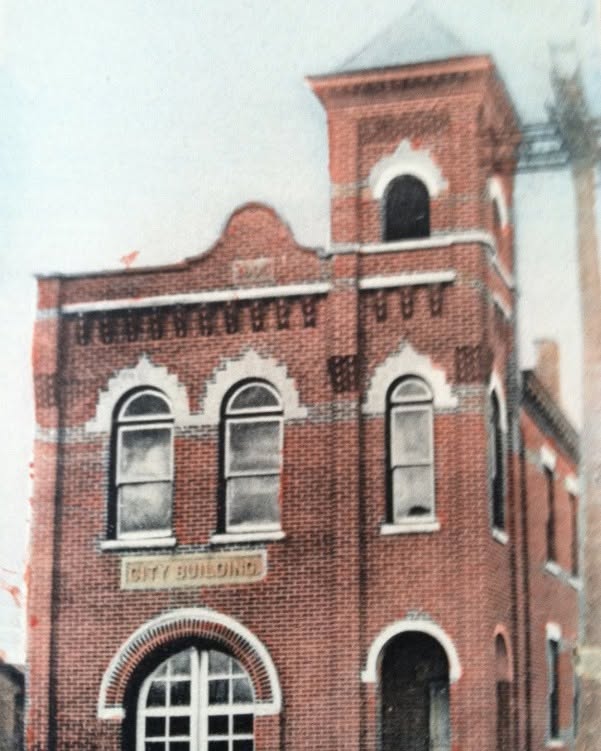 In 1905, Redkey completed a new municipal building at the northwest corner of High and Oak Streets.
Today it is commonly known as the Old Redkey Fire Station, but historically it was Redkey's City Building, serving municipal and public-safety functions for the community.
According to the National Register of Historic Places documentation, the building was constructed by Charles L. Sanders at a cost of $3,287.
The building is an outstanding local example of Romanesque Revival architecture.
Constructed primarily of brick and trimmed with Bedford limestone, the building features round-arched windows, decorative brickwork, stone bands and a prominent square corner tower.
The main building is two stories tall, while the tower rises four stories above downtown.
The original building did not, however, have the clock tower exactly as we see it today.
The upper portion of the tower was shorter.
That would change in 1909.
- 1909 – Building a Tower for the Clock
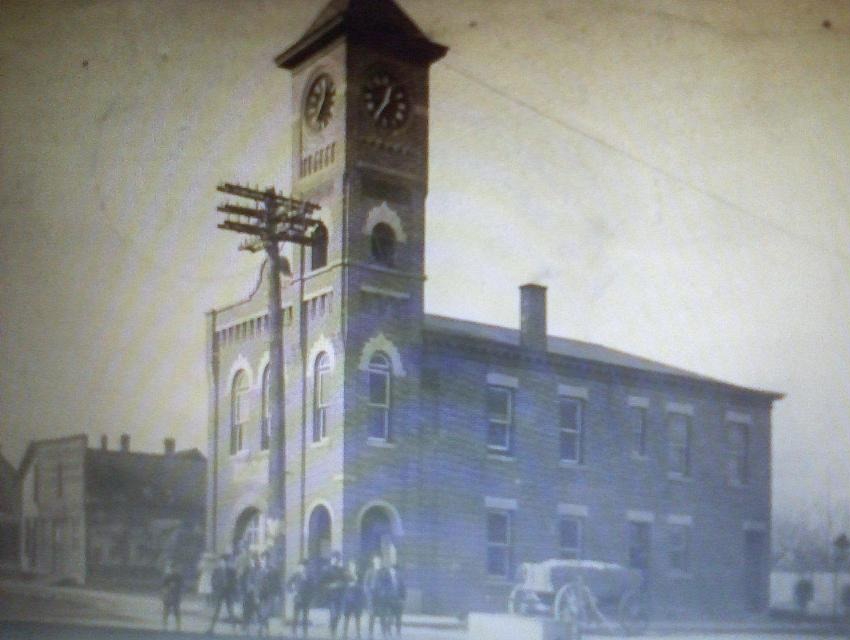 In 1909, Redkey's City Building was transformed.
A large mechanical tower clock was obtained for the community, and the existing tower had to be rebuilt and extended upward specifically to accommodate it.
That detail is important to the building's history: The clock was not simply placed into the original 1905 tower. The tower itself was rebuilt in 1909 for the clock.
The new upper level provided space for four large clock faces and the mechanical equipment necessary to operate them.
At the top, a pyramidal roof and decorative detailing completed the tower that generations of Redkey residents would come to recognize.
The clock installed inside was manufactured by one of America's most respected clockmakers.
- Redkey's Seth Thomas Tower Clock
The clock installed in Redkey in 1909 is an original #15 Seth Thomas mechanical tower clock.
The Seth Thomas company traced its beginnings to 1813, when clockmaker Seth Thomas established his own operation in Plymouth Hollow, Connecticut. The company eventually became one of America's best-known clock manufacturers, producing everything from household clocks to enormous mechanical clocks designed for courthouses, churches, schools, factories and municipal buildings.
By the late nineteenth and early twentieth centuries, a Seth Thomas tower clock represented quality engineering, craftsmanship and civic pride.
Redkey joined communities across America that installed one of these remarkable machines.
- What Is a #15 Seth Thomas Clock?
The 1911 Seth Thomas Tower Clock catalog, published only two years after Redkey's clock was installed, provides a fascinating look at the No. 15.
The standard No. 15 was an eight-day mechanical striking tower clock.
According to the manufacturer's specifications, the mechanism measured approximately:
50 inches wide
28 inches deep
58 inches highThe clock used a four-foot pendulum weighing approximately 75 pounds. It was designed to operate either one large dial or as many as four clock faces approximately 5½ feet in diameter or smaller. The boxed clock mechanism itself weighed approximately 1,000 pounds.
Redkey's approximately five-foot clock faces are consistent with the size the No. 15 was designed to operate.
- How the Clock Works
Unlike a modern electric clock, the Seth Thomas tower clock is a large mechanical machine.
Its operation depends on a carefully coordinated system of: Weights * Gears * Shafts * Pinions * Escapement * Pendulum * Motion Works * Clock Hands
The principle is surprisingly simple even though the machinery is complex.
The Weights Provide the Power
Traditional tower clocks were powered by gravity. Heavy weights suspended from cables provided the energy required to turn the clock's gears. As the weight slowly descended, that stored energy was transferred into the clock mechanism.
The Seth Thomas catalog instructed caretakers to wind its tower clocks approximately once each week. Winding raised the weights back to the top so gravity could begin the process again.
The Gears Control the Motion
Inside the massive iron frame is a system of precisely manufactured gears and shafts. The gears reduce and transfer the movement so that the hands outside move at exactly the correct rate. What appears from the street to be the slow movement of a minute hand is the final result of an entire mechanical system operating inside the tower.
The Pendulum Regulates Time
The pendulum acts as the clock's regulator. As it swings back and forth, the clock's escapement releases the gear train in carefully controlled increments. Adjusting the effective length of the pendulum allows the rate of the clock to be fine-tuned.
A longer pendulum causes the clock to run slightly slower; shortening it causes the clock to run faster.
One Clock – Four Faces
Redkey does not have four separate clocks. A central mechanical movement operates the faces together. Power is transferred upward through shafts and gears to the level of the clock faces. From there, motion is distributed outward to the hands on the different sides of the tower.
Behind each face, additional gearing—often called the motion works—translates that rotating shaft into the movement of the hour and minute hands.
The result is one mechanical clock telling time to the entire town in four directions.
- A Gift to the Community
Redkey's clock was not simply a piece of municipal equipment. It was a gift intended to serve the entire community, donated by businessman Milt Reynolds
Historical reporting places the cost of the clock project at approximately $1,100—a substantial investment in 1909.
Rather than being purchased as a small decorative feature, the clock required the town's four-year-old tower to be rebuilt and enlarged.
For generations afterward, residents could look toward downtown Redkey and know the time. The clock became part of the community's identity.
- The Clock and Fire Station Through the Years
The building continued to serve the Town of Redkey for decades.
Its large lower openings accommodated fire equipment, while municipal functions, including town government, police and jail, were housed within the building.
As equipment, town government and community needs changed, the building changed with them. But the clock remained above it all.
Children grew up beneath it. Businesses opened and closed beneath it. Parades traveled through downtown beneath it. Generations used it as a landmark.
Eventually, however, decades of continuous mechanical operation and exposure to the elements took their toll.
- The 1976 Restoration
By the 1970s, the clock was already approaching seventy years of service.
In 1976, the historic clock underwent a major restoration that helped preserve it for another generation.
That work became an important chapter in the clock's story. Without preservation efforts by earlier generations, much of the original mechanism might not have survived for today's volunteers to restore.
- When the Clock Fell Silent
The 1976 work extended the life of the clock for decades. Eventually, however, the old mechanical timepiece stopped.
By 2026, the once-familiar hands had remained still for over two decades. Paint and finishes had deteriorated. The four large exterior clock faces showed the effects of decades of Indiana weather. Inside the tower, the mechanical movement that had once marked every passing minute sat silent. Replacing the old clock with modern electronic equipment might have been easier. But it would not have preserved the clock.
The goal became something much more difficult:
Save the Clock Tower
- A New Preservation Effort Begins
In 2025, the Redkey Community Development, Corp. began organizing around the preservation of the Old Redkey Fire Station and its clock.
The effort became one of the first major historic-preservation projects associated with Redkey Community Development, Corp.
RCD's mission includes preserving historic buildings, monuments, sites and objects of local significance while encouraging community-led improvement and revitalization.
The clock tower was a natural place to begin. This was not only about fixing a clock. It was about saving a piece of Redkey
- 2026 – Bringing Down the Clock
One of the most dramatic moments in the restoration came when the historic mechanism was removed from its longtime position in the tower.
In the fall of 2025, the 117-year-old clock mechanism was carefully lowered from the tower.
Regional news coverage described it as the first time the mechanism had been lowered from the tower in more than a century.
For the first time in generations, residents could see the machine that had spent its life hidden above downtown.
The enormous gears, shafts, frame and other components revealed both the quality of the original workmanship and the amount of work needed to restore it.
- Piece by Piece
Once safely on the ground, the real work began. Rather than hiring a clock smith or replacing the old mechanism, volunteers began researching and restoring it. The clock was carefully disassembled piece by piece.
Components were inspected. Years of accumulated dirt, grime and residue were removed. Gears and other metal parts were hand-cleaned. Parts were repaired where necessary. Surfaces were prepared and repainted.
The framework was cleaned and restored. Then came the difficult process of putting the century-old machine back together, making it run and keep time accurately.
- Preserving the Original Machine
One of the most important parts of the project was the decision to preserve the clock as a working mechanical timepiece. Modern technology could easily turn the hands of a clock tower. That was not the point. The gears themselves are history. The frame is history. The pendulum is history. The shafts and mechanical connections are history.
The goal was to allow the original machine to do what its makers intended more than a century ago:
Keep time.
- Restoring the Clock Faces
The mechanism was only part of the project. Outside the tower are four large clock faces, each approximately five feet across. More than a century of sun, rain, snow, wind, heat and cold had taken a visible toll. Restoring them required working high above the ground around the upper portion of the tower. The faces were cleaned, repaired and repainted so that the hands and markings could once again be clearly seen from downtown. The exterior work also helped return the upper tower to a cleaner and more historically appropriate appearance.
Fundraising was necessary to help cover equipment and material expenses, including the specialized lift required to safely reach the faces.
- A Community-Funded Restoration
The restoration was accomplished with limited funding.
At a 2026 chili fundraiser held inside the Old Redkey Fire Station, the mechanism was displayed where visitors could examine a machine that had normally been hidden high inside the tower.
The project became a community history lesson as much as a restoration.
- June 7, 2026 – The Clock Runs Again
Then came the moment everyone had been working toward. At approximately 1:00 p.m. on June 7, 2026, the restored Seth Thomas clock was put into operation.
The gears turned. The pendulum moved. The shafts transferred that movement upward. And the hands began moving around the clock faces again.
For the first time in decades, the old clock was keeping time over Redkey. A machine built during the presidency of William Howard Taft was operating in the twenty-first century.
More than 117 years after its installation, the clock was alive.
1909 → 1976 → 2026
Three generations of Redkey residents, separated by nearly 120 years, had now played a role in keeping the same clock alive.
- Part of the Redkey Historic District
The importance of the building extends beyond the clock. The Old City Building is a contributing historic structure within the Redkey Historic District, listed in the National Register of Historic Places in 1992.
The National Register documentation specifically identifies the City Building as an outstanding local example of Romanesque Revival architecture and confirms that the original Seth Thomas clock installed in 1909 remains in the tower.
The historic district preserves an unusually intact collection of late-nineteenth- and early-twentieth-century commercial architecture. These buildings help tell the story of Redkey's railroad years, the Indiana Gas Boom, its factories, merchants and the generations who built the community.
The clock tower is one of the most visible parts of that history.
- 2026 Clock Tower Rededication
Saturday, September 12, 2026 11:00 AM
Downtown Redkey
The Town of Redkey and Redkey Community Development invite the community to gather beneath the historic tower for the Rededication of the Redkey Clock.
The ceremony will recognize the volunteers, donors, businesses and community members whose time, skills and generosity made the restoration possible.
Special remarks will be delivered by a lifelong Redkey resident who spent 33 years teaching at Redkey Elementary School before retirement.
The rededication is intended not simply to celebrate a completed repair, but to recognize the people who chose to preserve a part of the town's history for generations they may never meet.
Everyone is welcome.
- Redkey Clock Tower Timeline
Redkey Clock Tower Timeline
1830s
Early settlement begins in the Redkey area.
1854
The community is platted as Mt. Vernon by William Harrison Wade.
1856
James Redkey arrives in the settlement.
Late 1860s
The railroad arrives. The local station becomes known as Redkey and the community adopts the name.
1883
Redkey is incorporated.
1886
Natural gas is discovered in Jay County, beginning the area's Gas Boom. Redkey's first volunteer fire department is also organized.
1900
Redkey's population reaches 2,206 after tremendous gas-boom growth.
1905
The new City Building and Fire Station is constructed by Charles L. Sanders for $3,287.
1909
The tower is rebuilt and made taller specifically to accommodate a new Seth Thomas tower clock.
1909
The Seth Thomas clock begins its long service over downtown Redkey. Local history credits Milt Reynolds with providing the clock for the community.
1976
The clock undergoes a major restoration, extending its service for another generation.
Early 2000s
After decades of operation, the mechanical clock eventually stops running.
1992
The City Building and clock tower are included as part of the Redkey Historic District's National Register of Historic Places designation.
2025
A new community effort begins to restore and preserve the clock tower.
February 2026
The historic mechanism is lowered from the tower for restoration—the first time it had been brought down in more than a century.
Winter–Spring 2026
Volunteers completely disassemble, clean, repair, paint and reassemble the clock mechanism.
Spring–Summer 2026
Work continues on the four clock faces and exterior of the historic building.
June 7, 2026
The Seth Thomas clock runs again for the first time in decades.
September 12, 2026
The community gathers at 11:00 AM for the official Redkey Clock Tower Rededication Ceremony.
- Did You Know?
The building came first.
The City Building was constructed in 1905. The tower was rebuilt and extended four years later to accommodate the clock.The clock is not electric at its heart.
It is a mechanical, gear-driven tower clock whose design dates to an era when gravity, weights and a pendulum supplied and regulated its power.One mechanism operates four faces.
A system of shafts and gears carries the motion from the central clockworks to the hands outside.The clock faces are approximately five feet across.
The #15 Seth Thomas was specifically designed to operate four large tower dials of roughly this size.The clock mechanism is massive.
The manufacturer's 1911 specifications list a standard No. 15 mechanism at approximately 1,000 pounds when boxed.The clock was designed to run for days between windings.
The No. 15 was sold as an eight-day clock, allowing it to operate for approximately a week before its weights had to be raised again.The clock is original.
National Register documentation identifies the clock in the tower as the original #15 Seth Thomas installed in 1909.Redkey's tower exists in its present form because of the clock.
The 1905 tower was specifically rebuilt in 1909 to make room for it. - Why Preservation Matters
It would have been easier to replace the clock.
It would have been easier to install electric motors behind the faces and discard the old machinery.
But once an original 1909 mechanism is lost, it cannot truly be replaced.
Historic preservation is about more than saving old objects.
It preserves the connection between generations.
Someone stood inside this building in 1909 and watched these gears move for the first time.
Someone cared enough to restore them again in 1977.
And in 2026, another group of Redkey residents took those same gears apart, cleaned them by hand and put them back to work.
The people change.
The town changes.
But the clock remains.
- Preserving Our Past – Building Redkey's Future
The clock restoration reflects the mission of Redkey Community Development, Corp.
RCD works alongside residents, and businesses to preserve historic buildings and landmarks, improve downtown Redkey, support beautification and community projects, and encourage civic pride.
The restoration of the Seth Thomas clock demonstrates what can happen when a community recognizes that something from its past is worth carrying into its future.
More than a century after it first began keeping time over downtown Redkey, the old clock is ticking again. And because a community cared enough to save it, it can continue marking Redkey's time for generations to come,
Thank you to every volunteer, donor, business, organization and resident who helped make the restoration possible.