Quarterly Report FY 2025, Quarter 3
April 1 – June 30, 2025
Prepared for
Mental Health Advisory Council (MHAC) Meeting on August 20, 2025
Indiana Protection and Advocacy Services (IPAS) Commission Meeting on August 22, 2025
IDR's Mission: To uphold, promote, and advance the rights of individuals with disabilities
through empowerment and advocacy to achieve a more equitable society.
Table of Contents
Executive Director's Note
Public Service Recognition Week 2025
In May, IDR recognized all employees during Public Service Recognition Week. IDR employees have worked in public service for a combined 342 years!
IDR Intake Team Praised for Information and Referral Process
A commentor on Facebook said this about IDR’s Intake process: “Super helpful! Left a message and got a phone call back in under an hour. The issue is based in a different state (although we are in Indiana) and they had phone numbers of who I should contact in the state our issue is in, ready to go." (P&O 3.1)
IDR Supports Other P&As
IDR hosted Disability Rights Center - New Hampshire in June, as they conducted legal work in Indianapolis.
Internships Offer Rich Experiences in Disability Law
IDR hosted two law student interns this summer as part of the Program on Law and State Government at IU McKinney School of Law. Rising 3Ls, Michele Trivedi and Amy Gaisser, observed IDR attorneys in action at policy meetings, depositions, and settlement conferences and both interns did research, spoke with clients, and even helped negotiate a settlement. Being a part of the externship program is important to help train future lawyers on working with clients with disabilities. (P&O 3.2)
Funding Uncertainty Leads to Changes in IDR Case Acceptance
Due to uncertain 2026 federal funding for the PAIR, CAP, PAVA, and PAIMI programs, IDR is limiting acceptance of cases funded through those programs. This means people with mental health conditions, people with disabilities that are not developmental disabilities or mental health conditions, people experiencing barriers to voting, or people needing VR services will have less access to advocacy resources. This situation puts the Congressionally mandated work of IDR and other Protection and Advocacy organizations around the country at risk, but even more importantly, this puts the disability community at risk.
Team Updates
Abuse, Neglect, & Discharge Team
Monitor and Investigate
AND Team Opens Nine Cases This Quarter
Nine cases were opened this quarter to investigate allegations of abuse, neglect, and exploitation. Additionally, IDR filed nine licensing complaints with overseeing authorities at IDOH, BDS, APS, IDOE, Marion County Health Department, and others. IDOH and IDOE were responsive to IDR’s concerns. (P&O 1.1)
 IDR Partners with BDS in Investigation of HCBS Waiver Provider
An HCBS waiver provider was under investigation by BDS, and due to the complexity of the situation, BDS asked IDR to advocate for individual residents during the investigation and subsequent license revocation process. IDR has been working to address the needs of residents, and address allegations of abuse, neglect and financial exploitation. Thanks to IDR’s ongoing involvement, advocates have been able to prevent unnecessary guardianship and loss of individual rights. IDR will continue to fight for the rights of these residents. (P&O 1.1)
Advocate
Systemic Case Investigates a Facility Creating Barriers to Discharge
Investigation is ongoing to determine whether staff at a facility is gatekeeping the discharge of individuals with disabilities who are eligible for discharge to home and community-based settings (HCBS). See Clarence’s case below for more information. (P&O 1.1, 2.3)
Educate
Plain Language Resources Support Protection and Advocacy Network
In May, Tina Frayer and Christian Ewoldt presented “Plain Language is Common Sense” on a National Disability Rights Network (NDRN) webinar. One hundred sixty-one advocates from 38 states and territories learned about the development and impact of IDR’s Know Your Rights coloring book and other plain language resources.
Feedback from the session was very positive. Here are some comments from attendees:
- "I will be delighted to share this information with individuals. I believe it will greatly benefit them.”
- "We (attorneys) need a training on plain language! [We need] strategies on how to shift our thinking/expression to adopt plain language, what that looks like, etc."
- "I plan on taking this to the Executive Director to discuss additions to the way we approach outreach and education for our FAQs and tabling flyers. We have FAQs and we have a coloring book - combining the two is genius. I love it!"

One P&A requested a summary of IDR’s PSF Project, the PSF project presentation, and a link to the coloring book, to advance its monitoring of youth residential and detention centers.
In addition, Michelle Wickham shared the impact of plain language resources at the monthly NDRN Communications Group meeting, which resulted in five P&As requesting access to IDR’s plain language materials. Click the link above or scan the QR code to the left to access the coloring book. (P&O 1.1, 2.1)
Success Story
Group Home Provider Fails to Provide Timely Notification of Medical Procedure or Adhere to Support Plan
“Claudia’s” guardian asked IDR for help when Claudia’s group home provider failed to notify either of them of a scheduled medical appointment and took Claudia to the appointment with no notice. Claudia refused to cooperate, and group home staff notified the guardian that Claudia would be sedated for future medical appointments. The guardian later reported that due to making a report to IDR, the group home intended to retaliate by evicting Claudia from her home. IDR’s advocacy resulted in an action plan. First, Claudia and her guardian would be notified of what to expect well in advance of any appointment so they could be prepared. Next, proper procedures would be followed regarding any medication. Finally, IDR ensured Claudia was not evicted from her home. (P&O 1.1, 2.3)
Monitoring Team
Monitor and Investigate
Staff Conducted Ninety-One Monitoring Visits in FY2025
IDR staff conducted 35 monitoring visits at 13 facilities during this quarter. In FY2025, IDR conducted 91 monitoring visits at facilities that serve individuals with disabilities (30 in Q1 and 26 in Q2). P&A access authority allows staff to enter any facility where individuals with disabilities receive services, at any time, without prior notice, to monitor and investigate allegations of abuse and neglect. (P&O 1.1, 2.1)
Success Story
Individual Advocacy Results in Systemic Investigation
“Clarence” was ready to be discharged from a PSF, but his gatekeeper, a staff member at his assigned community mental health center (CMHC), blocked his discharge, due to “criminal charges.” IDR’s investigation showed no current charges and advocated for Clarence’s discharge to a home and community-based setting. The gatekeeper made additional accusations against him, which were subsequently debunked. IDR demanded Clarence be assigned a new gatekeeper, and he was then successfully discharged. While investigating Clarence’s case, IDR discovered at least five other individuals whose discharges were delayed by this gatekeeper, for various reasons. Continued monitoring will be needed to ensure individuals like Clarence are discharged appropriately and not unnecessarily institutionalized. (P&O 2.3)
 Advocacy Leads to DMHA Policy Change
Thanks to advocacy by Christian Ewoldt and Sam Adams, the Department of Mental Health and Addiction (DMHA) revised its policy at LSH to allow patients to have access to writing utensils, necessary to prepare legal documents. (P&O 2.1)
Rep Payee Team
Monitor and Investigate
Federal Silence Stalls Closure of Casework
The entire Protection & Advocacy (P&A) network is facing a breakdown in communication with the Social Security Administration, leaving IDR unable to finalize critical casework tied to Representative Payee reviews. With no guidance from SSA since April 28, 2025, IDR continues its oversight efforts without federal feedback. While unable to receive approval or denial of Final Reports or Corrective Action Plans, IDR continues to conduct reviews, per the Strengthening Protections for Social Security Beneficiaries Act of 2018, which provides critical safeguards for Social Security recipients. (P&O 1.1)
IDR initiated 34 new cases, had 26 cases in progress, and completed 43 cases. (P&O 1.1)
IDR Completed 134 Appointments
These included payee appointments, beneficiary appointments, legal guardian appointments and third-party appointments. (P&O 1.1)
Success Story
Staff Has Completed 420 Rep Payee Appointments in First Three Quarters of FY2025
During this quarter, IDR staff conducted 209 appointments with payees, beneficiaries, legal guardians, and third parties. So far in FY2025, IDR has conducted 420 appointments (77 in Quarter 1 and 134 in Quarter 2). (P&O 1.1)
Civil Rights Team
 Advocate
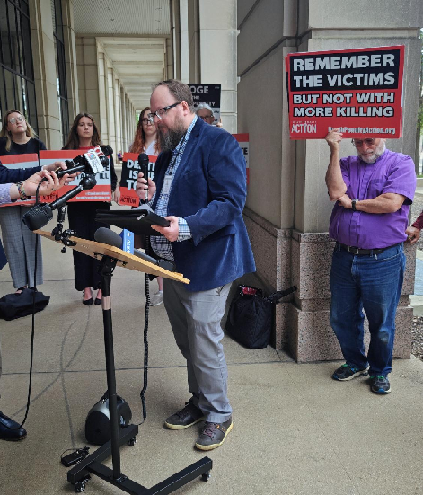
IDR Advocates for Clemency
IDR Attorney Sam Adams spoke in support of clemency for death row inmate Benjamin Ritchie at a press conference on May 12, 2025, in Indianapolis. “The evidence strongly shows that Mr. Ritchie’s disabilities played a significant role in what happened that night, and those are the very reasons why courts have decided that the death penalty should not be given to people with developmental disabilities,” Adams said.
Mr. Ritchie was executed on May 20, 2025. (P&O 2.1)
Educate
Disability Rights and Huntington's Disease
In June, Sam Adams offered a rights workshop to attendees at the 40th annual Huntington’s Disease Society of America Annual Convention in Indianapolis. IDR provides tailored presentations to state and national organizations like HDSA to ensure individuals with disabilities are empowered to advocate for themselves, and when needed, to reach out to IDR for help advocating for their rights. (P&O 2.1)
Success Stories
Public Facilities Must Provide Qualified Interpreters to Ensure Equal Access
Because of IDR’s advocacy, “Connie” was able to receive ASL interpretation when communicating with the Noblesville Police Department, allowing her to submit a complete and accurate police report. The Noblesville Police Department now has a list of certified ASL interpreters available when residents request an interpreter. (P&O 2.1, 3.1)
 Advocates Ensure Safety for Young Client
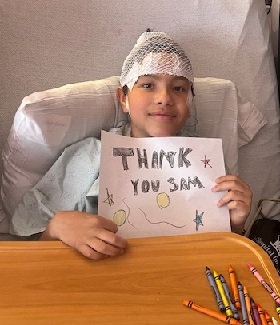
Sam Adams and Michelle Reynolds advocated on behalf of a young client and his family to ensure their home was safe and accessible for him.
Because of IDR’s advocacy, the family was able to install a privacy fence in their backyard, allowing him to safely spend time in the backyard and fully enjoy the use of his home.
He sent Sam a drawing to show his appreciation! (P&O 2.3)
Systemic Litigation
Oral Arguments Held in Federal Lawsuit Regarding Attendant Care for Medically Fragile Children
Indiana Protection and Advocacy Services Commission, et al. v. Indiana Family and Social Services Administration, et al. (1:24-cv-833-TWP-TAB; U.S. District Court, Southern District of Indiana)
This lawsuit was filed by IPAS on behalf of children with complex medical needs who are on the Health and Wellness Waiver (f/k/a Aged and Disabled Waiver) and two individual children alleging that FSSA fails to provide necessary medical services in the home/community, and that FSSA’s decision to end the ability of parents/guardians to provide paid attendant care services to such children violated the children’s rights under the Medicaid statutes and placed children at serious risk of institutionalization, in violation of the Americans with Disabilities Act, as interpreted by Olmstead.
The district court granted a preliminary injunction to the individual children, requiring FSSA to (1) undertake efforts to find in-home nursing services for the children; (2) report on its efforts to find in-home nursing services; and (3) allow the children’s mothers to continue providing paid attendant care services until in-home nursing services are secured. An appeal has been filed with the Seventh Circuit concerning the grant of the preliminary injunction. Briefing is complete and oral argument was held on April 8, 2025. The district court has scheduled a settlement conference for July 14, 2025. (P&O 2.3)
Education Team
Advocate
Advocacy Helps Student With Disabilities Stay in School After Expulsion Threat
When “Chase,” an elementary student with developmental disabilities, was threatened with expulsion, his parents turned to IDR for help. A school review had wrongly concluded that Chase’s behavior was not related to his disability, paving the way for suspension. With support from Jim Hutton and Shari Stites, the family entered mediation with the school. Thanks to IDR’s advocacy, the school reversed its decision, acknowledged the behavior was a manifestation of Chase’s disability, and agreed not to suspend him. New accommodations added to his Individualized Education Program (IEP) will ensure he receives the support he needs while he is at school. This case underscores the vital role IDR plays in protecting the rights of students with disabilities.(P&O 2.1)
Educate
IDR Resources Support Students and Parents
In May, Jim Hutton presented an overview of IDR services and special education laws to a group of 25 parents, educators, administrators, and other stakeholders at IN*SOURCE. One attendee praised IDR’s Intake Team for their helpfulness and skill in connecting people to resources. (P&O 2.1, 3.1)
Success Story
 Parent Praises the Work of IDR Advocates
After IDR helped her navigate her son’s IEP process and ensure he has the best chance to learn, a parent took to social media to thank advocates Gary Kloczkowski and Carmen Ledezma for helping her family advocate for her son’s rights at school. (P&O 2.1)
Employment Team
Advocate
Client Assistance Program (CAP) Cases Grew in Q3
While the President’s proposed 2026 federal budget does not include separate funding for the CAP program, the need to assist individuals with disabilities in understanding and accessing VR and employment services remains. The Employment Team opened 13 CAP cases in Q3. This is the same number of cases opened in Q1 and Q2 combined. The total number of CAP cases opened so far in FY2025 is 29 (Q1-7; Q2-6; Q3-13; Q4 through July 31-3). (P&O 2.1, 2.2)
IDR Advocacy Results in Needed Vehicle Modification
“Curtis” needed a modification to his van. VR approved the modification but refused Curtis’ request to use a VR vendor in Kentucky. Thanks to IDR’s advocacy, Curtis was allowed to use the Kentucky vendor, and his van was successfully modified, allowing Curtis to access transportation and supporting his employment. (P&O 2.2)
Educate
Individuals Experiencing Blindness/Low Vision Learn to Access Reasonable Accommodations
Zaida Maldonado-Prather presented at Bosma Enterprises, to a group of employment-seeking individuals, who are blind or experiencing vision loss. Zaida’s presentation focused on employment rights, including requesting reasonable accommodation from an employer. (P&O 2.2)
 Partnership Ensures Young Adults with Disabilities Know How to Access IDR Services
Michelle Wickham provided an overview of IDR services to 20 young adults and their family members, at a Family Employment Awareness Training (FEAT) in May. IDR will join a series of FEAT sessions being held across Indiana throughout 2025. FEAT is provided by the Center on Community Living and Careers at Indiana Institute on Disability and Community. (P&O 2.1, 2.2)
Success Stories
 IDR Advocacy Secures Reinstatement for Worker with Disabilities After New Owner Excludes Him
“Clayton,” an individual with an intellectual disability, contacted IDR for help after the store he worked at for 25 years suddenly stopped assigning him shifts. The store was bought by new owners, who failed to recognize Clayton’s ability to perform modified job duties. IDR helped Clayton navigate the employer’s internal discrimination process and request reinstatement with reasonable accommodations. Thanks to IDR’s advocacy, Clayton was reinstated, and back on the schedule. Clayton and his guardian expressed gratitude for IDR’s guidance, which ensured his right to work with dignity and support was upheld. (P&O 2.2)
IDR Empowers Worker to Challenge Disability Discrimination, Achieves Settlement
IDR offered technical assistance to “Corey” so she could return to her job with a reasonable accommodation (RA) in place. When self-advocacy was unsuccessful, IDR assisted Corey in filing a discrimination complaint under Title I of the ADA, with the EEOC, which resulted in a settlement between her and the employer. (P&O 2.1)
Health Care Team
Monitor and Investigate
Participation in Mortality Review Committee Helps IDR Identify Systemic Issues and Hold Systems Accountable for Rights Violations Including Abuse and Neglect
IDR Attorney John Heinz met with the BDS Mortality Review Committee to review reports of recent deaths of individuals receiving BDS services. This work fulfills IDR’s priority to investigate and monitor settings where people with disabilities are being served, including facilities, for rights violations, including instances of abuse, neglect, or exploitation. (P&O 1.1)
Advocate
Ensuring Advocacy in Healthcare Decision-Making
“Cameron” needed support with health care decisions but did not need a guardianship. IDR advocated for Cameron and was able to help him appoint a health care representative (HCR) to assist him in making health-related decisions. The HCR acts as an advocate for Cameron and makes decisions that align with his wishes, values and best interests. Access IDR’s free, downloadable HCR form here. (P&O 2.1)
Self-Determination Team
Monitor
IDR Supports Court Reform Effort to Improve Guardianship Monitoring
Melissa Keyes and Justin Schrock will serve as State Advisory Board members for a Court Monitoring Pilot Project (CMPP) being led by the Indiana Office of Adult Guardianship. The goal of the project is to help guardianship courts improve monitoring processes by developing organized, effective, and responsive methods to identify problematic guardianships and cases in which less restrictive alternatives to guardianship are appropriate. (P&O 2.4)
Advocate
 Financial Exploitation Investigation Results in Admission of Mismanagement and Restitution
“Chuck,” an individual with traumatic brain injury, needed help to challenge the final accounting submitted by his former guardian. IDR’s legal advocacy resulted in the guardian paying for forensic review of management of Chuck’s estate, which uncovered tens of thousands of dollars of missing funds. The Court ordered the guardian to pay restitution to the estate and admit to mismanagement of Chuck’s finances. Thanks to IDR, this case of financial exploitation was resolved. (P&O 2.4)
Educate
Staff Engage at Adult Guardianship Symposium
Melissa Keyes and Justin Schrock attended the Indiana Adult Guardianship Symposium, which took place in-person for the first time since 2019. IDR also participated in the symposium as an exhibitor and shared information with 150 attendees regarding IDR’s services and alternatives to guardianship. (P&O 2.4, 3.2)
Supported Decision-Making Training Offered to Students Preparing for Adulthood
In April, Tash Crespo presented to students at the Crown Point Transition Fair. Tash informed students, ages 14-21, about their rights to self-determination and offered families strategies for implementing Supported Decision-Making. (P&O 2.4, 3.1)
Technical Assistance
Agencies Seek Guidance From IDR
This quarter, Justin Schrock offered technical assistance to 12 organizations, state agencies, and other stakeholders. In FY2025, IDR has provided technical assistance on supported decision-making (SDM) and less-restrictive alternatives to guardianship to 33 organizations (9 in Q1, 12 in Q2, and 12 in Q3). IDR has offered technical assistance at least 115 times to stakeholders, many of whom regularly engage IDR for support. IDR's leadership in this area is needed now more than ever to continue the momentum toward self-determination. (P&O 2.4, 3.2)
Policy & Special Projects Team
Legislative Advocacy
IDR Recommends an Assisted Living Facility No Longer Be Classified as a Home and Community Based Setting (HCBS) Provider
On May 22, IDR submitted public comments about the heightened scrutiny review of an assisted living facility. After reviewing the facility’s heightened scrutiny evidence packet and other publicly available information (such as Google Maps and the facility’s website), IDR found numerous potential violations of the federal HCBS Settings Rule. For that reason, IDR recommended that the facility not continue to be categorized as an HCBS provider. (P&O 2.3)
IDR Offers Feedback to BDS Regarding Proposed Definition of “Extraordinary Care”
On June 13, IDR responded to BDS’s request for feedback regarding its proposed definition of “extraordinary care.” IDR staff and interns noted that BDS’s definition was too vague to be meaningful to HCBS Waiver participants and their families and recommended that BDS further define unclear components. IDR’s comments also offered additional circumstances in which a participant almost certainly has extraordinary care needs and suggested that BDS add them to its final definition. (P&O 2.3)
Advocate
 Advocacy Needed to Protect Affordable Transit for Riders with Disabilities
Emily Munson continues to chair the Indianapolis Mayor’s Disability Advisory Council (MAC-D), which in June, joined other advocates in opposition to IndyGo’s proposed fare increase. If passed, a round-trip IndyGo Access ride could cost up to $30. Meanwhile, IndyGo Access riders are denied the perks and discounts available to fixed-route bus riders. This coordinated advocacy underscores IDR’s ongoing commitment to equitable access and its role in challenging policies that disadvantage the disability community. (P&O 3.2)
Voting
Educate
Preparing to Vote
In an ongoing partnership with Self-Advocates of Indiana, IDR will provide voter registration support at the 2025 SAI Picnic in September. Last year, IDR assisted 10 attendees with updating their voter registration or registering to vote for the first time. (P&O 2.6)
Education & Outreach
Educate
 IDR Empowers Self-Advocates and Informs Service Providers and Stakeholders
Staff offered seven rights presentations to 265 self-advocates, service providers, and other stakeholders this quarter. Topics include education, employment, self-determination, and abuse and neglect prevention. Additionally, staff provided resources and outreach at three events. (P&O 3.1, 3.2)
Press
IDR Featured in Five News Stories
Members of the media from local and national stations contacted IDR six times during this quarter, seeking information for their audiences. Select stories are featured below. (P&O 3.1)
Hoosiers with Mobility Disabilities Often Face Frustration – Rather Than Access – at Historic Sites
ABC 57, Brianna Clark, May 13, 2025 - Too often, Hoosiers with mobility disabilities face frustration – rather than access – at historic sites. This ABC57 story features a former White House aide for disability policy, Emily Voorde, trying to access a South Bend courthouse. IDR Senior Attorney Sam Adams agrees that “having to go through a labyrinth is not as accessible, as useable, to people with disabilities.” Improving access benefits the entire community, he added. “For most people, an accessibility need is not a matter of if it will be needed, but when.” Watch Access to Justice. (P&O 3.1, 3.2)
External Oversight Ensures Accountability and Protects Individuals Receiving Services
WRTV, Kara Kenney, May 19, 2025 - The article examines the years-long lack of external oversight of Indiana’s mental health programs. On June 30, 2022, the State’s contract with the organization that had served as Indiana’s Mental Health Ombudsman expired and no successor organization has been awarded a contract to perform that work, leaving Hoosiers with mental health conditions without an important resource. The piece shares the lived experience of Hoosiers with disabilities and the expertise of IDR Executive Director Melissa Keyes. “There’s so much need for accountability,” Keyes said. Read "A big gap: Indiana lacks mental health oversight office despite law requiring it." (P&O 1.1, 3.1)
Proposed Federal Funding Cuts Threaten IDR's PAIMI Program
Side Effects, Benjamin Thorp, July 18, 2025 - IDR has a proven track record of investigating the abuse, neglect, and exploitation of individuals with disabilities. Proposed federal budget cuts threaten this important work. The proposed drop in funding for the Protection and Advocacy for Individuals with Mental Illness (PAIMI) program would cut funding from $644,339 to $230,610 and drastically reduce IDR's ability to investigate and advocate for people with mental illness, said Executive Director Melissa Keyes. The proposed 2026 budget "will not be enough to investigate alleged instances of abuse or bring about systemic changes through class action lawsuits and other mechanisms," the article reports. Read Program to protect mentally ill from abuse is slated for cuts. Experts are worried. (P&O 1.1, 3.1)
Supplemental Information
IDR Staff
Current Grant Programs
- CAP – Client Assistance Program
- PAAT – Protection & Advocacy for Obtaining Assistive Technology
- PABSS – Protection & Advocacy for Beneficiaries of Social Security
- PADD – Protection & Advocacy for Persons with Developmental Disabilities
- PAIMI – Protection & Advocacy for Individuals with Mental Illness
- PAIR - Protection & Advocacy for Individual Rights
- PATBI - Protection & Advocacy for Persons with Traumatic Brain Injury
- PAVA - Protection & Advocacy for Voting Access
State Hospitals
- EPCC – Evansville Psychiatric Children’s Center
- ESH – Evansville State Hospital
- LSH - Logansport State Hospital
- MSH – Madison State Hospital
- NDI - NeuroDiagnostic Institute
- RSH – Richmond State Hospital