Quarterly Report FY 2025, Quarter 2
January 1 – March 31, 2025
Prepared for
Mental Health Advisory Council (MHAC) Meeting on May 14, 2025
Indiana Protection and Advocacy Services (IPAS) Commission Meeting on May 16, 2025
IDR's Mission: To uphold, promote, and advance the rights of individuals with disabilities
through empowerment and advocacy to achieve a more equitable society.
Table of Contents
Executive Director's Note
The IDR team has worked hard this quarter to continue providing outstanding legal advocacy to people with disabilities despite the multiple shake-ups and uncertainty with the transition to a new state and federal administration. We have been monitoring the changes to better understand how new executive orders, policy priorities, and budget considerations will impact not only our work, but the programs people with disabilities rely on to live in their communities. IDR values the meaningful inclusion of people with disabilities and those with lived experience to lead and drive policy that impacts their lives. We value the multiple identities that people have. We prioritize people with disabilities getting the individualized services they need. We value civil rights and human dignity. While administrations may change, our priorities and values will not. We will keep moving forward the best we are able.
One of the major changes being proposed and carried out at the federal level is the restructuring of the Health and Human Services Administration (HHS), including the elimination of the Administration on Community Living (ACL). ACL was created in 2012 to bring together the many siloed services for people with disabilities and older adults. The result, while not perfect, allowed for efficiency, innovation, and better outcomes. The move to dismantle ACL and eliminate or disperse vital programs under its umbrella will have devastating consequences.
Add to this monumental shift, a significant reduction in federal workers and a state budget deficit projection and the result will be little oversight and less focus on the needs of people with disabilities. The situation is dire. People will be cut off from vital services. People will end up in institutions. People will die. I say this not as hyperbole, but to stress the great importance these programs, working in conjunction, have on the lives of so many people. The system is not perfect. As with any bureaucracy, especially one that deals with the lives of human beings, it is messy, often inefficient, sometimes illogical. But rather than engaging with the community and having meaningful conversations about how to make the system better, the solution was to take a hatchet and blindly chop away at the delicate lattice of supports and services that people have crafted to enable them to live, work, and play in their communities. It is hard to know what circumstances we will find ourselves in this time next year. But to those who rely on our services, IDR is committed to you, and we will remain focused on our mission to promote and protect the rights of people with disabilities.
Team Updates
Abuse, Neglect, & Discharge Team
Monitor and Investigate
 Investigation Restores Person with a Disability to Community Living
IDR investigators revealed serious lapses in care by residential provider staff, including their failure to implement “Barbara’s” Behavior Support Plan (BSP) during a June 2024 incident. Thanks to IDR’s thorough advocacy, the incident was addressed, and Barbara regained her place in a supportive community-based setting. (P&O 1.1)
Advocate
Involuntary Discharge Threat Rescinded
“Bella” resides at an assisted living facility. In connection with some alleged incidents at the facility, staff recommended Bella be placed in an inpatient mental health treatment facility. Bella’s guardian contacted IDR for help. IDR conducted fact-finding and prepared for a hearing, but thanks to IDR's advocacy, shortly before the hearing, the facility rescinded the notice of involuntary discharge, ensuring Bella can stay in her current home. (P&O 1.1, 2.1)
Educate
Driving Change with Insights on Private Secure Facilities
In February 2025, Sam Adams and Tina Frayer presented outcomes of the PSF project to 108 attendees at the Indiana Public Defenders Council. A public defender praised the presentation for helping guide arguments in juvenile cases where probation officers favor residential placements. A guardian ad litem highlighted its value in assessing facility impacts on ACES scores when making recommendations for children. Attendees appreciated the critical accountability role IDR provides for their clients. "I am grateful for the invaluable accountability mechanism IDR can provide for our clients.” (P&O 1.1, 3.1)
 Advancing Children's Rights at NAMI Summit
In March 2025, Tina Frayer and Natasha Henry presented at the NAMI Mental Health and Criminal Justice Summit, addressing 20 professionals on the rights of children in residential facilities and the value of IDR’s Know Your Rights coloring book. The book’s engaging visuals and clear language inspired one manager to integrate it into staff orientation, while another attendee praised the session as the best at the conference. IDR’s advocacy is driving meaningful change in residential care practices. Click the link above or scan the QR code to the right to access the coloring book. (P&O 1.1, 3.1)
Success Story
IDR Investigation Cited in National Report
The Private Equity Stakeholder Project issued a report describing the poorer quality of care of individuals with disabilities being cared for by facilities owned by some private equity businesses. The report, which cites IDR’s white paper, Slipping Through the Safety Net: How Indiana’s Disability Service System Failed One Client and Jeopardizes Others , illustrates how these facilities are compromising the quality of care they provide, resulting in negative outcomes for those they serve. The report praises IDR for outstanding advocacy and “for the tremendous work they do.”
This report was featured in the Washington Post on March 18. (P&O 1.1)
Monitoring Team
Monitor and Investigate
IDR Conducted 26 monitoring visits at 11 facilities this quarter. (P&O 1.1, 2.1)
Success Story
Plain-Language Rights Resource Will Empower Patients
During monitoring visits, advocates gathered valuable feedback from patients on a draft version of IDR’s upcoming plain-language rights resource. Fourteen patients found the draft engaging and useful while three others were so impressed they asked to keep the draft copy! Scheduled for publication soon, this resource aims to enhance patients’ understanding about their rights and give them the tools they need to advocate for themselves. (P&O 3.1)
Rep Payee Team
Monitor and Investigate
Protecting Beneficiaries Drives Rep Payee Review
IDR started 31 new cases, had 39 cases in progress, and completed 20 cases this quarter. This work upholds IDR’s mission to investigate rights violations in facilities and aligns with the Strengthening Protections for Social Security Beneficiaries Act of 2018, reinforcing critical safeguards for Social Security recipients. (P&O 1.1)
IDR Completed 134 Appointments
These included payee appointments, beneficiary appointments, legal guardian appointments and third-party appointments. (P&O 1.1)
Success Story
Rep Payee Review Team Achieves Impressive Case Completion Rate
With 66% of the Representative Payee grant year completed, IDR has successfully closed 65% of assigned cases, reflecting the dedication and efficiency of the Rep Payee team. (P&O 1.1)
Civil Rights Team
Advocate
 IDR Supports Self-Advocate's Pursuit of Accessible Housing
Due to his disability, “Bill” needed to move from an upper floor apartment to one on ground level. His landlord threatened a fee to provide this reasonable accommodation (RA). IDR supported Bill’s efforts, and the landlord agreed to the RA with no fee. Bill’s lease was renewed, and he moved into a ground floor apartment that met his accessibility needs. (P&O 2.1)
Educate
Educating Individuals to Protect Fair Housing
When "Bree" needed her caregiver to stay with her in her HUD apartment, the landlord requested a doctor’s note per regulations. IDR guided Bree in securing the necessary documentation, ensuring she could access vital care and maintain her independence. (P&O 2.1)
Success Story
Ensuring Access Through Reasonable Accommodation
When "Bev" was initially denied the use of her walker during a visit to an inmate, Indiana Department of Corrections (IDOC) staff offered a wheelchair as an alternative but refused to assist her with it. IDR attorneys stepped in, collaborating with IDOC to secure Bev’s right to use her walker, provided it underwent an inspection. Additionally, IDOC staff received retraining to ensure they offer proper support and accommodations to visitors with disabilities. (P&O 2.1)
Emotional Support Animals in Fair Housing
The Civil Rights team successfully resolved two important cases involving emotional support animals (ESA) this quarter. “Beatrice” faced non-renewal of her lease due to the absence of a formal accommodation request. With IDR’s guidance, she filed a Reasonable Accommodation request, prompting her landlord to renew her lease. “Betsy” was ordered to remove her emotional support dog because of its breed. IDR intervened, clarifying that the Fair Housing Act (FHA) protects tenants’ rights to keep emotional support animals, regardless of breed. Through IDR’s advocacy, both individuals retained their homes and their valued emotional support animals. Read IDR’s fact sheet for more information. (P&O 2.1, 3.1)
Litigation
 Indiana Protection and Advocacy Services Commission, et al. v. Indiana Family and Social Services Administration, et al. (1:24-cv-833-TWP-TAB; U.S. District Court, Southern District of Indiana)
IDR filed an appeal with the Seventh Circuit concerning the grant of preliminary injunction. Briefing was complete. Oral argument was held on April 8, 2025. The district court has scheduled a settlement conference in June. (P&O 2.3)
Education Team
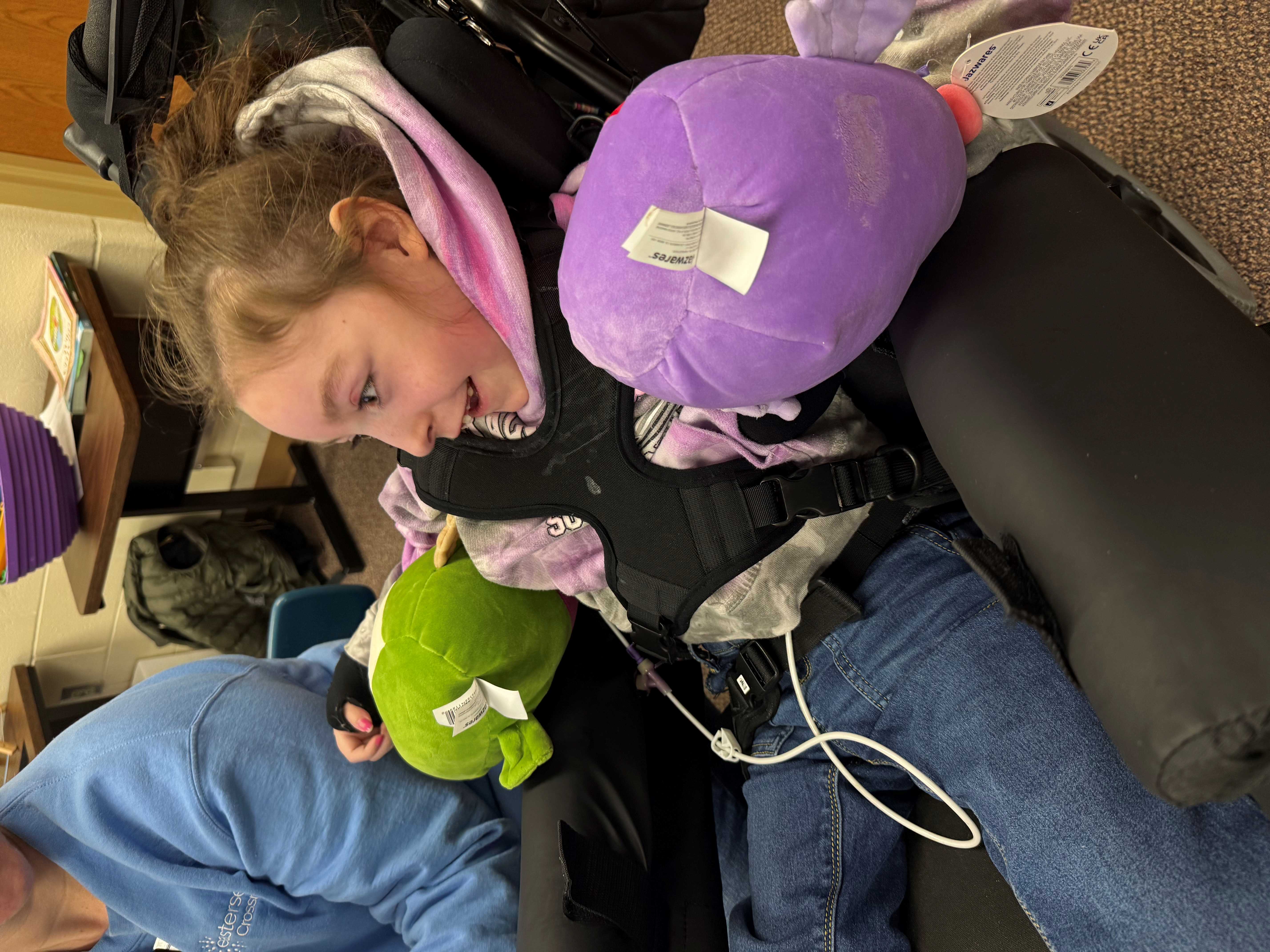 Advocate
Overcoming Barriers: Sophia's Return to School
When the school refused to admit their daughter, Sophia (pictured at left), into first grade due to her needs, her parents sought help from IDR. With the support and persistence of IDR's Education team, Sophia was finally able to attend school. Her radiant smile says it all! Sophia’s mother Jennifer, expressed her gratitude: “Without IDR, I honestly don’t know what we would have done! I know our fight is not over, but we have amazing people behind us!”. (P&O 2.1)
Success Story
IDR Advocates for Appropriate Settings for Students
“Benjamin” was splitting his school day between his home school and an alternative program. He was having more behaviors at the alternative school but very few at his home school. Thanks to IDR’s advocacy for a less restrictive environment, Benjamin now attends his home school full time. (P&O 2.1)
Employment Team
Advocate
 IDR Supports Individuals Who Want to Work
The Employment team is currently supporting 27 individuals with disabilities to ensure they can participate in the workforce. By protecting their rights, IDR empowers people with disabilities to pursue fulfilling careers and contribute their skills to society. (P&O 2.1, 2.2)
Educate
Empowering Transition-Age Students
Carmen Ledezma presented at two Family Employment Awareness Training (FEAT) sessions sponsored by IIDC. These sessions support employment-seeking transition-age students. One session was presented in English, the other in Spanish, ensuring accessibility for diverse audiences. (P&O 2.2, 3.1)
Success Story
 Empowering Employment with Assistive Technology
When "Brady" was denied trial work experiences due to concerns about his mobility, IDR stepped in to advocate for his rights. As a result, VR provided an assistive technology evaluation, revised his IPE, and supplied him with communication and GPS tools. They also committed to 50 hours of device training and discovery services to help Brady explore employment opportunities aligned with his interests and abilities. Thanks to IDR's advocacy, Brady now has the tools and support to achieve his career goals. (P&O 2.2)
Health Care Team
Monitor and Investigate
Mortality Review Committee Analyzes Death Reports
IDR Attorney John Heinz met with the BDS Mortality Review Committee to review reports of recent deaths of individuals receiving BDS services. This work fulfills IDR’s priority to investigate and monitor settings where people with disabilities are being served, including facilities, for rights violations, including instances of abuse, neglect, or exploitation. (P&O 1.1)
Advocate
IDR Fights for Home and Community-Based Services
IDR is advocating for a client whose access to the CIH Waiver was initially denied by FSSA. Although a judge ruled in favor of the client, FSSA appealed, prompting IDR to present arguments to the Indiana Court of Appeals to uphold the client’s right to Home and Community-Based Services. This case highlights systemic barriers faced by individuals with disabilities in accessing essential services that promote independence and community integration. (P&O 2.3)
Success Story
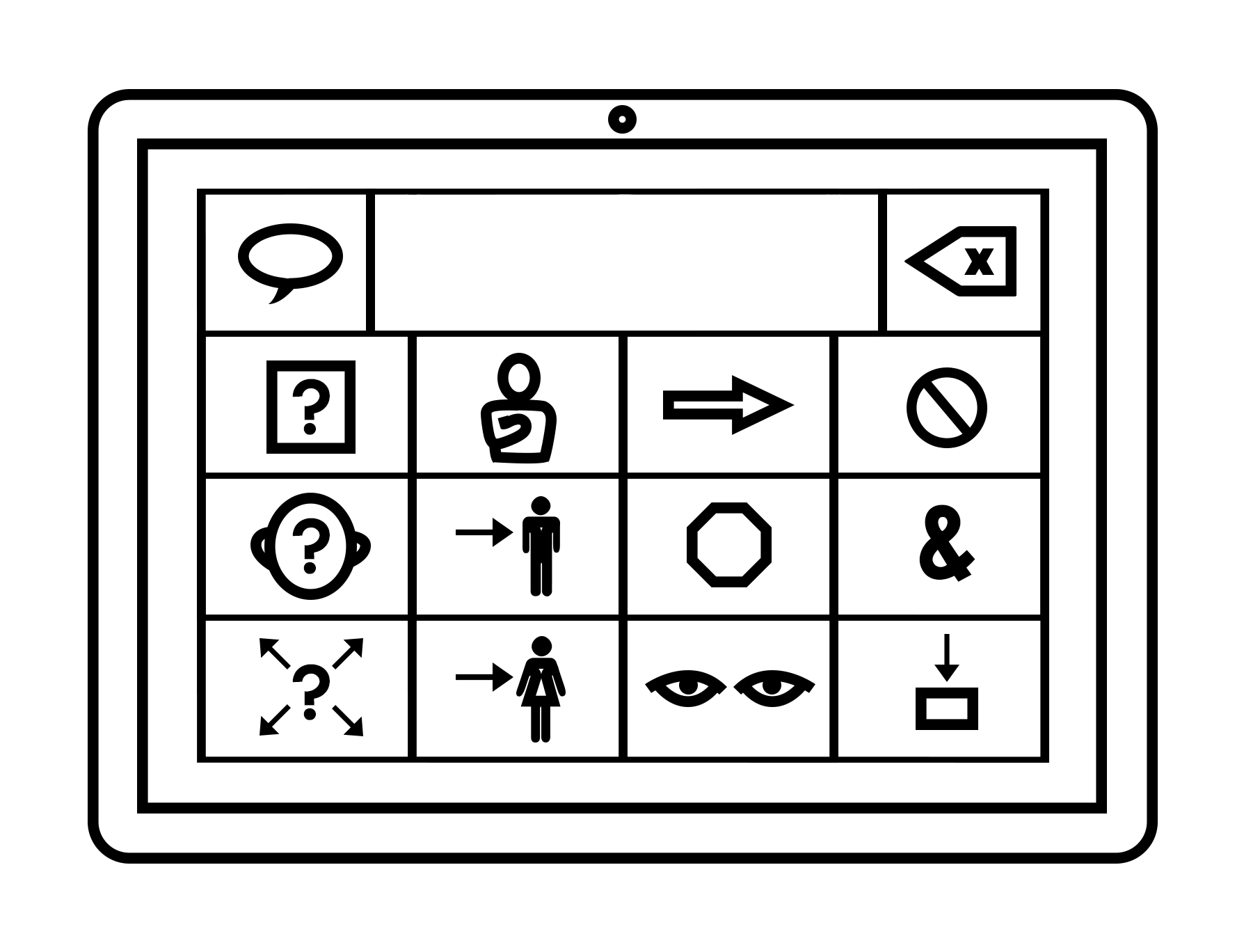 Speech Generating Device is Life Changing for a Child
“Bobbie’s” speech language pathologist recommended he utilize a speech generating device, but his insurance provider denied his prior authorization request. The family appealed to the insurance provider multiple times, to no avail. IDR agreed to represent Bobbie, and thanks to IDR's advocacy, the insurance company ultimately decided to approve the prior authorization request for the device. (P&O 2.1) [Image of SGD by allisonfors.com]
Self-Determination Team
Monitor
 IDR Systemic Review of Guardianship Cases Continues
In partnership with Indiana Legal Services, IDR has received data from the Indiana Office of Court Services regarding guardianship cased filed beginning November 2017 to assess implementation of Indiana’s Supported Decision-Making law implemented in 2019. (P&O 2.4)
Advocate
IDR Helps Create More Streamlined Method for Guardians ad Litem to Access Medicaid Application Statuses
IDR collaborated with Kids’ Voice of Indiana and FSSA to streamline how guardian ad litem volunteers inquire about Medicaid application statuses filed by third parties, improving efficiency for those they serve. (P&O 2.4)
Educate
Brain Injury and Domestic Violence Committee Holds Inaugural Meeting
Attorney Justin Shrock and the new committee clarified goals and desired outcomes, heard from brain injury survivors, and developed strategies for increasing awareness about brain injury. This group is committed to developing and sharing resources with individuals affected by brain injury. (P&O 2.4, 3.2)
Technical Assistance
IDR Empowers Legal Advocates on Supported Decision-Making and Psychiatric Advanced Directives
IDR's SDM team provided technical assistance to 12 Indiana disability service organizations, and educated attorneys about Indiana’s psychiatric advanced directives (PADs), equipping attorneys with tools to better advocate for their clients. This effort promotes informed legal advocacy, empowering individuals with severe mental illness to plan their care and protect their rights—fostering autonomy, dignity, and better access to tailored health services. (P&O 2.4, 3.2)
Success Stories
IDR Secures Support and Freedom for Client so She can Thrive
“Bernadette” was jailed for over a month due to an issue with her mother/guardian. She lost her Medicaid coverage. IDR stepped in to assist Bernadette’s public defender, who was unaware of the services and support available to Bernadette. Thanks to IDR’s support, Bernadette’s Medicaid coverage was restored, she received an evaluation, and her team developed a treatment plan to meet her needs. Bernadette was released to live with family and, with ongoing support, is now thriving and completing a pre-trial diversion program. This case underscores the importance of ensuring access to legal and social services for individuals with disabilities. By addressing systemic gaps, IDR's advocacy enables these individuals to receive appropriate care, stay with loved ones, and reintegrate into society. (P&O 2.3, 2.4)
Policy & Special Projects Team
Legislative Advocacy
 Public Comments Promote Practical Solutions
Throughout the second quarter, IDR's policy team submitted public comments regarding proposed rule changes and legislation. IDR's comments ensured the disability community is heard. (P&O 3.2)
- IDR asked DDRS to clarify vague proposed regulatory amendments about provider fines; suggested that collected fines be retained by DDRS to improve the quality of provider service; and proposed that DDRS service recipients be involved in selecting the level of fine assessed.
- IDR supported USDOL's proposed rule that would prohibit the future issuance of 14(c) certificates and phase out the 1(c) program over a three-year period. If finalized, the rule would prohibit entities from paying workers with disabilities less than minimum wage. (P&O 2.2)
- IDR shared concerns about DDRS' proposed amendments to the H&W Waiver. Specifically, IDR noted DDRS' lack of interaction with individuals with physical disabilities (e.g., DDRS' Advisory Council does not represent H&W or TBI Waiver participants).
- IDR educated General Assembly members about how an HIV decriminalization bill, if enacted, would help ensure that state statute does not violate the ADA.
IDR Excluded from Biannual Reporting Requirement
On January 30, Melissa Keyes reached out to Representative Miller, the author of House Bill 1227. As initially released, the bill would have required certain state agencies, including IDR, to provide a biannual report. After learning about IDR's unique status, the bill was amended to remove IDR from the list of reporting agencies. (P&O 2.1, 3.2)
Voting
Educate
IDR Offers Technical Assistance to Election Officials
Election officials from Ball State University's CEATS program contacted IDR for guidance on development of best practices in accessibility of elections. IDR connected researchers to organizations whose members have firsthand lived experience in voting with print or other disabilities. (P&O 2.6)
Education & Outreach
Educate
 Education and Outreach Inform and Empower
IDR reached 300 attendees through 9 presentations in English and Spanish, about IDR services and disability rights in the education and employment contexts. These presentations resulted in requests for 10 additional presentations across Indiana. (P&O 3.1, 3.2)
Press
IDR Gains Prominent Media Coverage
IDR attorneys engaged with the press 13 times during the quarter, securing mentions in three articles across four outlets and being featured in a nationwide report. (P&O 3.1)
- Proposed federal rule change reflects challenges, opportunities for Indiana's disabled workers (IBJ/Daily Journal)
- 'Utterly terrifying:' Disability advocates fear rollback of DEI under Trump, Braun (IndyStar)
Supplemental Information
IDR Staff
Current Grant Programs
- CAP – Client Assistance Program
- PAAT – Protection & Advocacy for Obtaining Assistive Technology
- PABSS – Protection & Advocacy for Beneficiaries of Social Security
- PADD – Protection & Advocacy for Persons with Developmental Disabilities
- PAIMI – Protection & Advocacy for Individuals with Mental Illness
- PAIR - Protection & Advocacy for Individual Rights
- PATBI - Protection & Advocacy for Persons with Traumatic Brain Injury
- PAVA - Protection & Advocacy for Voting Access
State Hospitals
- EPCC – Evansville Psychiatric Children’s Center
- ESH – Evansville State Hospital
- LSH - Logansport State Hospital
- MSH – Madison State Hospital
- NDI - NeuroDiagnostic Institute
- RSH – Richmond State Hospital