Program Summary
What is Beat the Heat?
To support local governments in developing and implementing heat relief strategies and response protocols, Indiana University’s Environmental Resilience Institute and OCRA launched Beat the Heat in 2021. The Beat the Heat pilot program kicked off with Richmond and Clarksville as the primary participants. Beat the Heat is also the first program of its kind in the state.
The program's goal is to assist communities in creating tangible, long-term and sustainable projects that help residents deal with an increase in hot days and the negative health impacts that come with hotter weather.
Look back at Beat The Heat Round 1
Richmond and Clarksville were the two communities were selected to spearhead the initiative, receiving funding and support to develop comprehensive heat relief strategies, hire heat relief coordinators and conduct in-depth assessments of their local heat risks and vulnerable populations.
Each community’s heat management plan covered: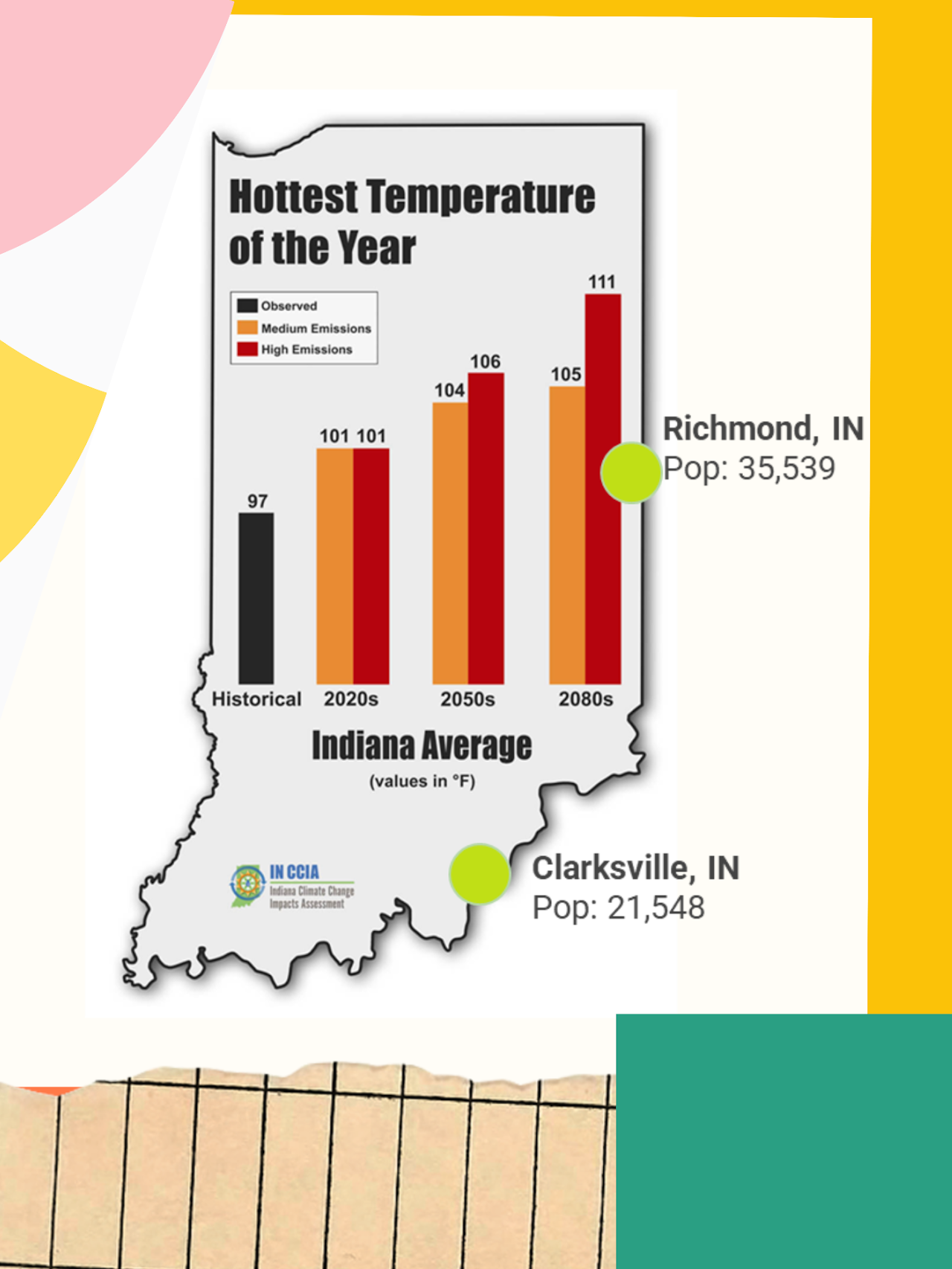
- Developing a heat wave response protocol.
- Creating an outreach strategy, including campaigns and workshops to raise awareness.
- Identifying home cooling strategies.
- Generating urban design ideas to combat heat.
- Connecting communities to resources. Examples include heat mapping campaigns by NOAA and CAPA Strategies.
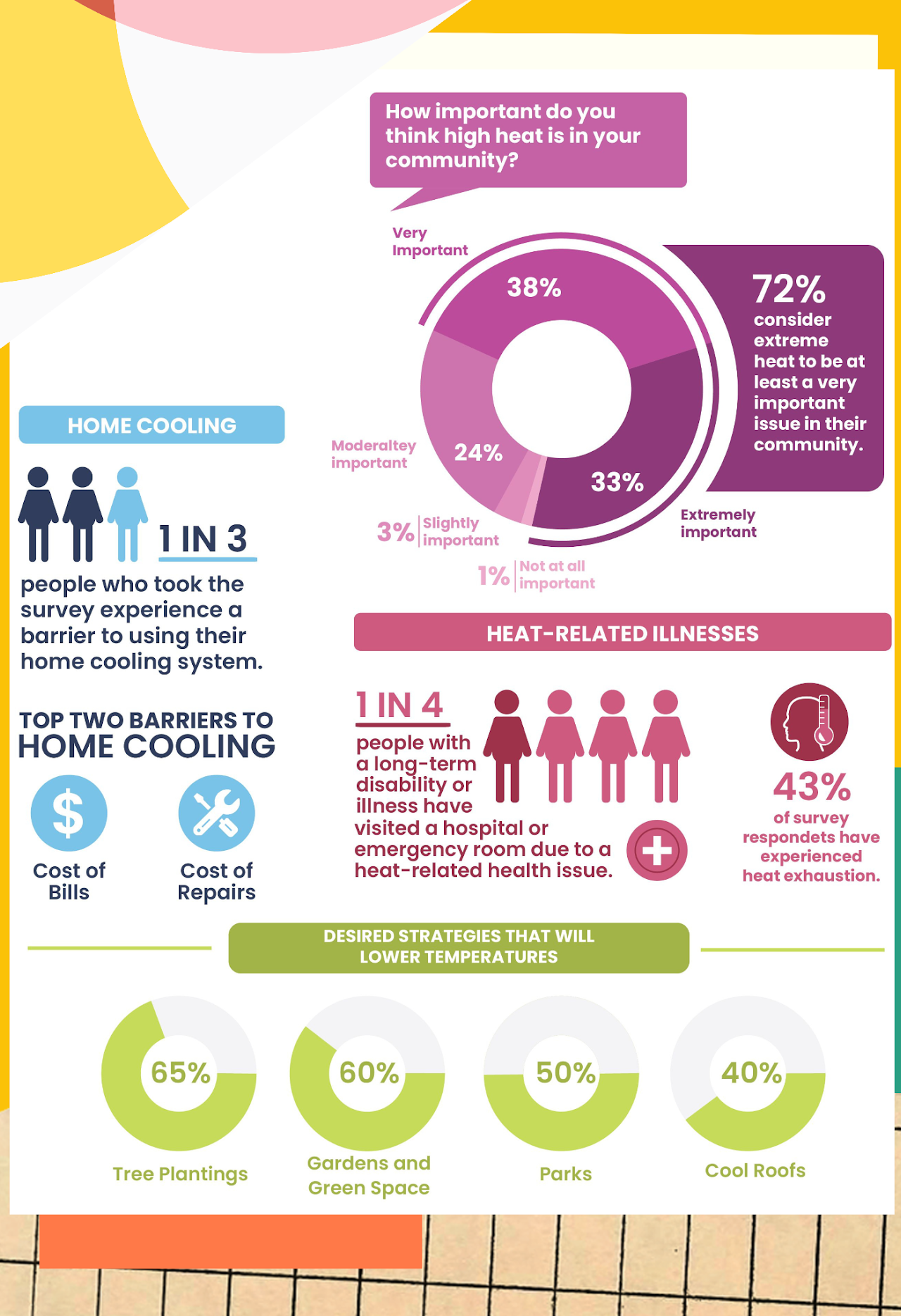 Beat The Heat Tackled Extreme Heat with Bold, Community-Driven Solutions in Richmond and Clarksville
- Launched a Heat Alert System via Clark County’s Smart 911
- Boosted Community Awareness through educational campaigns and workshops
- Improved Home Cooling by promoting and supporting energy-efficient solutions and access to air conditioning
- Promoted local cooling centers like libraries and the Salvation Army.
With additional Funding From OCRA, communities:
- Installed 43 Energy Star AC units in heat-susceptible homes, plus power bill credits for recipients in Richmond.
- Planted 45 trees across 10 species in high-risk areas, guided by Heat Vulnerable Index maps in Clarksville.
Program Overview
Beat the Heat is back with Round 2 of the two-year capacity building initiative to empower Hoosier communities to combat extreme heat and enhance local resilience.
Two selected communities receive tailored strategies, expert resources and a collaborative framework to drive impactful change. Through forming local Heat Task Forces, hosting dedicated Heat Fellows, participating in training webinars, conducting community heat surveys and implementing heat relief projects, communities can create cooler, more sustainable environments. With support to secure funding opportunities, Beat the Heat Round 2 equips local leaders to build stringer, heat-resilient communities.
The Beat the Heat program is open for applications as of Dec. 4! Applications are due by 11:59 p.m. ET on March 2, 2026.
Eligible Communities
- Non-entitlement cities or towns with a population under 50,000 can apply for this program.
- The community must submit a required Letter of Intent by the deadline to successfully apply for this program.
- The community should have the capacity to engage with OCRA, Indiana University, and a Heat Fellow throughout the program.
Program Benefits
A dedicated Heat Fellow will directly support each selected communities to lead workshops, conduct surveys, analyze data, map local temperatures and drive their heat resilience projects forward. IU ERI experts will lead three training webinars throughout the program cycle to build heat safety knowledge of the selected communities.
Heat Fellow will support selected communities to lead a Community Needs Assessment and mapping local temperature with sensor installation to identify unique heat challenges and high-risk areas. IU ERI and the Heat Fellow will support to develop heat-specific products like heat index, heat maps, urban heat and policy reviews along with a detail Heat Action Gantt chart to guide each selected community's heat resilience efforts. Additionally, support will include identifying and designing at least one heat resilience project like tree planting, cooling shelters or heat alert tools to be funded and implemented.
Indiana Resilience Funding Hub will support each selected communities to identify relevant funding opportunities to bring at least one heat resilience project to life. IU ERI experts will support each selected communities to best utilize community specific Beat The Heat data to write compelling grant applications/funding requests. Get bonus opportunity to apply for CDBG funding as a potential final funding option to address other key relief strategies.
- Establish a Heat Task Force including local leaders and stakeholders.
- Heat Relief Task Force are required to actively participate in all training webinars, heat task force workshops, and surveys.
- Host a Heat Fellow (the direct cost of the fellow will be funded by Indiana University).
- Provide beverages and food for the two in-person workshops.
- Coordinate meetings with city representatives and other key stakeholders (including communication/media specialistic, county emergency management, representatives from Public Works, the Parks Departments, and utility companies etc.) to lead the Beat The Heat campaign and to support sensor installations temperature mapping.
- Communities are responsible for funding and implementing at least one strategy by the end of the program.
- Heat Relief Task Force will be responsible for deliverables of heat management strategy implementation.
Communities must communicate early on with their chief elected official to collect a letter stating the commitment to raise funds and supporting the application submission to the program
Application Guidelines
Applications will open for submission Dec. 4 and will be due by 11:59 p.m. ET on March 2, 2026. Applications must be submitted via the Qualtrics Application Portal.
Click here to access the application portal
Applicants must fill out and submit all required information, including:
- Local government, chief elected official authorization and primary point of contact
- All 14 essay questions
- Letter of intent with narrative answers
- At least two letters of support from partnering organizations or residents
- Letter from chief elected official committing to fundraise and support program
- Proof of local match funds (if applicable), excluding bank details
Technical Assistance
Indiana University will host office hours on Dec. 10, from 1-2 p.m. ET to provide assistance and answer questions for interested applicants. Registration for these office hours is available at: Office Hours Registration.
A pre-recorded informational webinar is available that further explains this opportunity and the application process. Interested applicants can view the recording at: bit.ly/BtH-Webinar.

Indiana Office of Community & Rural Affairs