
Amblyomma maculatum
Common name: Gulf Coast tick
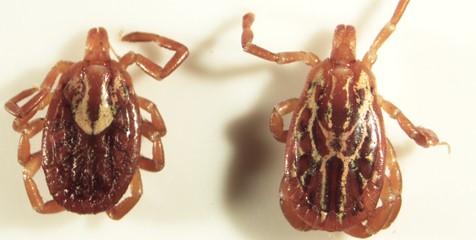
Adult female (left) and male (right) Amblyomma maculatum. Photo: Indiana Department of Health.
The Gulf Coast tick, Amblyomma maculatum, is a 3-host tick that feeds on a variety of bird and mammal hosts, including humans. Historically, Gulf Coast ticks were found only in the southeastern part of the United States, but recent collections have revealed a larger distribution, including collections of this tick in Indiana. This tick is of increasing concern due to its ability to transmit several pathogens of veterinary and medical importance, including Rickettsia parkeri, which has been found in Amblyomma maculatum ticks collected in Indiana.
- Geographic Distribution
Present mostly in southern Indiana counties. It’s widely distributed in grass prairies and coastal uplands along the Gulf of Mexico and Atlantic coast. Click here to see the geographic distribution of ticks that bite humans in the United States.
Figure 1: Known distribution of Amblyomma maculatum in Indiana, 2017-2022.

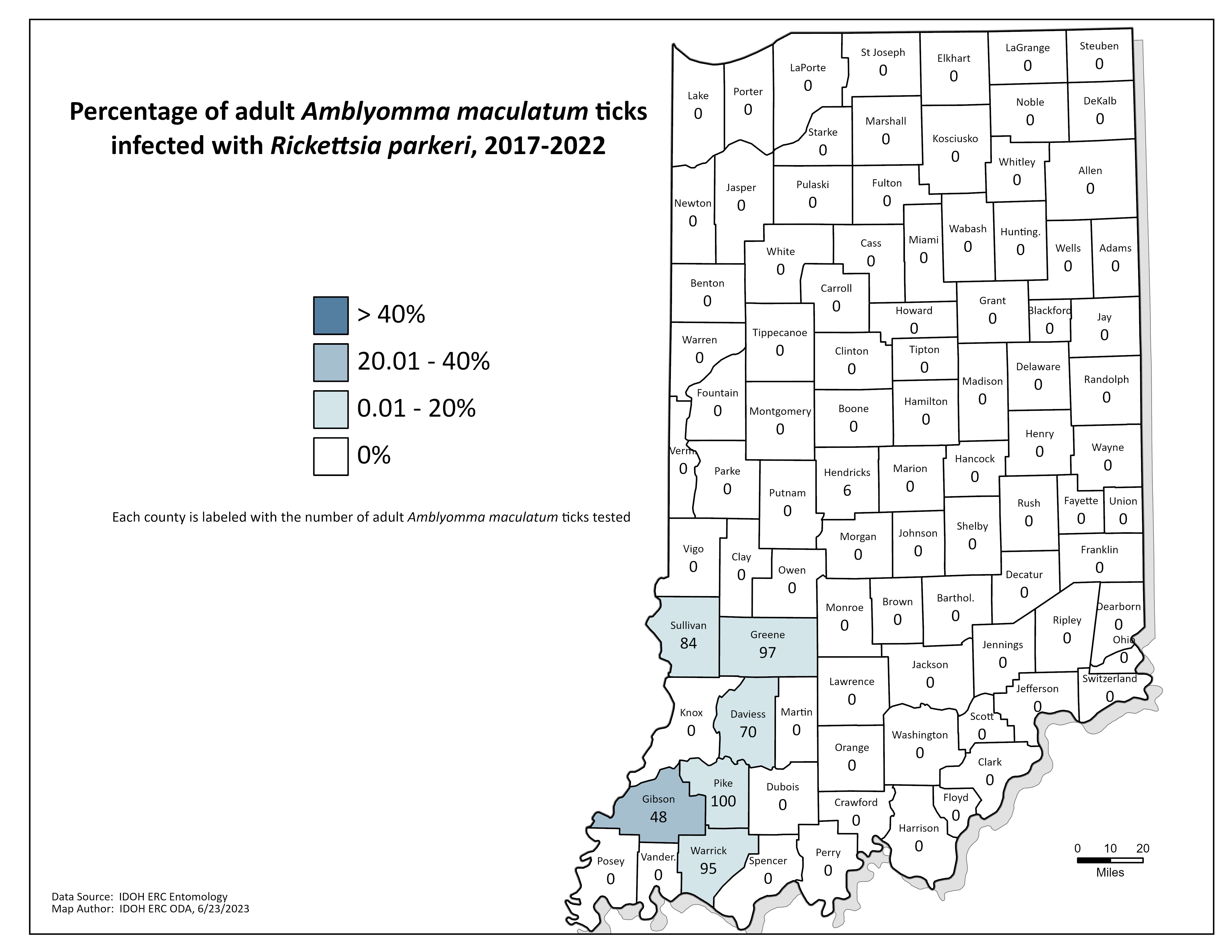
Figure 2: Percentage of adult Amblyomma maculatum ticks infected with Rickettsia parkeri in Indiana, 2017-2022.
- Life Cycle
The Gulf Coast tick life cycle consists of four stages (egg, larva, nymph and adult). These ticks are known to be aggressive feeders and can quest for suitable hosts for an extended period of time in optimal temperatures. Larvae and nymphs feed on birds and small mammals. The adults bite larger mammals and humans. The greatest risk of being bitten occurs in spring and summer.

Gulf Coast tick (Amblyomma maculatum) from left to right: larva, nymph, adult male, and adult female. Photo: Centers for Disease Control and Prevention.
- Commonly Associated Diseases
Rickettsia parkeri has been detected in Gulf Coast ticks collected in mostly southern Indiana counties. While no human cases have been reported in Indiana, R. parkeri is the causative agent for Rickettsia parkeri Rickettsiosis
More information on spotted fever group rickettsioses can be found here.
- Prevention
The best way to prevent diseases associated with Gulf Coast ticks is to avoid tick bites. Please see our tick prevention page for more information.
Please visit the Southeastern Center of Excellence in Vector-Borne Disease webpage for more information about Gulf Coast ticks.
- Images
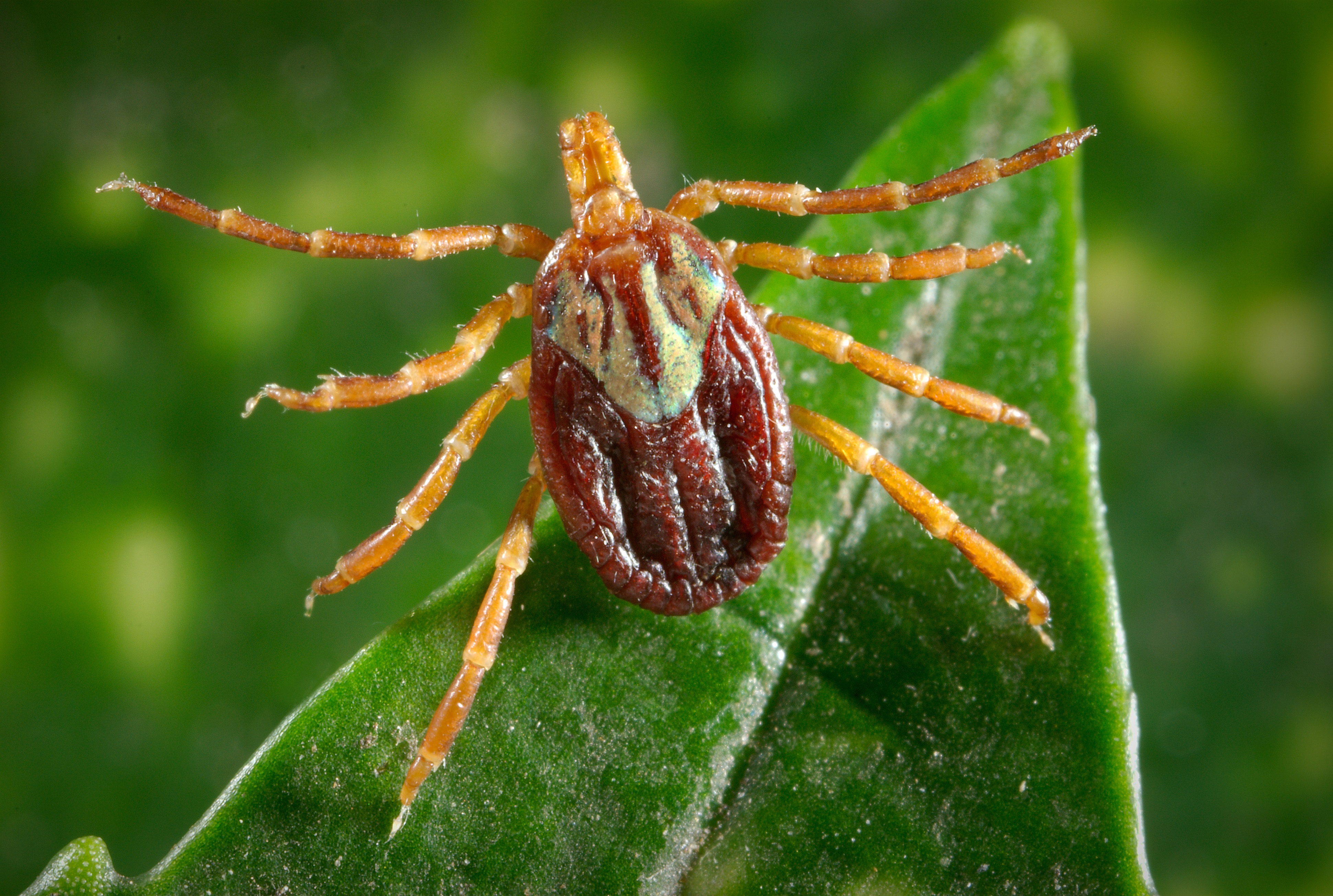
Female Gulf Coast tick (Amblyomma maculatum). Photo: Centers for Disease Control and Prevention.
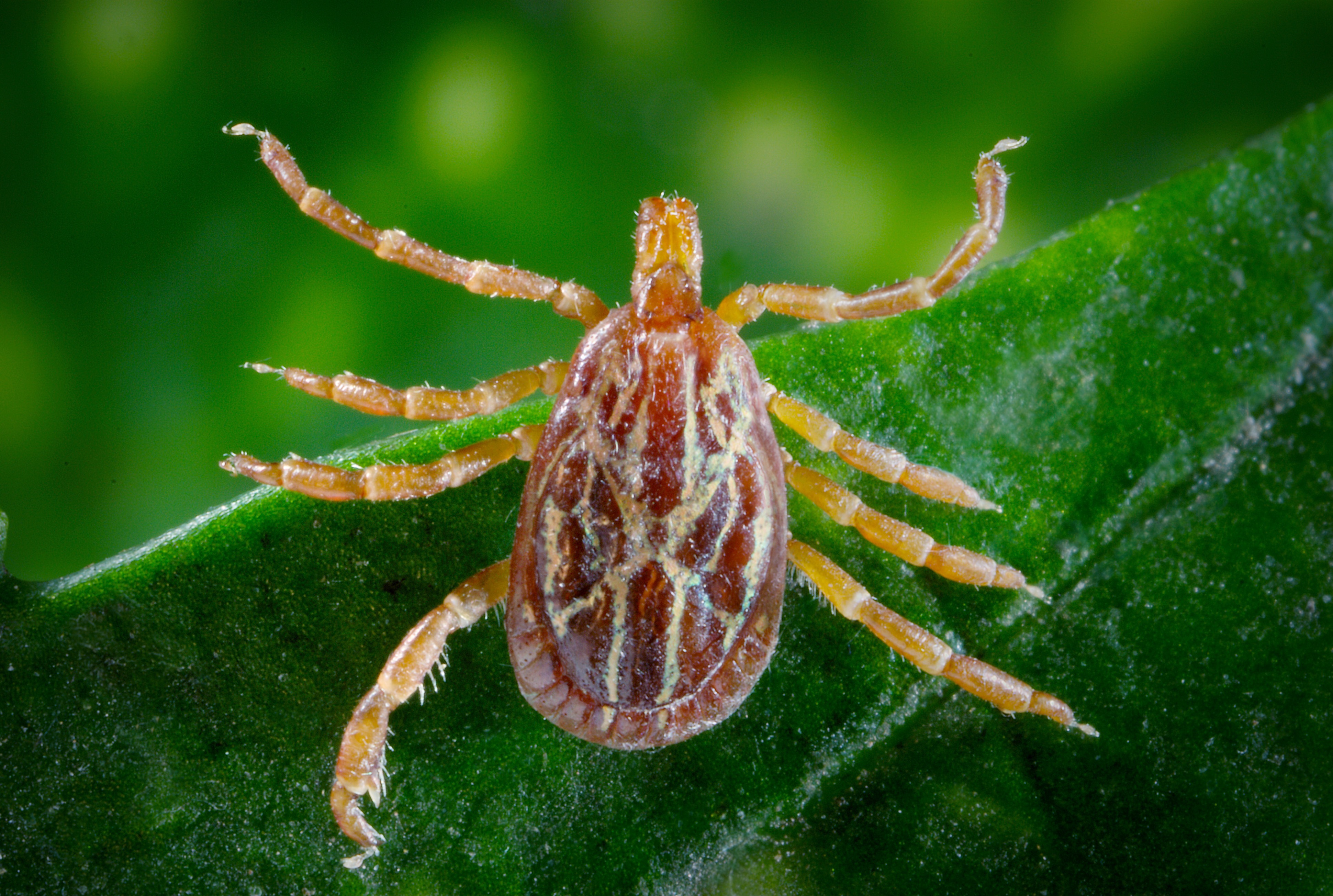
Male Gulf Coast tick (Amblyomma maculatum). Photo: Centers for Disease Control and Prevention.
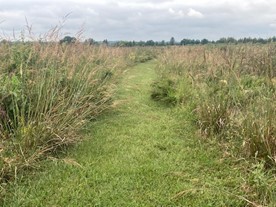
Gulf Coast tick (Amblyomma maculatum) grassland habitat. Photo: Indiana Department of Health
Page Last Updated: April 3, 2024