Sepsis
What is Sepsis?
Sepsis is the body's extreme reaction to an infection and often results in a life-threatening medical emergency. This reaction can be unpredictable and happen very quickly. Sepsis affects the whole body and can lead to tissue damage, organ failure and death if left untreated.
Sepsis is the most common serious complication of infection, and many survivors can suffer long-term complications.
Learn more about sepsis, identifying signs and symptoms, and prevention in the video below!
Sepsis is the body's extreme reaction to an infection. Bacterial infections are one of the most common causes, but fungal, parasitic and viral infections can cause sepsis as well. Sepsis cannot be diagnosed using a single test. Physicians can clinically diagnose a patient with sepsis based on signs and symptoms.
Learn more about diagnosing sepsis here.
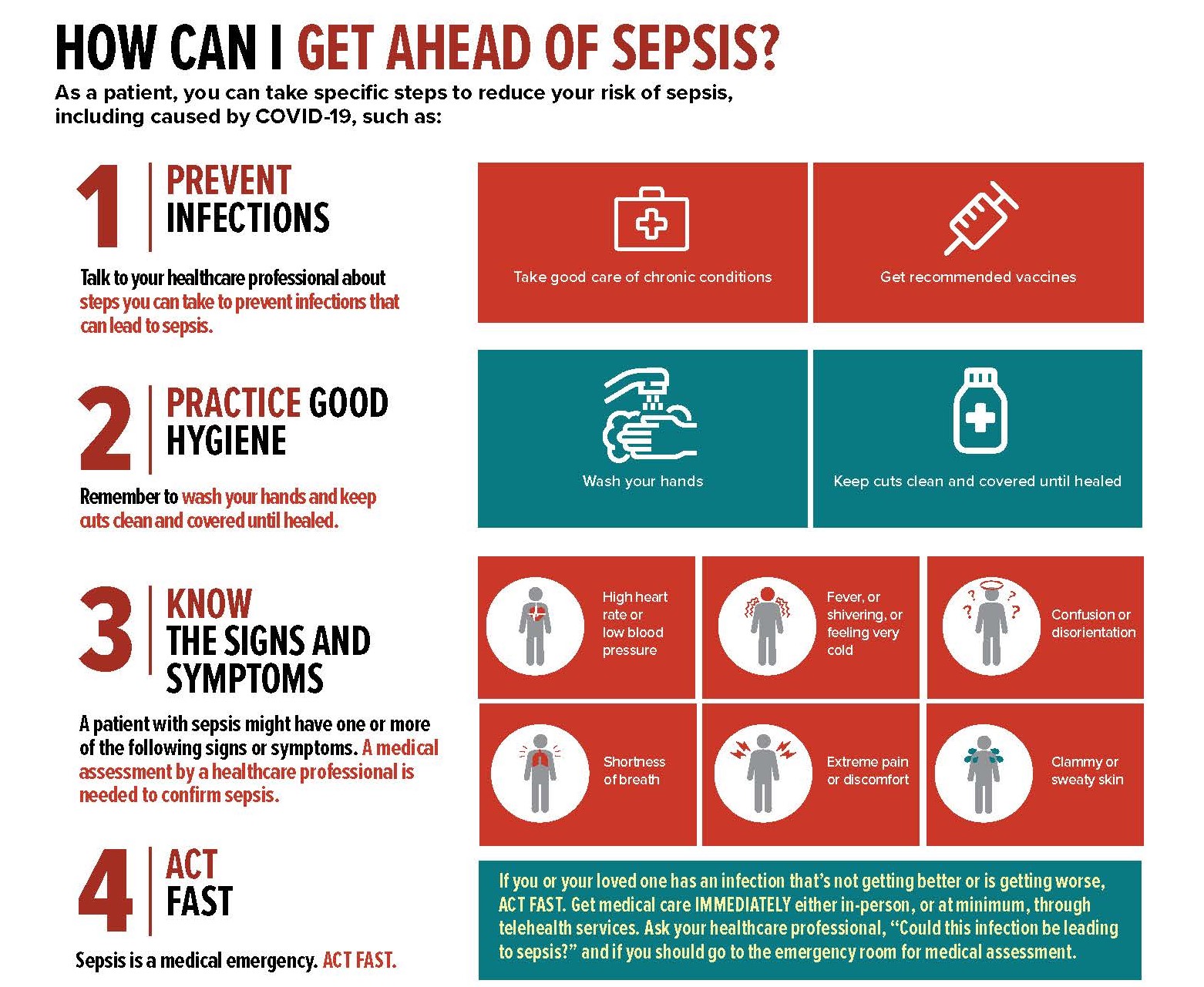
Common signs and symptoms include, but are not limited to;
- Clammy or sweaty skin
- Confusion or disorientation
- Extreme pain or discomfort
- Fever, shivering or feeling very cold
- High heart rate or weak pulse
- Shortness of breath
If you are experiencing signs or symptoms of sepsis, please seek medical attention
Anyone can develop sepsis, but the following groups may be at higher risk for developing sepsis and experiencing complications:
- Adults 65 or older
- Children younger than one
- Women who are pregnant or postpartum
- People who survived sepsis
- People with chronic conditions, such as diabetes, lung disease, cancer and kidney disease
- People with recent severe illness, surgery or hospitalization
- People with weakened immune systems
Certain conditions may increase risk. Please click here for more information.
Treatment plans may can vary between each sepsis patient. Effective treatment can include:
- Medications to fight infection
- Increasing blood pressure to maintain blood flow to vital organs
- Oxygen therapy
- Surgery to remove damaged tissue
- Monitoring for improvement
With early diagnosis and proper treatment, many sepsis patients can make a full recovery.
Page last reviewed and updated: December 2025