Electricity powers our daily lives and is available when we need it. There is a complex system of networks and a power grid- an interconnected system- that keeps electricity flowing to our homes and businesses at any given moment, on any given day. There are many different sources of energy that, taken together, ensure reliability across Indiana and the region and that the grid maintains resource adequacy and the overall cost of electricity for Hoosiers remains affordable.
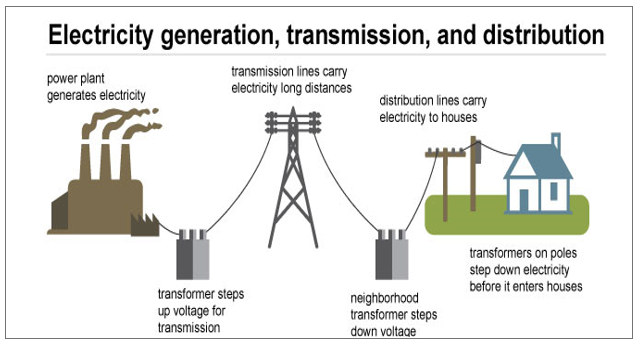
Here is a simplified and high-level illustration of how electricity is generated and moved where it is needed to Hoosier homes and businesses.
As Indiana continues to add more generation resources to its resource mix comprised of different technologies, and distribution-based and customer-owned resources are interconnected to the system, the general one-way flow of electricity as has been traditionally thought of is increasingly becoming outdated. Instead, the electric system is becoming a more complex web of interconnected resources, technologies, homes, and businesses that not only consume energy, but can also produce energy at various points on the system and modify consumption patterns to reduce energy consumption during specific periods of the day. The graphic below is an illustrative example of how the energy grid is evolving.
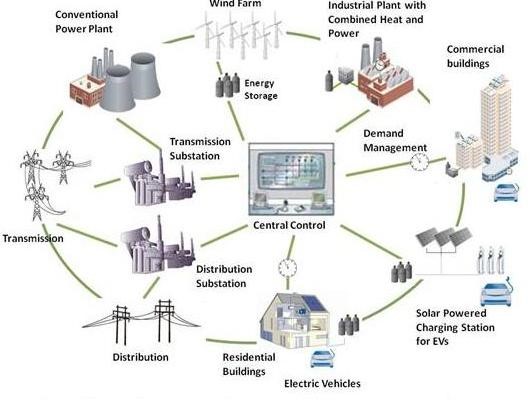
Image Source: Georgia Tech University, Climate and Energy Policy Laboratory
Indiana has a broad range of electric providers that supply, transmit and distribute electricity to end-use consumers. These utilities are unique and vary by size, geography, scale of operations, and characteristics. All of them, however, serve the public interest and ensure a safe, reliable, and affordable portfolio of electricity for consumers.
The 3 types of utilities that serve end-use consumers in Indiana include investor-owned (IOUs), rural electric membership cooperatives (REMCs) and municipally-owned utilities. Read more below.
Electricity is generated through the use of magnets and coils to produce a magnetic field. Simplistically, a magnet is moved inside a coil of wire and rotates to make (induce) electrons that move through the wires. A basic electromagnetic generator has a series of insulated coils of wire that form a stationary cylinder—called a stator—surrounding an electromagnetic shaft—called a rotor. Turning the rotor makes an electric current flow in each section of the wire coil, which becomes a separate electric conductor. The currents in the individual sections combine to form one large current. This current is the electricity that moves from generators through power lines to consumers.
Fuel resources are utilized to produce hot air, which turns a turbine that spins the rotor shaft that turns the rotor. When the rotor is turned, it converts the mechanical (kinetic) energy of the rotor to electrical energy. Different types of turbines include steam turbines, combustion (gas) turbines, hydroelectric turbines, and wind turbines.
From power plants, electricity is then transported to homes and businesses through transmission and distribution wires.
For more information, please visit the U.S. Energy Information Administration.
There are many types of energy fuel resources that make up the electric generation fuel mix in Indiana. Having a diverse fuel supply can help bolster resiliency, and can better protect consumers against fuel costs volatility for a specific fuel resource, whatever that reason may be. Here are a several examples of how energy resources work to produce electrical energy.
Coal: Coal is a black or dark brown rock consisting mainly of carbonized (converted into carbon, typically by heating or burning, or during fossilization) plant matter, found mainly in underground deposits that must be mined. Energy is created from coal through burning it to produce heat. This combustion takes place in a furnace with a boiler. The furnace heat converts water to steam, which then spins turbines, which turn a generator to produce electricity.
Natural Gas: Natural gas is a flammable gas that occurs naturally underground. Similar to coal, natural gas is burned to generate heat that boils water into steam to turn the turbines that generate electricity. Hot gases from burning the natural gas also can directly turn the turbine.
Nuclear: The primary source of energy for nuclear power is uranium. In a nuclear energy facility, heat is produced from splitting uranium atoms – a natural process called nuclear fission. As with other resources, the heat creates steam and the steam turns a turbine connected to a generator.
Hydro: Hydroelectric power uses falling water to produce electric power. Hydroelectric power plants usually have dams that block water from freely flowing on its normal path. Instead, water flows through a small, narrow passageway. As the water is forced through this narrow passage, the flow of water speeds up and is forced through a turbine, which spins as the water rushes through it. The turbine is connected to a generator shaft, which turns the generator and creates electrical current.
Wind: The blades of a wind turbine capture the energy in wind. The wind causes them to rotate (similar to blowing on a pinwheel). The rotation of the turbines is tied to a generator that produces electrical energy.

Solar: Solar energy generation begins with sunlight captured by a solar panel. You may have seen the large, often rectangular panels on the roof of a home or business or in a large group on the ground. These panels contain crystals that, when struck by sunlight, produce an electrical current.
Captured Methane: Methane gas is captured from landfills or other sources as trash decomposes. The methane rises to the top of the landfill and is collected in pipes; then it produces electricity when it is burned.
Pumped Storage: Water is pumped into a reservoir. During peak demand hours, water flows down from the plant reservoir through one or more turbines to generate electricity.
Wood Waste: Fuel derived from both liquid and solid wood wastes is used to produce electricity. Wood waste liquids come from the pulp and paper industries. Solids include railroad ties, utility poles and wood chips.

Biomass: Biomass is derived from organic materials such as scrap wood, crops and some types of waste residues. It can be used to generate heat and electricity. Biomass fuels can be solids, gases or liquids that result from living organisms or from the byproducts of human activities.
Solid Waste: Energy is produced from solid waste by burning the waste as a fuel.
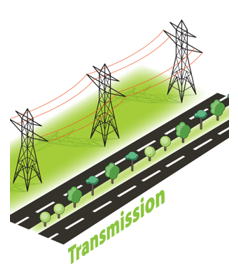
Transmission and distribution refers to different stages of transporting electricity over wires and poles from generators to a home, school or a business. The primary distinction between the two is the voltage level at which electricity moves in each stage.
After electricity has been generated, a system of electrical wires carries the electricity from the source of generation to our homes and businesses. These lines can be found overhead or sometimes underground. Combined, transmission and distribution lines make up what is commonly referred to as “the grid.” Transmission and distribution are two separate stages or systems on the grid.
Think of transmission as the interstate highway of electricity delivery. It refers to the part of electricity delivery that moves bulk (high voltage) electricity from the generation sites over long distances to substations closer to areas of demand for electricity. Consumers may recognize transmission lines as the larger, taller poles/towers carrying many wires over longer distances. Transmission lines move large amounts of power at a high voltage level – a level that is too much to be delivered directly to a home or business. Transmission lines, transformers, substations and other equipment generally have voltages of 100 kV (100,000 volts) and above.
In most cases, the energy moving through the transmission system must be reduced to lower voltage levels by electricity distributors before it can be delivered to a residence or business. Energy, specifically the voltage level, sent through transmission lines is reduced, or ”stepped down,” via transformers and sent through distribution lines, which are then connected to homes and businesses.
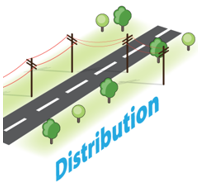
If transmission is the interstate highway of the grid, distribution is the local neighborhood and city street. It is the last leg of the delivery of electrical power from a generator to the consumer. Energy travels on the distribution system at a voltage level that can be delivered directly to a home or business. Distribution lines are the lines many people see along streets. The voltage of distribution lines – the lines many people see in their neighborhoods – is approximately 13 kV (13,000 volts); a typical household runs on 110 volts.
In addition to substations, the distribution system includes wires, poles, metering, billing, and related support systems involved in the retail side of electricity delivery.
As electric companies invest in distribution system upgrades and enhancements, they are focusing on new technologies to help them meet the increased demands of our digital society and to communicate more effectively with their customers. The increased capital expenditures are helping companies to modernize their distribution systems, maintain reliability and ensure that new resources can interconnect in a timely and affordable manner.