NAVIGATION
SETTLEMENT | PEOPLE | MAP | RESEARCH | PORTER REA | ABOUT CEMETERIES
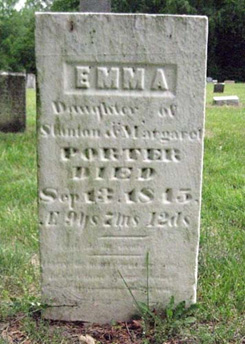
This small rural cemetery dates back to 1845. Nine-year-old Emma Porter was the first person to be buried here. The Porter Cemetery Association was formed in 1884. The Cemetery has been expanded a few times over the years. Land was purchased for Potato Creek State Park in the 1970s. It was decided to not purchase the Cemetery. The Porter Rea Cemetery Association owns, manages and maintains the Cemetery. It is still being actively used.
The Porter Rea Cemetery was not connected to one church. It has been used as a community cemetery. The black residents of the Huggart settlement were active members of this community. Some of them are buried here alongside their white neighbors. Cemeteries contain information about the people and the community. Learn more about cemeteries
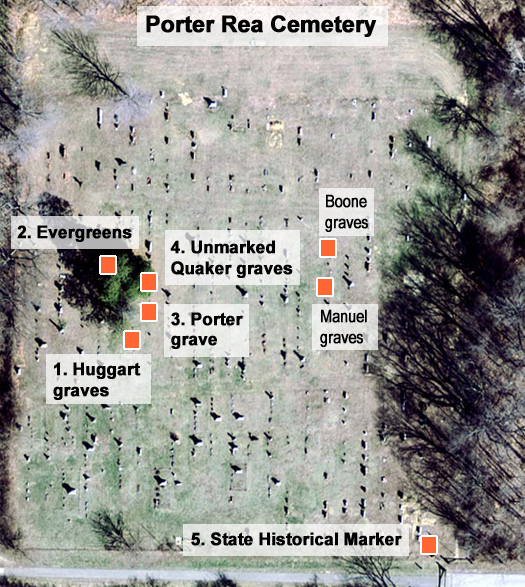
Look at this aerial photograph of Porter Rea Cemetery. Some African-American grave locations are marked. Can you find the two east west carriage lanes that were used to access the graves?
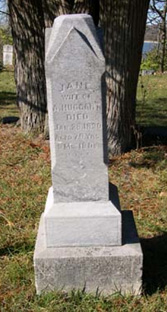
- 1. Huggart grave
This is a modified stone obelisk.
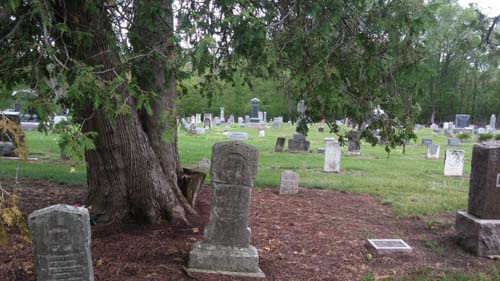
- 2. Evergreen tree
These were planted to represent eternal life. There were two cedar trees planted in the mid 1800s.
- 3. Emma Porter grave
This is the oldest burial in the cemetery. The basic tablet is a common marker for the 1800s. It is the center point of the original cemetery.
- 4. Unmarked Quakers' graves
Simple field stones were occasionally used to make a grave. They did not include inscriptions. These three just north of Porter's grave may be for Quakers that lived in the area. The Quaker religion does not believe in creating a monument to oneself.
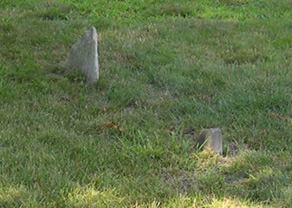
- 4. Unmarked Quakers' graves
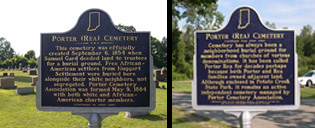
This marker was dedicated in September, 2003. It honors an integrated mid 19th century community. African-Americans and their white neighbors were buried together. Descendants and local historians helped pay for it. It is in the southeast corner of Porter Rea Cemetery.