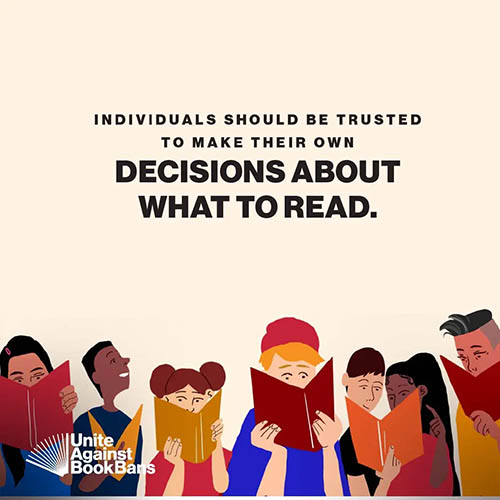
Over 70% of voters (71%) are against attempts to remove books from public libraries, with a majority of voters from all political parties sharing this opposition. (key findings from a survey conducted by Hart Research Associates and North Star Opinion Research on behalf of the American Library Association)
Book Résumés
Book Résumés assist teachers, librarians, parents, and community members in defending books against censorship. These résumés outline each book’s significance and educational value, making them easy to share with administrators, book review committees, elected officials, and board members.
Bookmark this page! With thousands of library books facing censorship, new book résumés are regularly added.
The American Library Association (ALA)
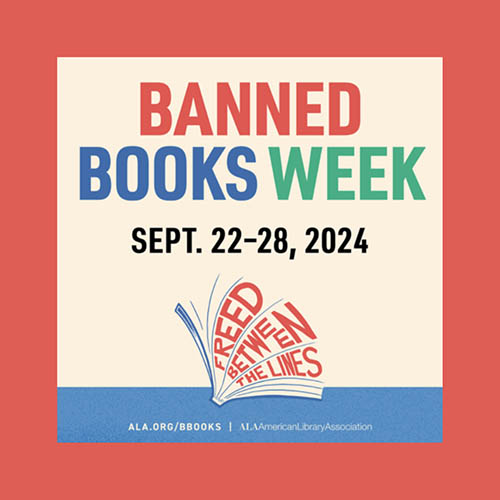
The American Library Association (ALA) gathers data on book challenges through reports submitted by library professionals and news stories published across the United States.
Free Access to Banned Books
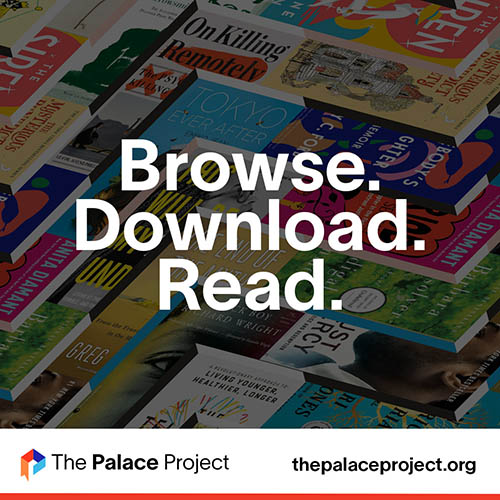
The Digital Public Library of America (DPLA) Offers Free Access to Banned Books. The DPLA has introduced The Banned Book Club to ensure all readers can access the books they wish to read. This initiative provides e-book versions of banned books to readers across the United States through the free Palace e-reader app, allowing access to titles that have been restricted in various locations.
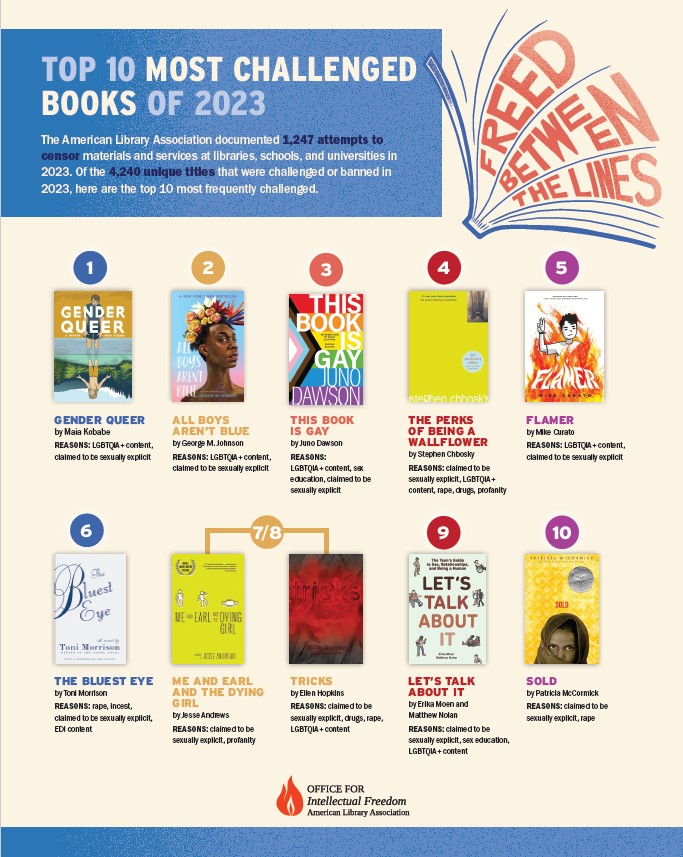 #1 “Gender Queer,” by Maia Kobabe
#2 “All Boys Aren’t Blue,” by George M. Johnson
#3 “This Book is Gay,” by Juno Dawson
#4 “The Perks of Being a Wallflower,” by Stephen Chbosky
#5 “Flamer,” by Mike Curato
#6 “The Bluest Eye,” by Toni Morrison
#7 “Tricks,” by Ellen Hopkins
#8 “Me and Earl and the Dying Girl,” by Jesse Andrews
#9 “Let’s Talk About It,” by Erika Moen and Matthew Nolan
#10 “Sold,” by Patricia McCormick
- What is Intellectual Freedom?
Intellectual freedom is the right of every individual to seek and receive information from all points of view without restriction.
Intellectual freedom is a cornerstone of democracy, ensuring all people can access diverse ideas and opinions.
- What does intellectual freedom have to do with libraries?
Libraries serve as gateways to knowledge, providing free access to information and ideas.
Libraries curate collections that represent a wide range of viewpoints, supporting informed and critical thinking.
- What about censorship?
Libraries stand against censorship, advocating for the free flow of information and resisting efforts to restrict access to materials.
When library materials are challenged, libraries follow established procedures to ensure that decisions are fair, transparent, and respect intellectual freedom.
- How do libraries support intellectual growth?
By providing access to diverse resources, libraries help individuals develop critical thinking skills and form their own opinions.
Libraries offer programs and events that promote literacy, lifelong learning, and intellectual exploration.
- How can I help support intellectual freedom?
Utilize Library Services
- Make use of the resources and services offered by your local library, showing support for its role in providing free access to information.
Participate in library events
Attend library programs and events that promote intellectual freedom and diverse viewpoints.
Join Advocacy Groups
- Become a member of organizations that advocate for intellectual freedom, such as the American Library Association (ALA).
Contact Legislators
- Reach out to local, state, and national legislators to express your support for policies that protect intellectual freedom and oppose censorship.
Educate Yourself and Others
- Stay Informed
- Keep up-to-date with current issues and challenges related to intellectual freedom.
- Spread Awareness
- Share information about intellectual freedom with friends, family, and colleagues. Use social media, blogs, and conversations to raise awareness.
Bristol Public Library Collection Development and Request for Reconsideration of Materials
Requests for reconsideration of material forms are available at the circulation desk. A digital copy will be available soon.