Why report
You can help the Indiana Division of Fish & Wildlife by submitting reports of certain mammals of interest. These mammals can potentially be seen from the comfort of your home, on your way to work, or while out biking, hiking, or camping. Compiling observations of these species can help identify local and state-wide trends in these rare or elusive mammals.
Mammals of Interest include a variety of species. Some may be nocturnal and difficult to observe, others may have no resident breeding populations but are visitors to Indiana, and the rest may be common locally but rare elsewhere in the state. The report form also includes species at risk of declining
and Species of Greatest Conservation Need.
The report form allows you to submit a photo or brief video to help document the observation. Media of the animal observed would be most useful, though DNR biologists can examine evidence left by the mammal too (tracks, scat, or other signs). Completion of this form is voluntary. Data submitted may
be shared within DNR and partners with the discretion of DNR staff. Personal information will be used to process your observation and may also be used for participation in surveys and other secondary purposes. DNR staff will only respond to reports if more information is needed.
What to report
We currently accept reports from the following species. Learn how to identify them:
- Badger
- Low to the ground and stocky
- About 15-30 pounds
- Fur on the head is black with a centered white stripe from nose to neck
- Fur on the back is grizzled black and brown, tipped in white
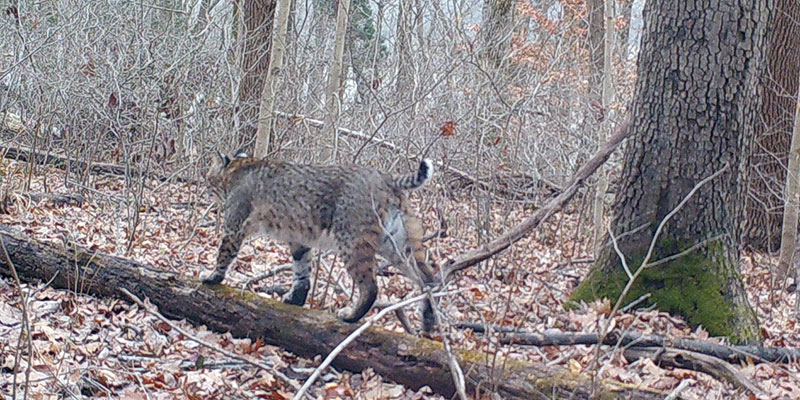
- Bobcat
- Short tail (<6 inches)
- Fur is reddish-brown or tan, above white belly
- Black marks inside legs, some may have spots throughout their coat
- White-backed, black ears
- Franklin’s ground squirrel
- Fur appears grizzled; each hair has a black base and light-tan tip
- Tail is furred but never bushy, it appears thin
- Very fast
- Prefers medium to tall grass habitats and prairies
- Gray fox
- Primarily grizzled gray fur, with reddish coloration on legs and necks, and white throats
- Distinct black stripe running down top of tail, ending in black tip
- Two black lines on muzzle between eyes and nose
- Small – 8-12 pounds
- Gray wolf
- 60-80 pounds, 5-6 feet long, 27-33 inches at shoulder
- Large feet on long legs
- Blocky, wide head with a blocky muzzle
- Ears appear small and rounded
- Mountain lion
- 80-160 pounds, 7-8 feet long, tail makes up 2-3 feet of total length
- Powerfully built feline, with strong legs and large feet
- Thick, ropy tail with a blunt tip, the tail ends with black fur
- Overall coat is tawny to golden brown
- Nine-banded armadillo
- Leathery, gray armor covers this animal’s back, sides, and head
- About the size of a house cat
- Southern flying squirrel
- Fur is grayish-brown on top, strikingly creamy-white on belly, with distinct separation
- Furred tail is horizontally flattened; wider left to right, not top to bottom
- Small head, huge eyes
- Excess skin connecting front wrist to back leg enables short-distance gliding
- Star-nosed mole
- 22 fleshy appendages radiate out from the center of the nose
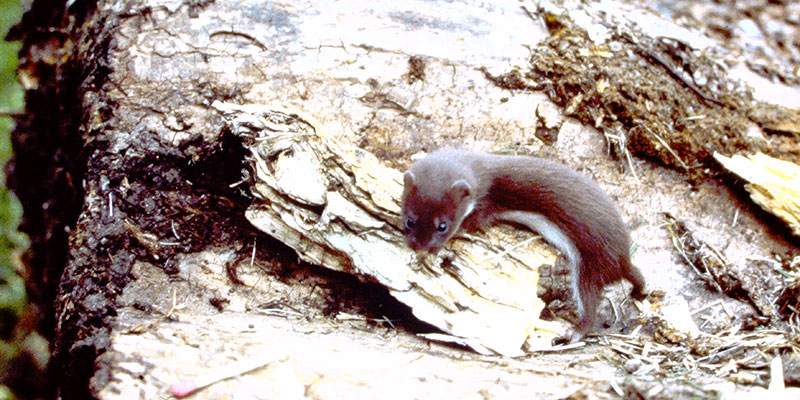
- Weasel species
Least weasel
- Short tail
- < 8 inches long, including tail
- Summer: Brown fur upper parts, white fur underparts
- Winter: coat is paler, though can be all white
Long-tailed weasel
- Longer tail (up to 4 inches) tipped in black fur
- 13-17 inches long, including tail
- Summer: Brown fur upper parts, white fur underparts
- Winter: coat is paler, though can be all white except for black-tipped tail
- Black bear
- Fur coloration can vary – typically black with a brown muzzle
- Large, rounded ears and small eyes
- 100-350 pounds
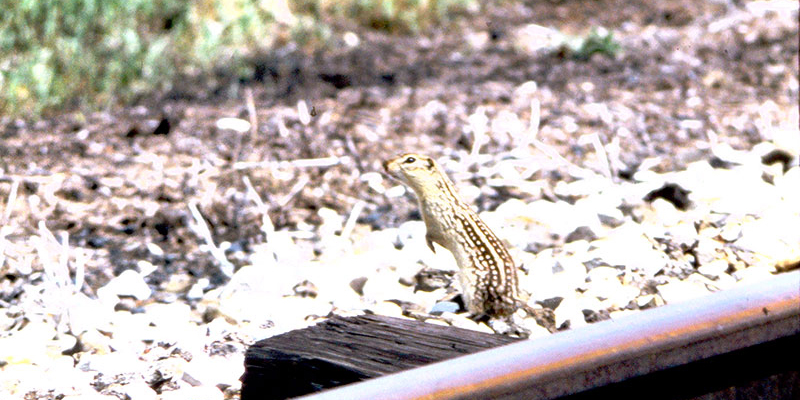
- Thirteen-lined ground squirrel
- Distinct line patterns of light-tan fur on a background of brown fur
- Line patterns alternate, solid lines and dashed lines
- Tail is furred, but not bushy
- Larger than an eastern chipmunk, smaller than a gray squirrel
- River otter
- Medium to dark brown fur with lighter belly and chest
- Thick, rope-like tail
- Long body, short legs, and webbed feet