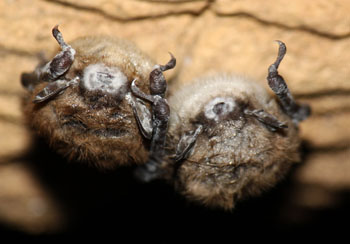
White-nose syndrome (WNS) is an infectious disease associated with a fungus (Pseudogymnoascus destructans) responsible for unprecedented levels of mortality among hibernating bats in North America. WNS is named for the white fungal growth on the skin of the muzzle, wings, and ears of cave-dwelling bats during winter hibernation. The disease was first noted in New York in 2006 and has since spread to 42 states and nine Canadian provinces. The fungus that causes WNS has been found in five additional states and one Canadian province. Twelve different bat species, including three federally endangered species and one threatened species, have been affected by WNS. As of 2011, the disease has caused the death of an estimated 5.7 to 6.7 million bats across eastern North America, with estimates of mortality often exceeding 90% in infected caves.
There are many ways everyone can help bats recover from WNS, starting with not disturbing bats in caves or their roosts, educating the public, and planting native gardens or groves. For more information, refer to the Bats of Indiana webpage.
Updates from the Field - 2026
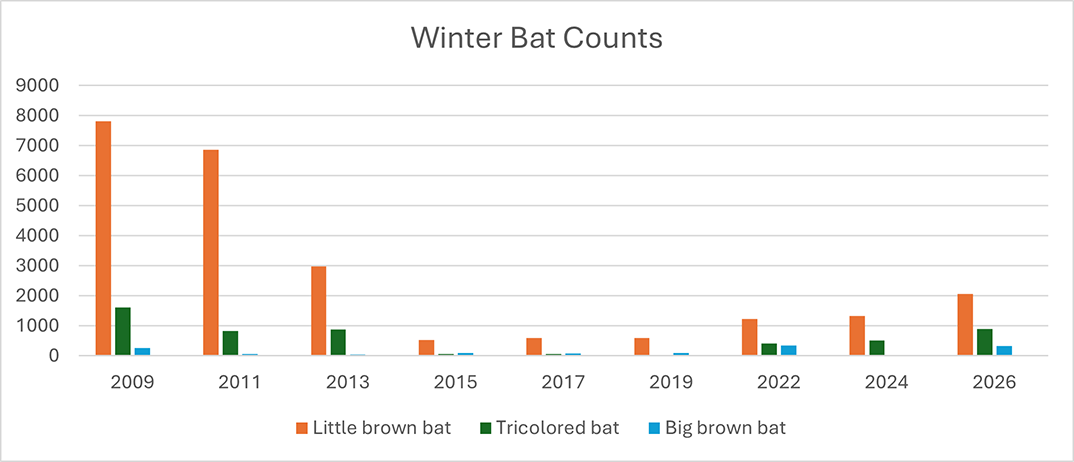
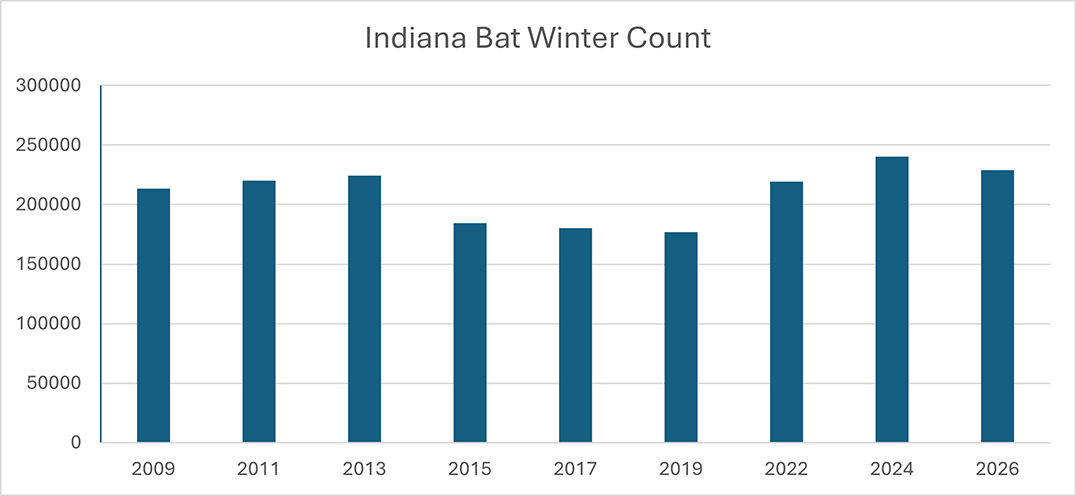
DNR bat biologists concluded this year’s winter surveys. It appears that Indiana’s bat populations continue to show signs of population recovery; numbers are slowly increasing. These results are very promising, but continued management is needed to help these bats get back to their pre-WNS populations.
Here are the highlights:
- The two species that suffered the greatest losses due to WNS are improving.
- There were more tricolored bats and little brown bats across all sites.
- More individual sites held tricolored bats and little brown bats compared to the peak of WNS mortality in 2015-19.
- Indiana bat numbers were about the same, if not increased by a few thousand bats, compared to 2024.
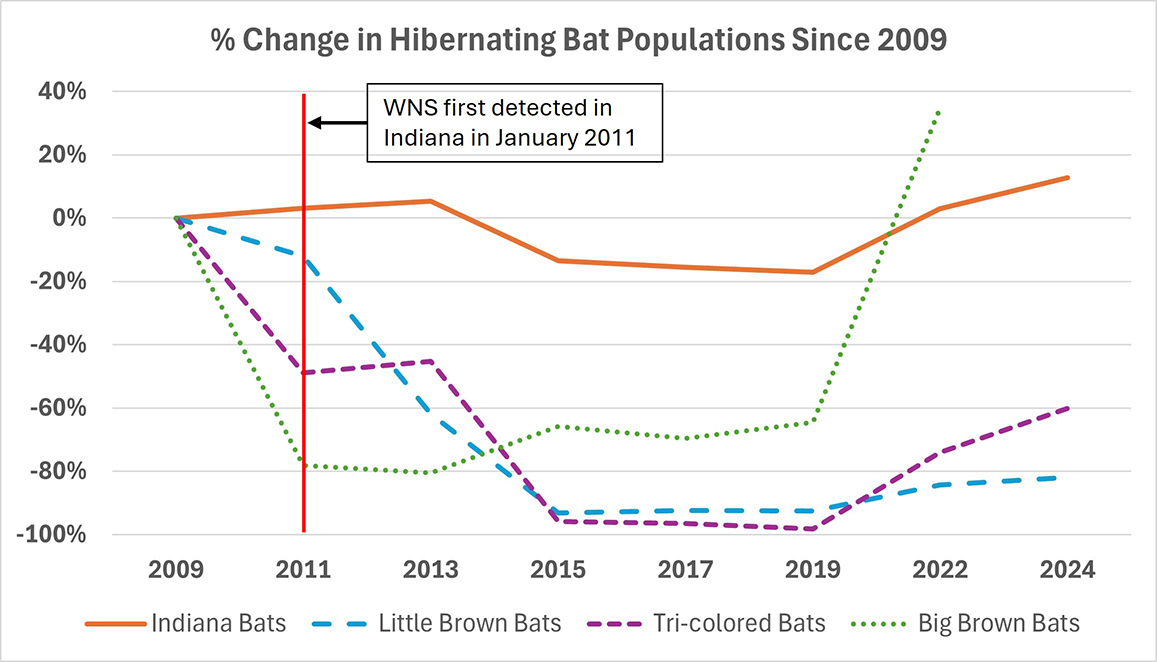
- WNS was first detected in Indiana in January 2011 during routine winter hibernaculum surveys conducted by Division of Fish, Wildlife & Nature Preserves bat biologists.
- By April 2011, the disease had been found in six caves across Crawford, Monroe, and Washington counties.
- During the following winter (December 2011-March 2012), bats exhibiting signs of WNS infection were observed in or reported from 20 additional caves that included six new counties (Greene, Harrison, Jefferson, Lawrence, Martin and Orange).
- Disease surveillance during the 2012-13 winter resulted in WNS detection from nine more caves that included one new county (Jennings).
- Two caves and one new county (Vermillion) were added from WNS surveillance during the 2013-14 winter.
- One cave in Jefferson County was added during the 2014-15 winter.
- WNS is widely distributed throughout much of the karst region in south-central Indiana and locally established within most of the state’s major concentrations of important bat hibernacula.
For nearly 30 years, wildlife biologists in Indiana have conducted population counts of hibernating bats every other winter. This biennial schedule minimizes disturbance but still provides important information needed to monitor the status and health of the state’s bat populations. At present, all bat hibernacula in Indiana are assumed to host the fungus that causes WNS in bats. The impact of WNS can be assessed as a “percent change” by comparing the last count before the disease was detected in a particular site (2009) to its count in any given year afterwards.
For more information on WNS:
In response to a growing concern for bat populations affected by WNS in Indiana, the Indiana Department of Natural Resources (DNR) closed public access to caves, sinkholes, tunnels, and abandoned mines on DNR-owned land in 2009. This action, made in consultation with the U.S. Fish and Wildlife Service, was a preemptive step to slow the spread of the deadly fungus that causes WNS. The fungus can be transported from cave to cave on the boots and clothing of people, as well as by bats.
In 2014, DNR initiated a program to allow limited access to select caves at Spring Mill State Park and Cave River Valley Natural Area. The program, in partnership with the Indiana Karst Conservancy (IKC), allows for recreational caving during the summer. Groups wishing to gain access to select caves in Spring Mill State Park or Cave River Valley Natural Area must apply for a permit and comply with proper WNS decontamination protocols. Groups must register in advance through the IKC and complete an online training module that explains decontamination procedures to prevent the spread of WNS to other caves and states.
Indiana DNR Division of Forestry now offers limited access to forest cave resources through a registration portal. Please explore this portal for more information regarding WNS decontamination and other rules to ensure you have a safe and enjoyable caving trip.
Indiana Nongame Wildlife Fund
Funding for WNS monitoring in Indiana is funded, in part, by citizen donations to the Indiana Nongame Wildlife Fund. To support this project and others like it, visit our donate page.