
Before an Outage
Plan ahead of time to ensure you and your family have an action plan when the power goes out.
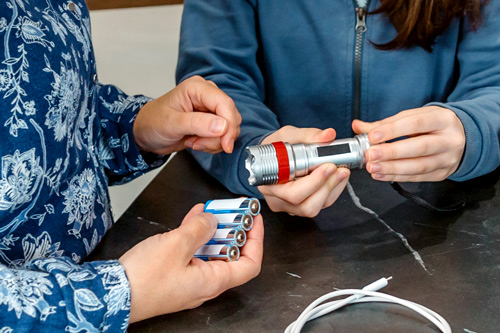
- Create a disaster kit. Include water, non-perishable food, flashlights for every household member, batteries, a radio and first-aid supplies. Learn more about disaster kits.
- Identify places to go in case of an extended power outage; check for hotels or people with whom you can stay.
- Create a communications plan so family members know how to get in contact during an outage.
- Identify and plan for personal and medical electrical needs. Do you need backup power for medical devices and refrigerated medicine? Discuss what you need to do with your primary care or medical device providers.
- If the power goes out during extreme weather, your air conditioner or furnace will not be able to operate. Have blankets or extra clothing to stay warm, or consider buying battery-powered fans.
- Consider purchasing a generator. But remember, never use a generator indoors due to the risk of fire and carbon monoxide poisoning.
- Protect against power surges by purchasing and plugging in surge protectors for household electronics for when power surges occur.
- Keep cell phones and other equipment charged. If bad weather is expected, charge devices you may need in case power becomes unavailable for a few days.
During an Outage
When the power goes out, keep calm and take these steps while you wait for it to return.
- Report the outage and monitor alerts. Power companies have websites or phone numbers to call and report an outage. You also may be able to sign up for updates from the company as it works to solve the problem.
- Contact your support network. Let someone know that your power is out and let them know if you are OK. Stay in contact in case anyone needs help.
- Keep refrigerators and freezers closed. Perishable food in refrigerators and freezers will have a better chance of staying fresh if the doors are kept closed as much as possible. An unopened refrigerator should keep food cold for about four hours. A freezer will keep the temperature for about 24-48 hours if the door is kept closed.
- If the power goes out during extreme heat, open windows to allow for natural ventilation using the wind.
- Prevent power overloads and fire hazards. Unplug appliances and electronics to avoid damage from a potential power surge when service is restored.
- Use flashlights before candles. Candles can pose a fire hazard and should not be used unless monitored carefully. Blow out candles before going to sleep.
- Prevent carbon monoxide poisoning. Do not use a gas stove to heat your home. Use generators outside in a well-ventilated area, away from windows, doors and vents (at least 20 feet). Camp stoves or grills should only be used outside.
- Pay attention to water advisories from local officials. Boil water or use bottled water as directed.
After an Outage
Once power returns, take a few safety precautions before returning to normal life.
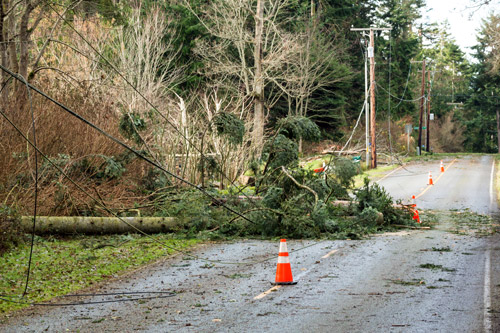
- Call 911 or the power company to report a fallen power line, then stay away! Never assume a downed power line is dead. It could still be surging with electricity. Stay at least 35 feet away from the power line and anything it is touching. Do not try to drive a vehicle across it.
- Evaluate your perishable food. Throw away any food that reaches 40 degrees or warmer, especially dairy or meat. If you are unsure, throw it out.
- Evaluate your refrigerated medicine. Contact medical professionals to get specific guidance on options if your medicine was stored at higher temperatures due to the outage.
- Check for damage. Inspect your home and devices for any damage caused by the outage or a power surge.

Get Prepared