
Abatement
Abatement is the use of nonlethal harassment techniques to frighten and discourage wildlife from using an area. These methods are legal to use on Canada geese without possessing a federal or state permit, as long as geese are not injured, touched, or handled by a person, dog, or other equipment. Different abatement methods can entail audial, visual, and physical practices that can be used anytime, so long as local ordinances are followed.
Abatement techniques will only be as effective as the amount of effort put into them. They must be used repetitively each time Canada geese appear on your property to be successful. Techniques should be used as soon as Canada geese appear on a property because Canada geese are much more difficult to frighten after they feel comfortable in an area. These methods provide immediate relief from Canada geese congregating in areas. For long-term success, follow up with habitat management .
The following techniques may be used on Canada geese, where safe and legal to do so. Check local ordinances and laws before using any of them.
- Audial Devices
- Air horns
- Whistles
- Blank pistols
- Specialized projectiles (bangers, screamers, and whistlers)
- Cracker shells from a shotgun
- Firecrackers
- Propane cannons
- Recorded distress calls (~ 80 decibels)
- Visual Devices
- Motion sensor lights
- Flagging
- Eye spot balloons
- Dead goose or predator decoys
- Mylar tape
- Scarecrows
- Dogs (chasing only, dogs may not catch geese)
- Remote-controlled devices
- Handheld green lasers (do not shine in birds’ eyes)
- Physical Devices
- Garden hose
- Sprinkler
- Motion-activated sprayer
- Legal chemical repellents (must be applied following label instructions)
- Hunting
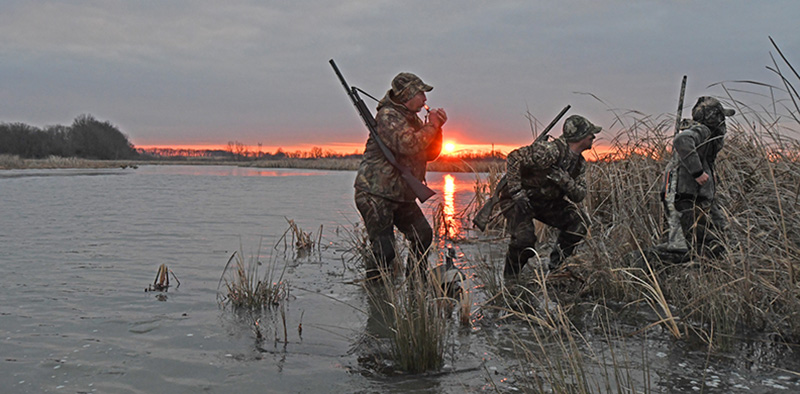
Hunting waterfowl, where safe and while following local ordinances, should be encouraged during the legal waterfowl hunting seasons using approved methods. Hunting is the most effective and preferred method of removing surplus ducks and geese. Hunting also removes some of the adult breeding birds that are adding to the population.
- Egg and Nest Destruction
March through April are primary egg-laying times for Canada geese and are when egg and nest destruction methods may be used. These times may vary depending on spring temperatures and other local conditions. Nest removal can be carried out at any time, on property you own or have permission to be on, if no eggs or Canada geese are present. Whole nests should be thrown away or scattered so they cannot be used. Repeatedly removing nests can encourage breeding Canada geese to relocate, build a new nest, or nest later in the season. It is advisable to begin nest removal as soon as Canada geese are seen scouting nest locations and to prevent them from laying eggs in undesirable locations. Nest construction may last for several weeks, and the first egg may be laid less than 24 hours after the nest is constructed. Once the first egg is laid in a nest, no further action can legally be taken without first registering online with the U.S. Fish and Wildlife Service.
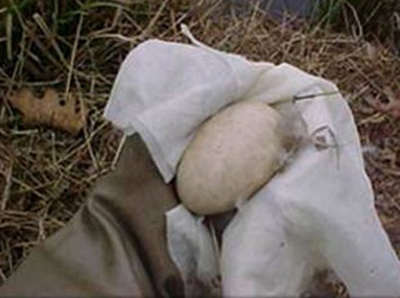
It is against federal law for anyone to destroy a Canada goose nest that contains one or more eggs without first securing permission through the U.S. Fish and Wildlife Service. Permission may be received by registering online. Landowners must register each employee or agent working on their behalf. Egg destruction can be implemented any time of year after a permit is secured. Online registration is open Jan. 1 through June 30.
Once registered, egg treatment or nest destruction can occur. Be cautious if attempting to conduct these activities yourself because Canada geese are very protective of their nests during this time. A person may either shake the egg for at least 60 seconds (listen for sloshing sound), puncture the large end of the egg with a sharp object, or coat the egg with 100% corn oil to prevent it from hatching.
Nests with cold eggs should be left alone because the Canada goose is still laying eggs. Return two weeks later to recheck the eggs. For all other eggs, it is encouraged to use the egg float test to properly determine egg age before addling. If the eggs are removed or broken too early, the Canada goose will likely lay more eggs. Place the eggs in a bucket with at least 6 inches of water so that the eggs will float. Eggs younger than 14 days will sink. These eggs should be dried off, addled, and returned to the nest to trick the mother Canada goose into incubating eggs that will not hatch. Eggs that are older than 14 days will float. These eggs should be removed if they float vertically. If the egg turns on its side while floating, it means the gosling is close to hatching, and addling is no longer an acceptable method of removing eggs. Typically, all goslings in the same nest will hatch within a few hours of each other. These eggs should be left to hatch, and other removal methods should be used for the goslings. Removal of live Canada geese, including goslings, requires a separate permit.
- Relocation, Euthanasia, and Shooting Permits
For technical assistance managing Canada geese, please contact a District Wildlife Biologist.
It is illegal to trap, capture, relocate, or euthanize (i.e. shoot) Canada geese without a permit except during the goose hunting season, when they can be hunted in accordance with state and federal law. For landowners experiencing economic damage or safety issues from Canada geese, a federal migratory bird depredation permit is available from the U.S. Fish and Wildlife Service. For more information and to start the permit approval process for the federal permit, contact USDA-APHIS-Wildlife Services at 765-494-6229. Permits can only be issued by DNR without the need for a federal permit from March 11 through Aug. 31 of each year
- Domestic Geese
Domestic geese are not regulated by the Indiana Department of Natural Resources.