

Since 2008, the Wabash County Soil and Water Conservation District (SWCD) has been active in the Middle Eel River Watershed Initiative. The mission of the initiative is to protect and enhance the water resources of the Middle Eel River Watershed through education and implementation of soil and water conservation practices.
The success of this initiative is due to the strong partnerships that have been built between local farmers, Manchester University, and partners such as the Indiana Department of Environmental Management (IDEM), Natural Resources Conservation Service (NRCS) of Kosciusko, Miami, and Wabash counties, Kosciusko County SWCD, Miami County SWCD, Wabash County SWCD, Indiana Department of Natural Resources, Indiana Smallmouth Bass Alliance, Indiana State Department of Agriculture, Miller’s Canoe Rentals, North Manchester Center for History, The Stockdale Mill, Doud’s Orchard, North Manchester Rotary Club, County Highway Departments of Wabash and Miami Counties, and the Wabash County Solid Waste District.
The unifying goal of this effort is to reduce soil erosion, in-stream suspended sediment, export of nutrients (nitrogen and phosphorus), and off-site movement of E.coli while maintaining or improving agricultural productivity in the Middle Eel Watershed. Manchester University received the Friend of Conservation Award at the 2012 IASWCD Annual Conference for their dedication to conservation.
The conservation success of the initiative has been due in part to a $2.9 million Mississippi River Basin Initiative (MRBI) grant along with a $1 million IDEM 319 nonpoint source pollution grant. The Middle Eel River Watershed includes 30 miles of the river from North Manchester to Mexico (IN) and covers nearly 170,000 acres. Land use in the Middle Eel River is about 88 percent agricultural.
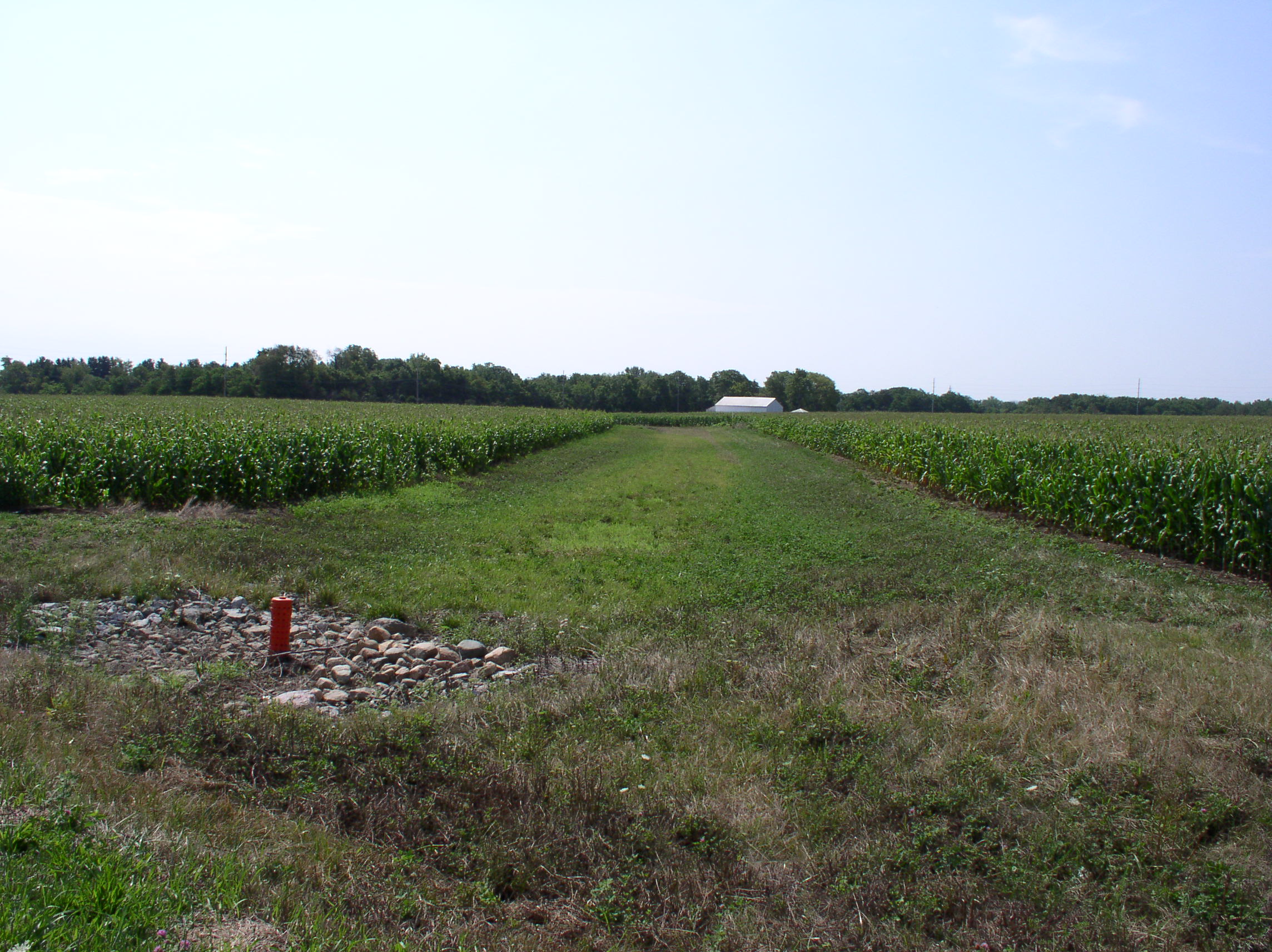
Since 2009, the 319 grant has funded the development of a watershed management plan and water quality monitoring for the Middle Eel River and its tributaries. 2011 marked the first year for the cost-share program with land owners. The initiative partnered with 20 farmers in the watershed to cover 5,474 acres of land and included such practices as, cover crops, no till, nutrient management, pasture and hay planting, a heavy use protection area, a grade stabilization structure, grassed waterways, prescribed grazing, and fencing.
The public outreach program has included a yearly river clean-up where 156 volunteers have pulled a total of 9,980 pounds of metal, as well as, other debris from the river. An annual canoe float, allowing families of all ages to enjoy a fun and educational day on the Eel and other various field days, has been held in all three Soil and Water Conservation Districts.
In Wabash County, seven EQIP/MRBI contracts were approved for 2011 totaling $558,708. We utilized Clean Water Indiana (CWI) grant funds to hire a contractor to do the computer entry and paper work essential to get these applications accepted. The Wabash contracts resulted in 2,090.7 acres of no till, cover crops, high levels of nutrient management and pest management using precision technology. Additional CWI funds were used to hire a retired NRCS independent contractor to survey and design grass waterways and WASCOBs throughout Wabash County enabling us to provide more “conservation on the ground.”
The success of this initiative is due to the strong partnerships that have been built between local farmers, Manchester University, and partners such as the Indiana Department of Environmental Management (IDEM), Natural Resources Conservation Service (NRCS) of Kosciusko, Miami, and Wabash counties, Kosciusko County SWCD, Miami County SWCD, Wabash County SWCD, Indiana Department of Natural Resources, Indiana Smallmouth Bass Alliance, Indiana State Department of Agriculture, Miller’s Canoe Rentals, North Manchester Center for History, The Stockdale Mill, Doud’s Orchard, North Manchester Rotary Club, County Highway Departments of Wabash and Miami Counties, and the Wabash County Solid Waste District.
The unifying goal of this effort is to reduce soil erosion, in-stream suspended sediment, export of nutrients (nitrogen and phosphorus), and off-site movement of E.coli while maintaining or improving agricultural productivity in the Middle Eel Watershed. Manchester University received the Friend of Conservation Award at the 2012 IASWCD Annual Conference for their dedication to conservation.
The conservation success of the initiative has been due in part to a $2.9 million Mississippi River Basin Initiative (MRBI) grant along with a $1 million IDEM 319 nonpoint source pollution grant. The Middle Eel River Watershed includes 30 miles of the river from North Manchester to Mexico (IN) and covers nearly 170,000 acres. Land use in the Middle Eel River is about 88 percent agricultural.
Since 2009, the 319 grant has funded the development of a watershed management plan and water quality monitoring for the Middle Eel River and its tributaries. 2011 marked the first year for the cost-share program with land owners. The initiative partnered with 20 farmers in the watershed to cover 5,474 acres of land and included such practices as, cover crops, no till, nutrient management, pasture and hay planting, a heavy use protection area, a grade stabilization structure, grassed waterways, prescribed grazing, and fencing.
The public outreach program has included a yearly river clean-up where 156 volunteers have pulled a total of 9,980 pounds of metal, as well as, other debris from the river. An annual canoe float, allowing families of all ages to enjoy a fun and educational day on the Eel and other various field days, has been held in all three Soil and Water Conservation Districts.
In Wabash County, seven EQIP/MRBI contracts were approved for 2011 totaling $558,708. We utilized Clean Water Indiana (CWI) grant funds to hire a contractor to do the computer entry and paper work essential to get these applications accepted. The Wabash contracts resulted in 2,090.7 acres of no till, cover crops, high levels of nutrient management and pest management using precision technology. Additional CWI funds were used to hire a retired NRCS independent contractor to survey and design grass waterways and WASCOBs throughout Wabash County enabling us to provide more “conservation on the ground.”