

The guidelines for the 2011 Clean Water Indiana (CWI) grants were very clear. They were looking for proposals that would reduce sediment and nutrients coming from non-point sources and going into the Gulf of Mexico. This wasn’t unusual, but the 2011 grant request added an incentive. When districts set up projects that covered multiple districts, it would be possible to receive additional funding.
From that simple incentive, a regional collaboration was formed between Fountain, Parke and Vermillion County Soil and Water Conservation Districts (SWCD) that continues beyond the 2011 funding.
The three counties worked together to produce a proposal that would meet the goals of the CWI grant and address local issues. They decided to focus on funding an independent contractor who could supply technical assistance and general educational outreach to producers who were interested in Conservation Cropping Systems (CCS).
It all looked great on paper, but when the grant started in January one of the SWCDs was trying to hire new staff, another was in the midst of moving to a new office space and no one was lined up to fill the role of the CCS knowledgeable independent contractor. In fact, nearly a quarter of the year slipped by before Larry Timm was hired to be the CCS expert and SWCD operations settled down.
Larry was a lucky find and a great choice. He was a retired seed dealer that had covered most of the three county area, so he knew many of the producers already. Furthermore, while he was no longer working his own land, he was a long-time no-tiller that continues to have his tenants do the same. Starting with his own contacts and then adding the names that the SWCDs sent to him, he began networking.
Using the CWI grant to pay for Larry’s time and expenses meant that he and his expertise was available to everyone. He could come out and sit down to discuss any aspect of no-till farming, whether someone had been doing it for years and looking to fine-tune part of their operation or was just considering the idea. He could get in and help adjust a planter or drill to operate better or discuss which cover crops to plant when.
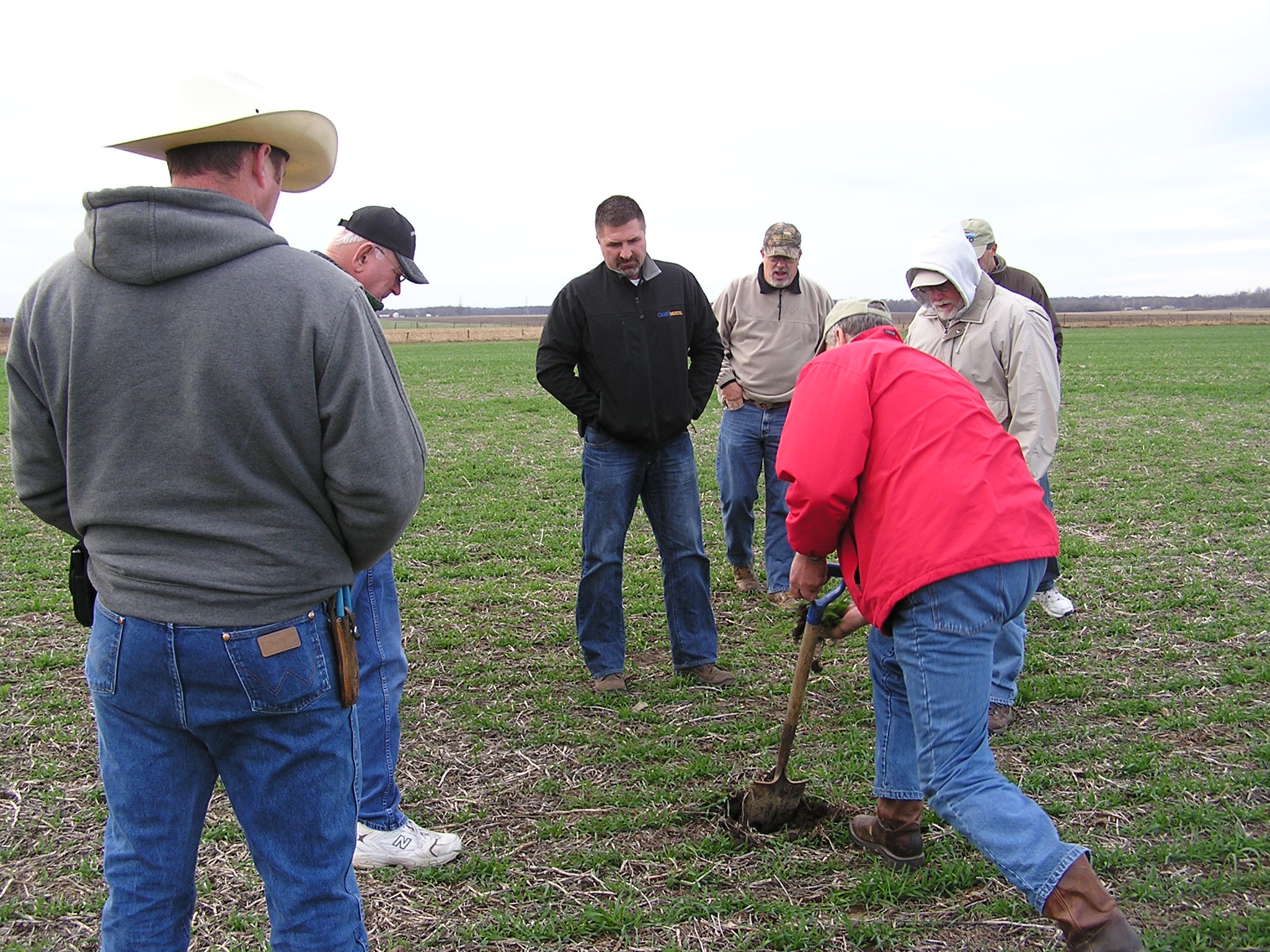
But in addition to supplying that one-on-one interaction and assistance, Larry also became a distribution point for all information connected to CCS. Everyone that Larry interacts with gets regular email notices of interesting articles, regional workshops and local events. He also facilitates small monthly discussion groups in each of the counties.
In 2011, our three counties set up a program to encourage and support producers interested in improving their operation. Before the year was over, we were able to extend the program with another, longer term, CWI grant to keep Larry working for us. Our commitment of resources is making a difference. No one changes overnight, but Larry’s presence is driving an on-going conversation about the benefits of CCS and bringing new people to seek out help making the conversion.