

Promoting Pollinators in Scott County
Bees, bats, butterflies and pollinator habitat have become a major focus of conservation efforts nationwide over the past few years. Scott County residents realize the importance of pollinators and the local conservation partnership has taken notice. In April 2016, the Scott County Soil and Water Conservation District, Scott County Extension and the Natural Resources Conservation Service hosted a farm safety workshop for women landowners in the county. It was the first program we had sponsored with a focus on reaching out to the female landowners in the county, and as part of that workshop a survey sheet was distributed to participants to indicate their interest in various topics for future workshops. One of the areas that received several votes was "Pollinators/Beekeeping."
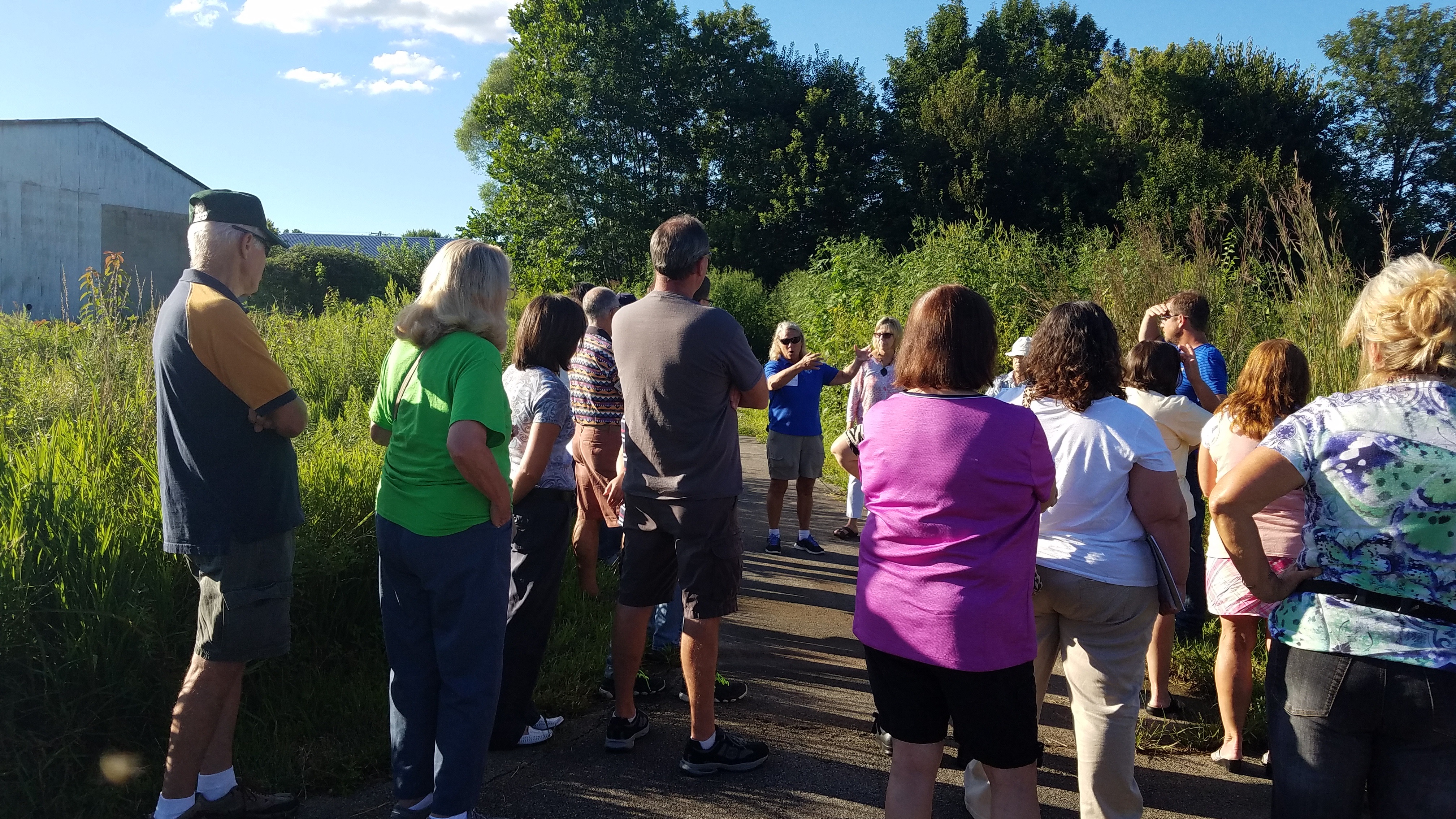
During a meeting of the Scott County Food and Agriculture Council (FAC) held at the USDA Service Center in May 2016, the SWCD, Extension and NRCS staff discussed further the idea of a pollinator workshop and began to plan. CWI funds had been available in a 2014 grant through the Scott County SWCD for a variety of plantings, and the grant was amended to allow customers to utilize those funds and plant pollinator seed into Conservation Reserve Program buffers already established or being re-seeded. NRCS has been working to provide technical assistance to the SWCD and customers in writing conservation plans to include pollinator seeding in practices for the CWI grants and also make seeding recommendations and discuss the management of the plantings. A few acres of pollinator habitat were created by utilizing those funds. The SWCD had applied with three other counties in the area for a Clean Water Indiana grant that started in 2016, and one of the possible practices through that grant was the creation of pollinator habitat. Also as part of that grant, the SWCD had agreed to install a pollinator plot in a grassed area beside the office, and plans were being made to have that seeded. The group felt it would be very beneficial to have that plot to reference at the workshop to compare a new seeding to an established seeding. The location proposed for the workshop was a 4-acre mowed area of the park restored to prairie and wildflower habitat at Linza Graham Park in the city of Scottsburg. That plot had been seeded for approximately 7 years. The SWCD plot is in a very visible area by the office and could be a good educational tool for the public and potentially a site for future workshops, as well as being able to show landowners who come into the office what a planting might look like, its maintenance and help identify some plants they may have seen and have questions about.
There were many partners who worked together on both the pollinator plot as well as the workshop planning and presentation. Through the US Fish and Wildlife Service (USFWS), pollinator and grass seed as well as pollinator plants were provided for the SWCD plot. A volunteer donated time and chemicals and sprayed the area to eliminate competing vegetation, and a local FFA student (and student advisor to the SWCD Board) disked and planted the area. The SWCD District Coordinator kept the plot watered, and an educational sign was provided by the USFWS. A volunteer constructed the framing for the sign and it was then installed by the SWCD Board Chairman.
The Scott County SWCD, Scott County Purdue Extension office, NRCS, USFWS, and Scott County Master Gardeners worked to promote the August 22 pollinator workshop, as well as participate in setting up for it. The City of Scottsburg waived the fee of the shelter house rental for the workshop. Respite from the August heat after hiking the habitat trail and ample room for the speakers’ presentations was provided by the shelter. The Historic Hoosier Hills RC&D provided the SWCD with folders for participants which were full of pollinator-related literature. Two of the speakers on the agenda were from the USFWS, Private Lands Biologist Susan Knowles and Eco Logic Nursery, Spencer Goehl who had teamed together to develop and restore the park habitat. The final speaker was a beekeeper from Clark County, Mark Whisman, who is currently involved in a beekeeping group in the area but is interested in forming a more local group. Participants at the workshop had several questions for him, and he also had a selection of honey products available for purchase. The SWCD had purchased seed packets to hand out to participants. Those packets contained a variety of seeds for plants that will attract honey bees. They also made available bags of garden cover crop/wildlife food plot seed available for purchase. In addition, the SWCD purchased native plant plugs for display that could then be obtained by participants after the workshop for a small donation. There was a total of 37 people in attendance at the workshop. A local teacher at a private school attended the workshop and talked with Partnership staff about programs on pollinators and also about establishing a pollinator plot at their school, and the SWCD staff is working with them to provide educational materials from NACD as well as NRCS posters.
Pollinator habitat will continue to be a focus for the local Conservation Partnership, and we are making plans for another pollinator habitat workshop to be held in April 2017 as a follow-up to the one held in August 2016. The workshop in April will provide participants an opportunity to see the same site but at a different time of the year and will give workshop speakers and participants the chance to get out into the plot a little more, see the plants at an earlier stage to help identify species and also to discuss important considerations for plantings at that time of year as it relates to their maintenance and management. Management of noxious and invasive species and also planting and maintaining native plants and grasses will also be the focus of the workshop. SWCD newsletters and news articles for local newspapers are utilized to promote the creation and maintenance of pollinator/wildlife habitat and discuss local, NRCS and other funding opportunities to assist landowners with the cost of those items.