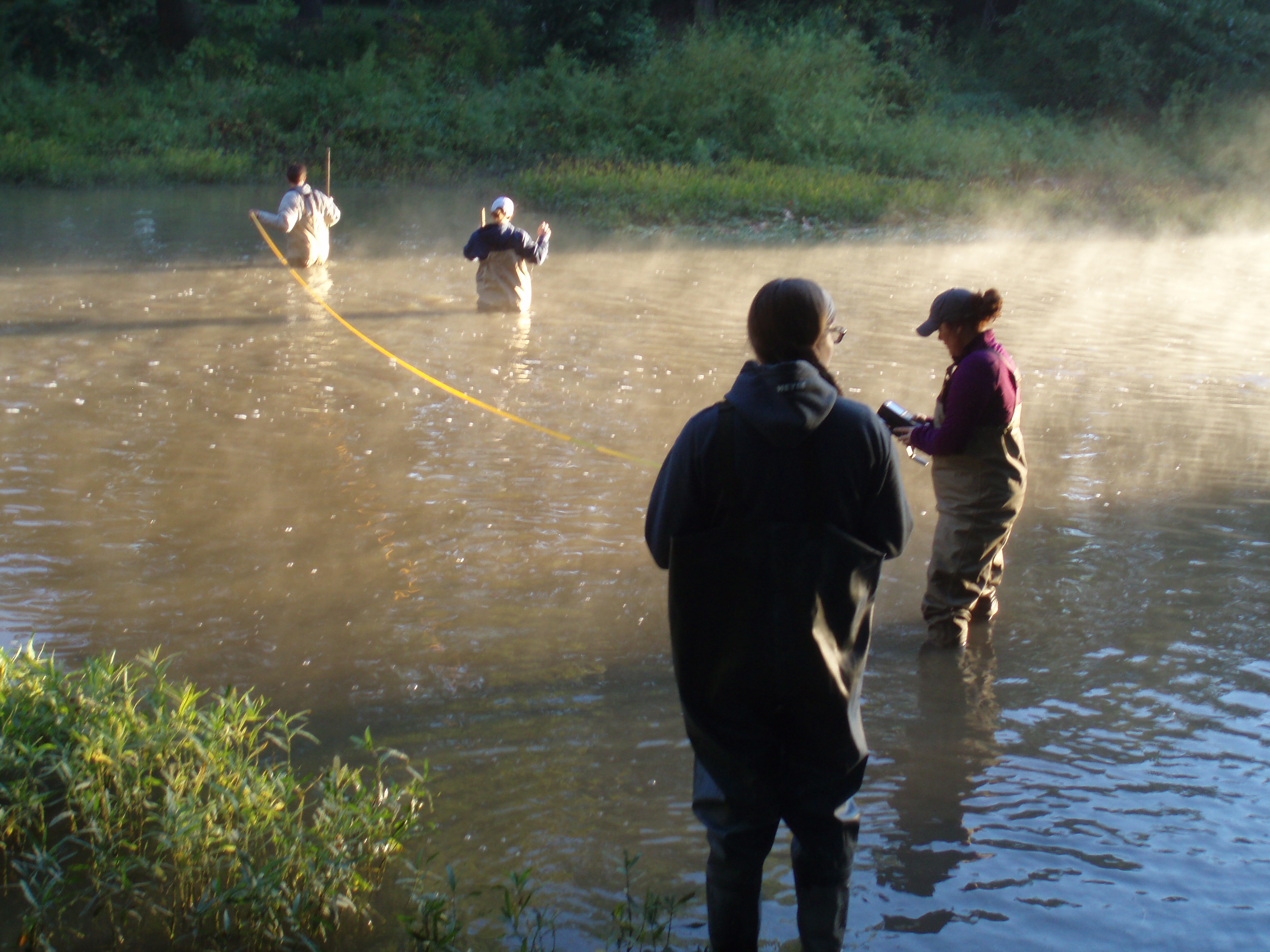


Lower Salamonie River Watershed Water Quality Monitoring Program
The Huntington County Soil and Water Conservation District (SWCD) along with Wells, Wabash, Blackford and Grant County SWCDs and other interested partners have implemented a water quality monitoring program for the Lower Salamonie River (LSR) Watershed. A great amount of time has been put into this monitoring program and we are happy to say that the program is in full swing now. The monitoring program is part of the 319 Watershed Management Grant that was awarded for the LSR Watershed back in January of 2013.
During the first two years of the grant the Watershed Coordinator along with stakeholders will gather data, identify water quality concerns, and set goals for water quality improvement. This information will be compiled and used to develop a Watershed Management Plan (WMP). In the third and fourth years, a cost share program will be developed to implement Best Management Practices (BMPs) to address the water quality concerns outlined in the approved LSR Watershed Management Plan.
Over the past few years, increased levels of nutrients and sediment have been recorded within the Salamonie River. Sections of the river and some of its tributaries are listed on the IDEM 303(d) list for impairments. These impairments include E.coli, impaired biotic communities and nutrients. The purpose of the 319 Grant and Water Monitoring Program is to address these impairments and the overall health of the Salamonie River and its surrounding tributaries. By gathering this data we will be able to identify high priority areas or critical areas that are in most need of management. Thirteen sampling sites are being monitored for the following: turbidity (sediment), dissolved oxygen, biochemical oxygen demand, pH, temperature, nitrate, nitrite, total phosphorous, E.coli and stream flow. A macro-invertebrate (aquatic organisms without a backbone) and habitat assessment will also be done within the watershed at least once a year. Seven water quality sampling events and one macro-invertebrate and habitat assessment were conducted between June and November. Based off of the data we have at this time, it appears that turbidity and total phosphorous are consistently exceeding the desired target levels, which agrees with stakeholder’s concerns of increased levels of nutrients and sediment. Two more sampling events are scheduled to be performed between December and March 2014.
Information about activities and events will be provided through public meetings, newsletters, and news releases. Information about the progress of the grant and upcoming events will also be included on the Huntington County SWCD website at www.huntingtonswcd.org and the Lower Salamonie Watershed website at https://salamonieriver.wix.com/lsrw.
For more information about the grant you can contact the Huntington County SWCD office at 260-356-6816 ext. 3.
Lower Salamonie River Watershed Water Quality Monitoring Program.