

The DeKalb SWCD strives live our mission to provide “Leadership in Conservation”. As a result, in addition to our work with the agriculture community we also focus on urban areas and often find ourselves working were Ag and Urban meet as we conserve the natural resources of DeKalb County.
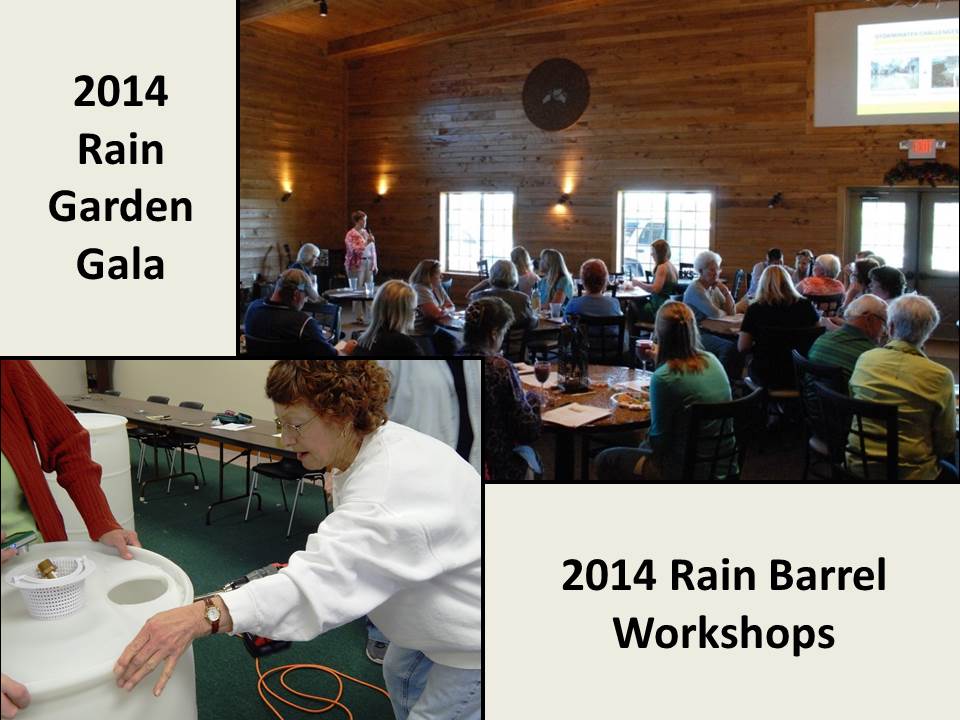
In June of 2014 the SWCD kicked off the summer with our “Rain Garden Gala” This unique event promoted the benefits of rain gardens and their importance for the environment. Hosted at a local winery, the 48 participants enjoyed live music as they sampled local wines and light refreshments. Program presenters then provided background information on the usefulness of rain gardens, basic installation instructions, and the use of native plants in a rain garden. This event introduced the SWCD to a new audience of folks and a fine time was enjoyed by all!
Following this the DeKalb SWCD partnered with City of Auburn Department of Water Pollution Control, City of Auburn Parks & Recreation Department, and the Northeast Indiana Solid Waste Management District to host 4 rain barrel workshops around DeKalb County. As part of learning how they could help improve and reduce stormwater runoff participants were taught how to construct a rain barrel. With barrels donated by local industry, parts supplied by the DeKalb SWCD, and the assistance from staff of the Water Pollution Control Department workshop participants built and walked away from the workshop with a totally functioning rain barrel! A total of 38 rain barrels were constructed by the participants of these workshops. Due to the great response for these workshops the DeKalb SWCD and partners agreed to repeat them again in 2015!
Rain gardens and rain barrels are just two of the conservation practices included in the DeKalb SWCD’s Cost-share Program. Partially funded by Clean Water Indiana this locally developed program provides cost-share funds to assist all landowners address conservation concerns on their land.
Reaching out to a new audience, partnering with other agencies, and providing funding for conservation implementation ……….”Leadership in Conservation”.