

Best Management Practices, Education and Outreach Restore Aquatic Communities
Agricultural activities related to crop cultivation and hydrological modification contributed nonpoint source pollution to Jenkins Ditch, and the waterbody failed to support its aquatic life designated use. As a result, the Indiana Department of Environmental Management added Jenkins Ditch (a 2.13 mile segment) to Indiana's Clean Water Act (CWA) section 303(d) list of impaired waters in 2006 for poor biological integrity for fish community.
The Clinton County Soil and Water Conservation District served as a project leader, facilitating water quality data management, developing watershed management plans and organizing education and outreach events. The SWCD's work was also supported by CWA section 205(j) and 319(h) funds to develop a watershed management plan for critical areas throughout the South Fork Wildcat Creek watershed and to implement restoration practices and projects throughout the watershed. Many project partners were involved in the successful implementation of this effort.
Over 20 percent of the land area of the Jenkins Ditch-South Fork Wildcat Creek HUC-12 subwatersed has implemented BMP's that include conservation crop rotation, residue and tillage management, and Pest and Nutrient Management Plans. Also documented are waste management practices, filter and buffer strips, and habitat management practices.
Water quality monitoring conducted after restoration efforts indicated that water quality in Jenkins Ditch had improved and is now fully supportive of its aquatic life designated use. On the basis of data collected, IDEM removed the Jenkins Ditch segment from the CWA Section 303(d) list of impaired waters.
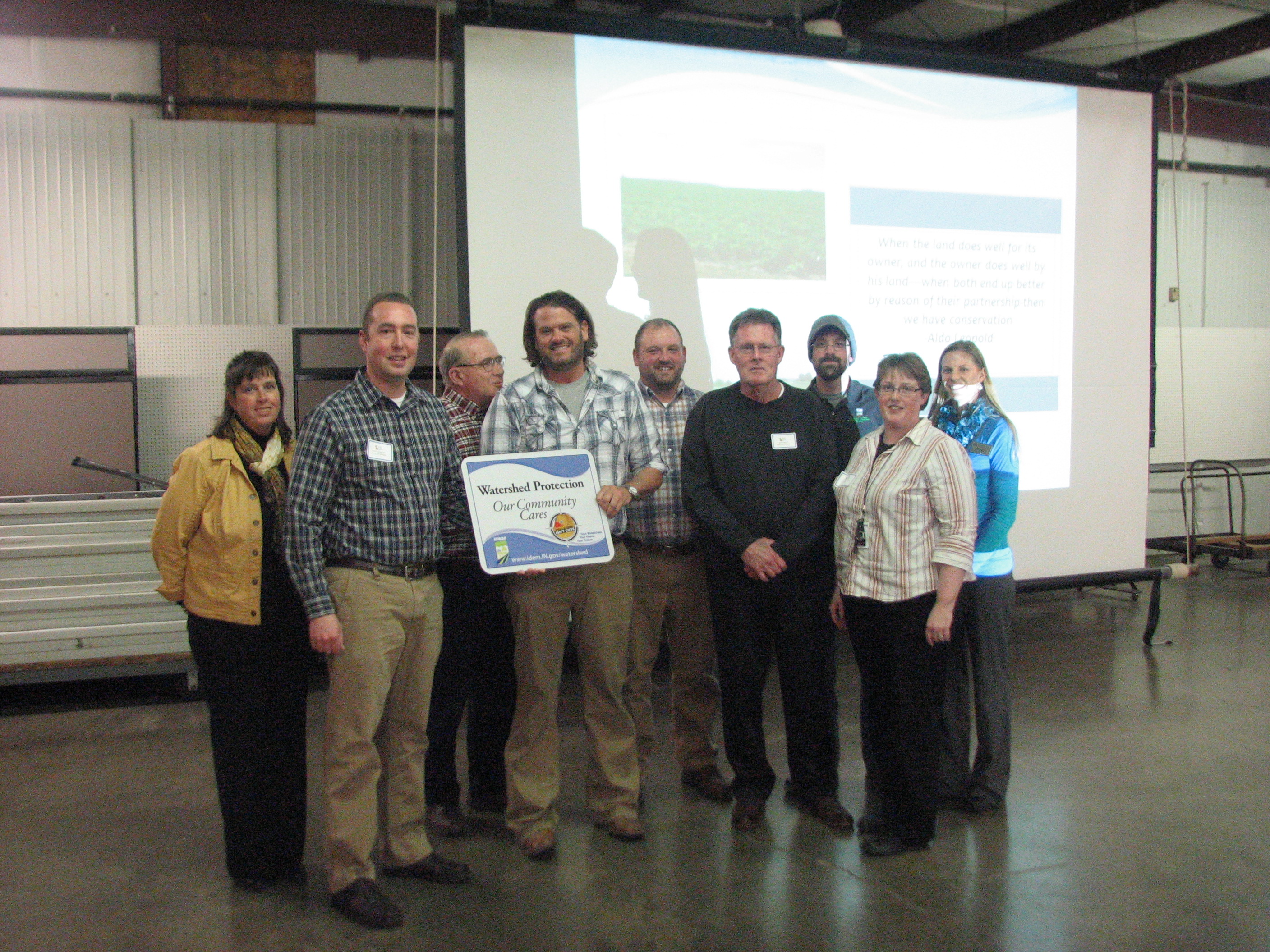
The Clinton County SWCD was recently recognized for their leadership role in the projects success.