

Who We Are: The Clay County Soil and Water Conservation District (SWCD) is a subdivision of State Government. It is a fpublic body which exercises public powers. It is governed by five supervisors, each a resident of the County, three elected and two appointed. Its staff members are considered to be employees of the county.The district receives its statutory authority from Indiana District Law (Indian Code IC 14-32).
Function: To provide information about soil, water and related natural resource conservation; identify and prioritize local soil and water resource concerns; and connect land users to sources of education, technical and financial assistance to implement conservation practices and technologies.
We serve: Clay County landowners, operators, taxpayers and citizens, including industry, business and governmental agencies.
Why: To accomplish our soil and water goals of protecting our natural resources for future generationa and improve our quality of life.
Our Mission: To conserve and improve all natural resources to preserve the quality of life for the people of Clay County, for present and future generation, by using the best technologies and practices available through technical, educational and financial assistance.
Critical Naturl Resource Issues:
1) Water Quality
2) Soil Quality/Health
3) Improve Land Use through Educationa nd Promotion of Conservation BMP's
Critical Geeographic Areas of Concern: All natural resource concerns apply to all of Clay County.
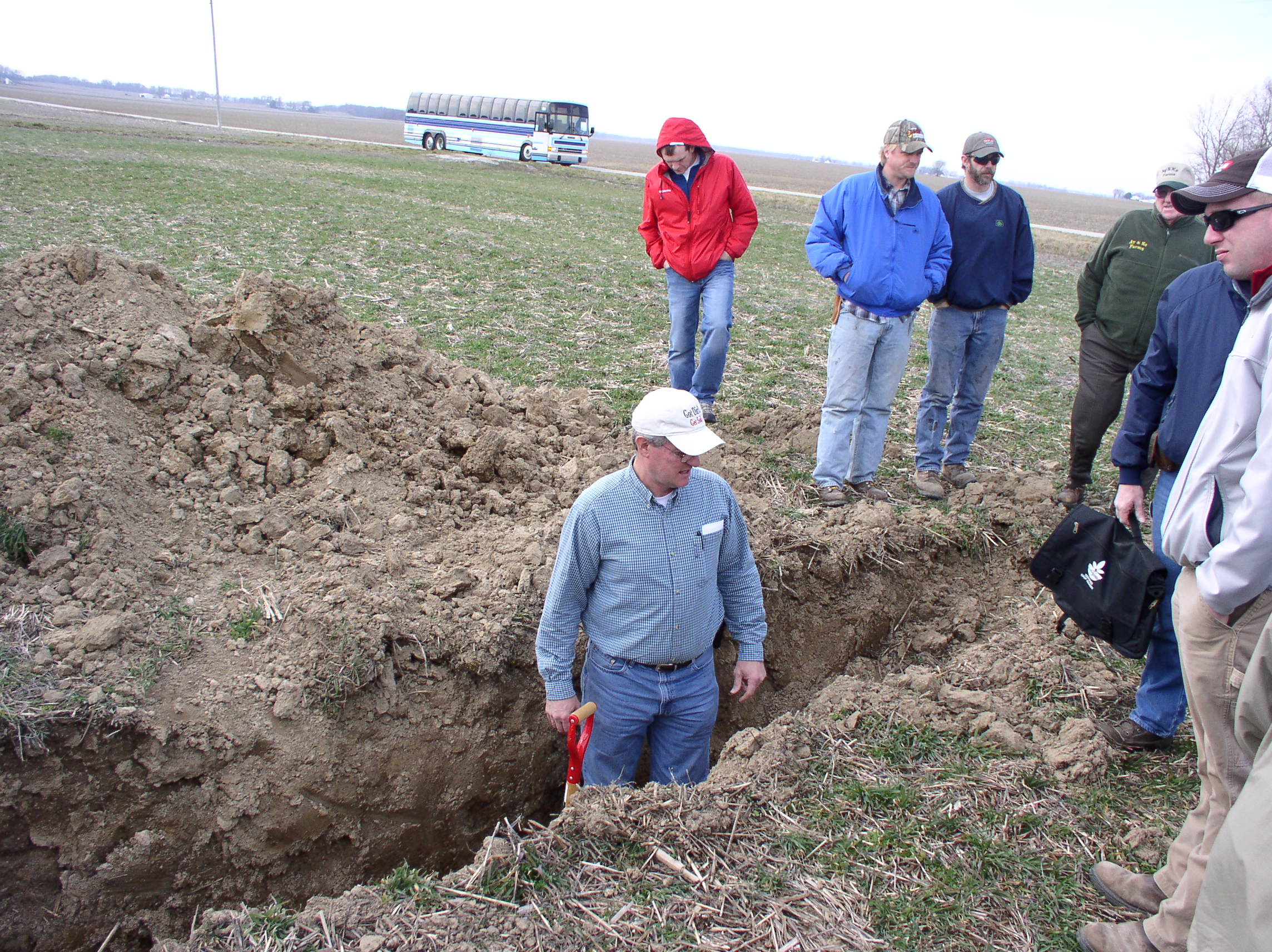
As part of the CWI Grant for 2011-2012 CCSWCD decide to plant various cover crops in 2011.They then coordinated a bus tour in early 2012 to help educate local producers and interested citizens from Clay County on various cover crops. Various Growers defined their seeding date, seeding method, Seed cost per acre, cover crop, previous covercrop, previous herbicides, sping herbicide control program, Cover Crop History and Why they are using programs.This information was put together in a Cover Crop Tour Itinerary with a map and wonderful visuals showing before and after comparisons.
Some of the reasons listed for using covercrops: build organic matter, scavenge nutrients, improve soil health, erosion control, build OM and soil tilth, scavenge or pull up P and K from lower soil profile, just as an experiment to compare cover crops and how they work within the farming operation, break up compaction.
This tour was through a partnership of The Clay, Greene, Sullivan and Vigo County Soil & Water Conservation Districts, The West Central Indiana Watershed Alliance, Ceres Solutions, The Indiana Conservation Cropping Systems Initiative and Purdue Extension.