| Back to 1997 Indiana Report of Diseases |
Rabies in Animals
Cases
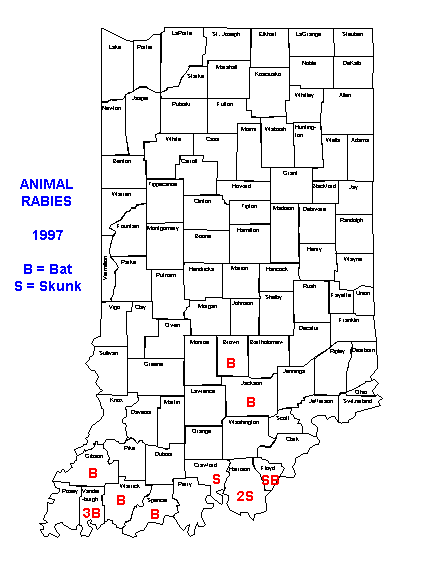
= 13 (9 bats, 4 skunks)Although human rabies is quite rare in Indiana (last case in 1959), it nevertheless is of great public health interest. Out of 2,103 animals tested in 1997 by the ISDH Disease Control Laboratory, 13 were rabies-positive. The most commonly tested species included dogs (737), cats (648), bats (215), and raccoons (214). Nine of the rabies-positive animals were bats, and four were skunks. The counties of origin are shown in Figure 1.
Figure 1.
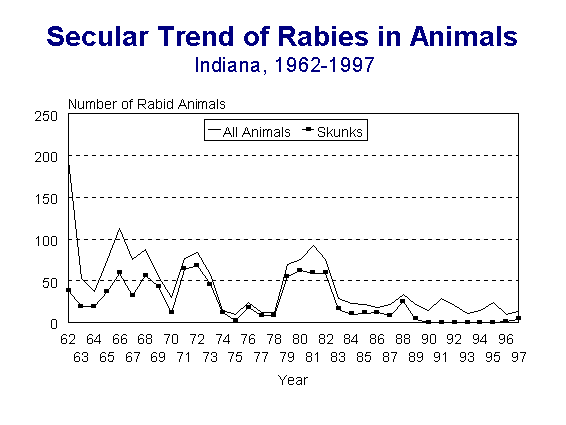
Historically, the skunk has been the major terrestrial rabies reservoir in Indiana (Figure 2). Since 1962, approximately 58% (819/1424) of the animal rabies cases have been in this species. Skunk rabies activity tends to fluctuate in Indiana in 6 to 8-year cycles. However, since 1990, there have been only 5 rabid skunks diagnosed in Indiana. Skunk rabies remains a problem in surrounding states, however.
Figure 2.
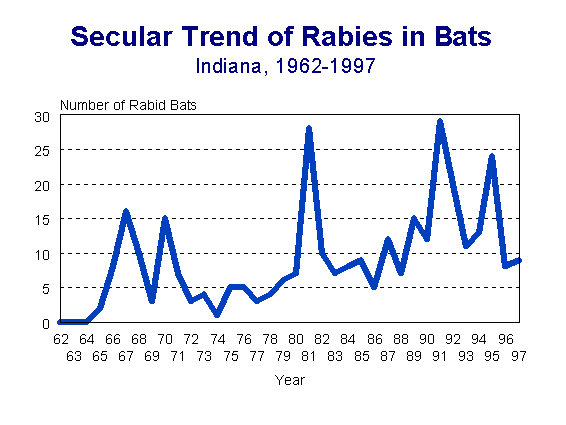
The number of rabid bats diagnosed in Indiana also undergoes cyclic fluctuations (Figure 3). Eight bat rabies ecotypes (strains) have been identified in the United States. Six of these are known to be circulating in Indiana. Nationally, almost all of the human rabies deaths in the last several years have been caused by one of the bat ecotypes. Often the victim had no known bat bite and in some cases no known bat contact. Thus, any contact or potential contact with an untested bat should be evaluated very carefully.
Figure 3.
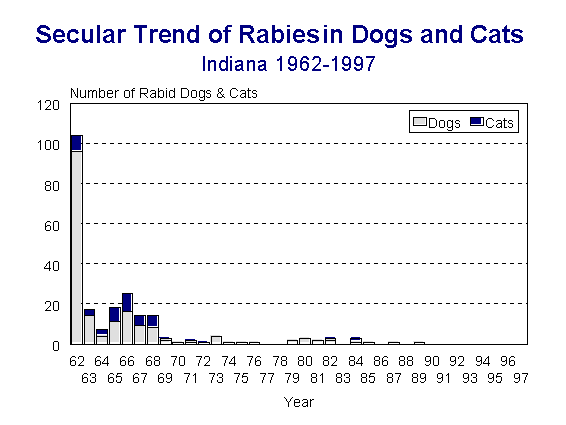
The number of rabid cats and dogs has declined markedly in the past 25 years (Figure 4). The last rabid dog and cat in Indiana were diagnosed in 1989 and 1984, respectively. Domestic animals in Indiana become infected primarily through exposure to rabid wildlife. Therefore, both dogs and cats should be vaccinated against rabies, as required by state law. Immunization of farm species is not indicated at present in Indiana.
Figure 4.
Raccoon-strain rabies virus has entered Ohio's eastern counties. There is no reason to expect that it will not eventually reach Indiana. When it does, the experience of East Coast states suggests that rabies-related activities will increase dramatically. In raccoon-rabies endemic areas, the incidence of rabies in all species (except humans so far) increases. Thus, the dog bite that today would be classified as very low rabies risk will become much more likely to require post-exposure prophylaxis (PEP) under raccoon-strain endemic conditions. In fact, human PEPs increase about 5 fold after raccoon-strain rabies becomes established.
The best way to prevent rabies is to avoid exposure to potentially rabid animals. Don't keep wild animals as pets, and don't feed or attempt to touch free-living wild animals. Keep pet food away from wild animals, and secure garbage can lids. Vaccinate all dogs and cats.
Several groups in Indiana, i.e. veterinarians, wildlife workers, etc., are at higher risk of rabies exposure by virtue of their work or recreational activities. It is important that people at high risk be re-immunized against rabies. Information on pre-exposure immunization can be found in Appendix C..
Animal Bites
Cases
= 9255Crude incidence
= 167/100,000A total of 9255 animal bites, an approximately 38% increase over 1996 (6,695), was reported in Indiana in 1997, for an incidence rate of 152 bites per 100,000 population. 2123 animal bites were reported from Marion County in 1997, accounting for almost 23% of the state total and yielding an incidence rate of 266 per 100,000 population. Because animal bites are frequently under-reported, the figures presented here should be considered minimums.
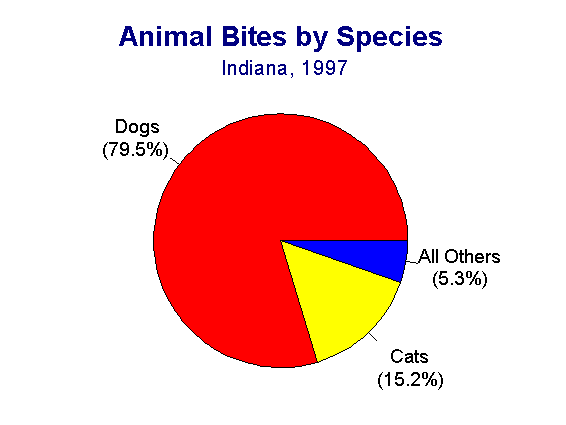
The dog is still the most common biting animal, accounting for about 80% (7,361/9,255) of the incidents, followed by the cat at just over 15% of the state-wide total (1407/9255). There were 28 bat bites reported in 1997. This species is currently the most important rabies reservoir in the state. These data are summarized in Figure 5.
Figure 5.
| Back to 1997 Indiana Report of Diseases |