NAVIGATION
SETTLEMENT | PEOPLE | MAP | RESEARCH | PORTER REA | ABOUT CEMETERIES
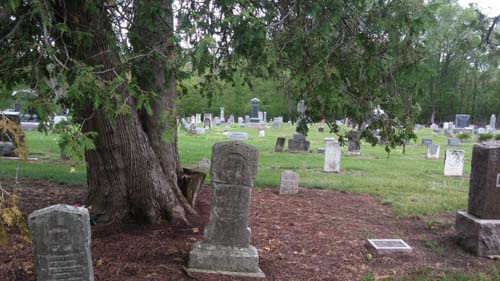
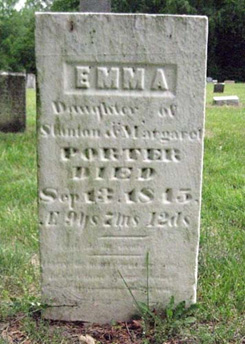
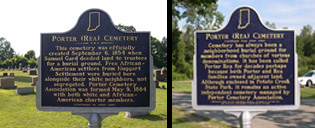
This small rural cemetery dates back to 1845. Nine-year-old Emma Porter was the first person to be buried here. The Porter Cemetery Association was formed in 1884. The Cemetery has been expanded a few times over the years. Land was purchased for Potato Creek State Park in the 1970s. It was decided to not purchase the Cemetery. The Porter Rea Cemetery Association owns, manages and maintains the Cemetery. It is still being actively used.
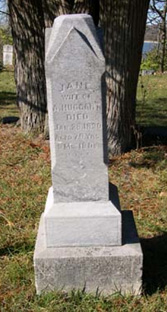
The Porter Rea Cemetery was not connected to one church. It has been used as a community cemetery. The black residents of the Huggart settlement were active members of this community. Some of them are buried here alongside their white neighbors. Cemeteries contain information about the people and the community. Learn more about cemeteries
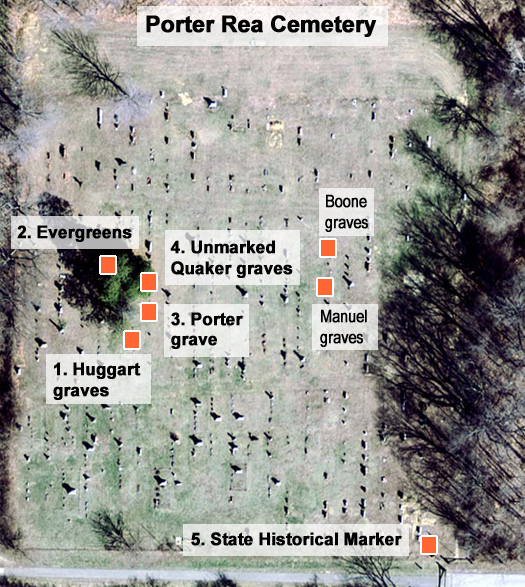
Look at this aerial photograph of Porter Rea Cemetery. Some African-American grave locations are marked. Can you find the two east west carriage lanes that were used to access the graves?