
Lake Michigan

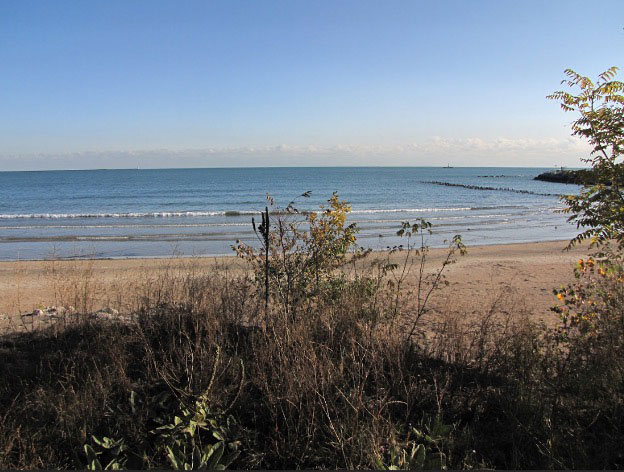

Lake Michigan is Indiana’s largest natural lake. The ecology of the lake is ruled by its size, with a massive amount of deep, cold water, wind disturbances and waves, and newly introduced exotic species. Indiana can only lay claim to about 1% (224 mi2) of the lake’s area and 45 miles of its shoreline, forming the extreme northwest border of the state. This portion of the lake has strong currents and a sandy lakebed, which prevents vascular plants from taking hold here. However, some characteristic wildlife species include mudpuppy salamanders (Necturus maculosus) and many varieties of birds. Shorebirds like sanderlings (Calidris alba) cluster in small groups, ring-billed gulls (Larus delawarensis) forage the beaches, and waterfowl such as loons (Gavia immer) summer on the lake. Lake Michigan is also home to 89 species of fish, 18 of which are non-native. Species of Greatest Conservation Need in the lake include fish like longnose dace (Rhinichthys cataractae) and cisco (Coregonus artedi).
The Lake Michigan ecosystem in northwestern Indiana.

- Ecosystem Services and Human Benefits
Lake Michigan provides important opportunities for recreation and commerce. Visitors engage in watersports like kayaking, swimming, and boating. The area is also a destination for birdwatchers looking for many species of waterfowl and shorebirds. Outdoor recreation at Lake Michigan offers Hoosiers and tourists numerous physical and mental health benefits. Fishing, both recreational and commercial, is another important service provided by the lake, contributing to the economic benefits of recreational tourism and providing direct benefits. The continued health of visitors from inside and outside Indiana, and the health of the local economy, relies on the health of the Lake Michigan ecosystem. Stewardship of the lake must prioritize clean water, stable fisheries, safe spaces for watersports, livable habitats for wildlife, and plentiful opportunities for fishing.
- Ecosystem Status
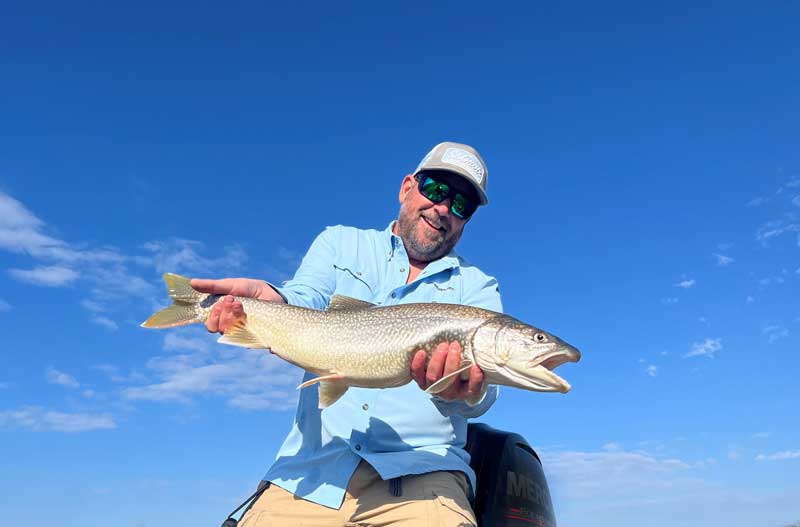
Declining abundance of native inhabitants due to invasive species causes concern for the Lake Michigan ecosystem. Furthermore, a long-term decline in zooplankton since the mid-2000s has coincided with prey fish declines, placing predatory and sportfish at risk. However, successful conservation efforts have encouraged abundant natural reproduction of fish such as lake trout (Salvelinus namaycush), preserving this multi-million-dollar industry.
Lake Michigan ecosystems are greatly impacted by pollution. The many surrounding industrial areas place it at increased risk for contamination and spills, reflected in research on the state of lake water and fish quality. Per- and poly-fluoroalkyl substances (PFAS) have been found in every fish sampled from Lake Michigan, with particularly toxic levels in sportfish. PFAS do not break down in the environment and are found in everyday items such as cosmetics, toilet paper, and nonstick cookware. Perfluorooctane sulfonic acids (PFOS) are a form of PFAS that were phased out of production in 2002 due to their toxicity to humans and wildlife. Concerningly, research has shown PFOS in more than 95% of sampled Lake Michigan fish, with highest prevalences in salmon and trout.
- Ecosystem Pressures
Lake Michigan ecosystems are at risk from pollutants such as nutrients, toxic chemicals, or sediments from the development of commercial, residential, industrial, and military sites. Serious pollutants of concern include mercury, polychlorinated biphenyls (PCBs), microplastics, and bacteria from human waste. Harmful bacteria such as Escherichia coli arise from wastewater treatment plants, sanitary sewers, septic systems, or boater waste. Risks of these contaminants impacts wildlife living in Lake Michigan and human visitors, affecting children, elderly, and individuals with weakened immune systems most severely.
Invasive and problematic native aquatic species also represent high pressure on the Lake Michigan ecosystem, including sea lamprey (Petromyzon marinus), quagga (Dreissena bugensis) and zebra (Dreissena polymorpha) mussels, round goby (Neogobius melanostomus), and alewife (Alosa pseudoharengus). These species not only compete with native fish for resources but also disrupt the natural food web and filter required nutrients out of the water, causing ecological and economic damage. Invasives may enter the lake through artificial canals, ballast water of freight ships, or other accidental introductions. Pollutants such as phosphorus may encourage the growth of nuisance algal blooms, causing nearly 80% of tributary habitat to be non-accessible to migratory fish. Downstream effects include reduced fish production for harvesting. Aquatic ecosystems may also be affected by changes in climate patterns discussed in this supplemental report.
Additional pressures affecting the Lake Michigan ecosystem in Indiana can be explored here.
- Ecosystem Conservation Opportunities
One opportunity to reduce pressures from pollutants and effluents in Lake Michigan is to expand incentives and disincentives for runoff, sedimentation, and water storage on private lands. The foundation of these incentives lies in consistent data collection. Data serves as a powerful tool to develop reliable education for key stakeholders. Engineers, developers, local governments, and the public can use this data to update best management practices and begin building support for needed changes. Through motivation comes action, and suitable changes to laws, codes, and tax structures can be made. Benefits given to landowners and developers using best practices will further empower individuals to adopt conservation efforts.
Integrating One Health into all Indiana conservation work is another opportunity to help reduce pressures on the Lake Michigan ecosystem. One Health is an approach that emphasizes the interconnectedness of human, animal, and environmental health. This framework works at local, regional, national, and global levels, with the goal of achieving optimal health across systems. Indiana conservation leaders have the opportunity to form relationships with One Health partners that support conservation actions, messaging, and motivation. By aligning values and priorities, stakeholders can work together to prevent, predict, detect, and respond to threats to environmental, animal, and human health. These health-centered values may be extended to the public, furthering support for conservation actions in Indiana ecosystems.